When choosing a CNC machine tool, the guideway system is one of the key factors that affects machining performance. The right CNC machine guideway can influence axis speed, machine rigidity, vibration control, load capacity, positioning accuracy, and long-term machining stability.
In CNC machining, there is no single “best” guideway. A high-speed 3C machining application has very different requirements from heavy mold roughing or large-part machining. The right choice depends on matching the CNC guideway design to the machining process and selecting the right vertical machining center configuration.
This guide explains the differences between linear guideways, box ways (hard ways), and hybrid guideway configurations. It also shows how Taikan Machine applies different guideway designs to different machining requirements.
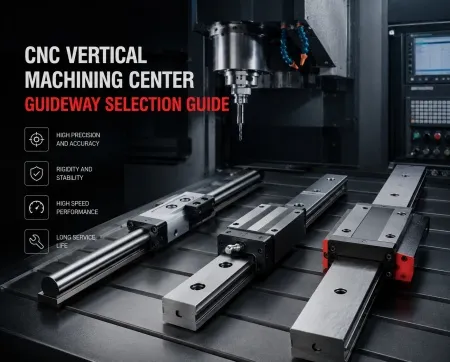
Why CNC Machine Guideway Selection Matters
A CNC machining center must balance two basic requirements: dynamic performance and cutting rigidity.
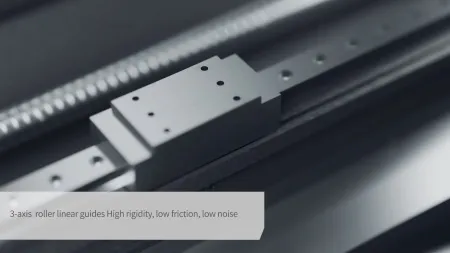
Linear guideways, also known as linear guide rails, use rolling elements to reduce friction and support fast axis movement. This makes them well suited to applications where high feed rates, fast positioning, and quick axis response are important. Roller linear guideways are also widely used in high-precision and high-rigidity CNC machining centers.
Box ways, often called hard ways, use sliding contact over a larger guideway surface. Their structural characteristics make them suitable for applications where high cutting forces, vibration control, and heavy-duty machining are the main concerns.
A hybrid guideway configuration combines these two approaches. By using different guideway types on different axes, a CNC machine can balance high-speed movement with heavy-cutting capability.
The selection should therefore start with the machining process, rather than simply choosing a guideway by name.
Linear Guideways: High-Speed and High-Precision CNC Machining
Low friction, high responsiveness, and stable movement at low speeds make linear guideways a common choice for high-speed and high-precision CNC machining.
Ideal Applications
Linear guideways are well suited to:
3C structural parts and high-volume production
Precision mold finishing
High-speed electrode milling
High-speed machining applications
Precision machining with frequent axis movement
How Linear Guideways Work
A linear guideway uses rolling contact through balls or rollers instead of direct sliding contact. This greatly reduces friction and friction-related heat generation.
With proper preload and optimized raceway design, linear guideways provide smooth axis movement and high positioning performance. They are therefore suitable for CNC machines that require high feed rates, fast positioning, short cycle times, and consistent surface quality.
For many high-speed vertical machining centers, roller-type linear guideways provide a useful combination of speed, rigidity, and precision.
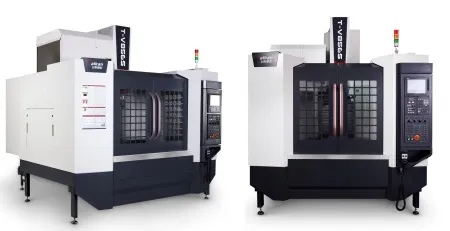
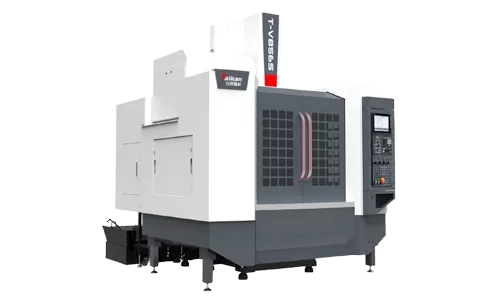
Featured Solution: Taikan HT-V856S Vertical Machining Center
Built on a highly rigid fixed-column cross-slide structure, the Taikan HT-V856S vertical machining center features an oversized base and a wide-span A-shaped column. The machine is cast from high-strength resin sand iron to resist vibration and deformation during high-speed cutting.
Guideway Configuration: Roller-type linear guideways on all three axes provide high rigidity, low friction, and low operating noise.
Spindle & Tooling: The machine is equipped with a Taikan BBT40-12000 r/min direct-driven high-speed spindle. A labyrinth structure and air curtain design help prevent coolant ingress. A reliable 24-tool arm-type magazine supports smooth and stable tool changes.
Precision Details: C3 pre-tensioned hollow-cooled ballscrews help reduce thermal expansion. Self-lubricating bearings and a rear dual-layer coolant filtration system support long-term component reliability.
For applications that prioritize high-speed machining, precision positioning, and stable production, a roller linear guideway configuration can be an effective choice.
Box Ways: High Rigidity for Heavy-Duty CNC Machining
Large contact areas, high structural rigidity, strong vibration damping, and high load capacity make box ways ideal for demanding cutting conditions.
Box ways are also commonly called hard ways in the CNC machine industry. Compared with linear guideways, hard ways are designed around sliding contact and a larger guideway contact area.
Ideal Applications
Box-way CNC machines are well suited to:
Heavy mold roughing
Large casting machining
Structural frame machining
Heavy-duty cutting
Applications with high cutting forces
Interrupted cutting conditions
How Box Ways Work
Box ways are integrated into the machine bed casting or use hardened steel inserts. The moving components slide directly along these surfaces.
The large contact area helps distribute cutting forces over a wider surface. This reduces pressure per unit area and provides strong support during heavy cutting.
The integrated structure also helps improve vibration damping and machine rigidity. These characteristics make hard guideways particularly suitable for heavy-duty CNC machining, where cutting stability and shock absorption are critical.
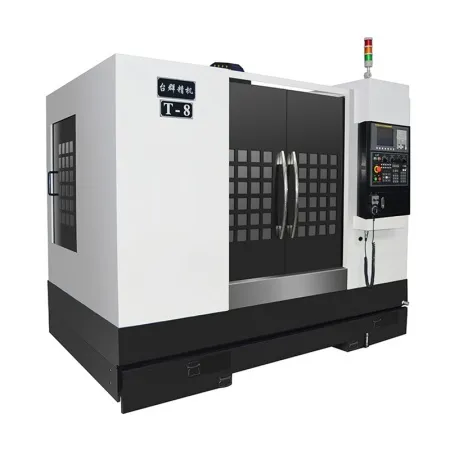
Featured Solution: Taikan HT-8 Vertical Machining Center
The Taikan HT-8 vertical machining center is highly versatile and can handle a wide range of machining tasks. It is particularly well suited to heavy roughing and demanding cutting applications.
The machine is built on an ultra-stable base with high-strength cast iron.
Guideway Configuration: Rectangular box ways on all three axes provide high rigidity and strong shock absorption during demanding cutting operations.
Spindle Performance: The Taikan BT40-8000 r/min belt-driven spindle helps isolate motor heat and reduce thermal deformation. It supports efficient cutting while helping control vibration and noise.
Z-Axis Stability: A centrally guided counterweight system supports smooth Z-axis movement and reduces movement instability. It also optimizes the Z-axis motor load for stable machining performance.
For applications where cutting force, rigidity, vibration control, and heavy material removal are the main priorities, a box-way or hard-way CNC machine can provide a strong solution.
Hybrid Guideways: Two Linear Guideways and One Box Way
What if a CNC machine needs both the rigidity of a box way for heavy material removal and the speed of a linear guideway for precise finishing?
A hybrid guideway configuration, such as two linear guideways and one box way, provides a balanced solution within a single CNC machining center.
Ideal Applications
Hybrid guideway CNC machines are suitable for:
Full-process mold machining
Multi-operation machining
Composite machining applications
Parts that require both roughing and finishing
Applications that need a balance of speed and rigidity
How Hybrid Guideways Work
A hybrid guideway system matches the guideway type to the load and movement requirements of each axis.
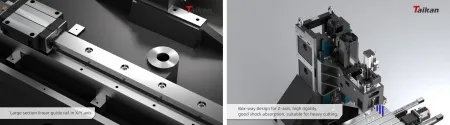
For example, the Z-axis can use a box way to absorb vertical cutting forces and provide strong load support. At the same time, the X and Y axes can use linear guideways for fast and precise horizontal positioning.
This combination allows the CNC machine to achieve a practical balance between linear guideway speed and box-way rigidity.
It can also reduce the need for secondary clamping and additional part transfers when one machine is used for multiple machining operations.
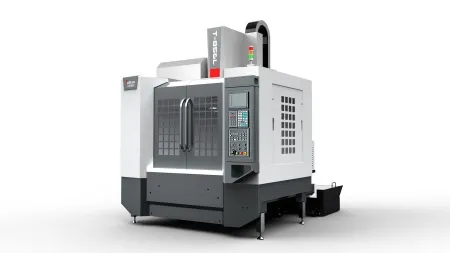
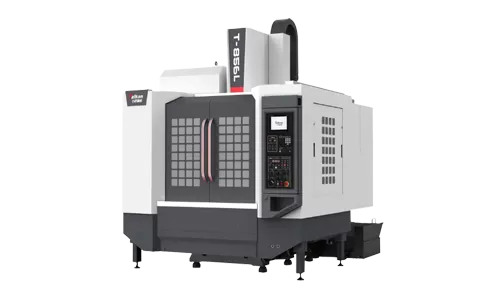
Featured Solution: Taikan HT-856L Vertical Machining Center
Designed for comprehensive machining, the Taikan HT-856L vertical machining center features a robust fixed-column bed and a wide-span A-shaped column.
Guideway Configuration: Large-size, high-precision roller linear guideways are used on the X and Y axes, while a highly rigid rectangular box way is used on the Z-axis. This design combines fast linear movement with strong box-way vibration damping.
Drive & Protection: C3 pre-tensioned ballscrews help reduce thermal expansion and are supported by self-lubricating bearings. The Taikan BT40-8000 r/min belt-driven spindle is protected by a labyrinth and air-curtain design.
Reliability: A stable 24-tool arm-type magazine supports efficient tool changes and helps maintain reliable operation during continuous machining.
The HT-856L demonstrates how linear guideways and hard ways can work together to meet different cutting requirements within one vertical machining center.
Linear Guideway vs. Box Way vs. Hybrid Guideway
The three CNC guideway configurations are not competing technologies where one is always better than the others. Each design provides a different balance of speed, rigidity, precision, vibration control, and machining capability.
Guideway Type | Main Advantage | Typical CNC Applications |
Linear Guideway | High speed, low friction, fast positioning | 3C machining, precision machining, mold finishing |
Box Way / Hard Way | High rigidity, damping, and load capacity | Heavy mold roughing, large parts, heavy cutting |
Hybrid Guideway | Balance of speed and rigidity | Mold machining, composite machining, multi-operation parts |
If production depends on rapid axis movement and high-speed positioning, a roller linear guideway configuration may be the better fit.
If the process is dominated by heavy cutting and high cutting forces, a box-way CNC machine may provide the rigidity and vibration control required.
If one vertical machining center must handle both high-speed machining and heavy cutting, a hybrid guideway configuration can provide a more balanced solution.
How to Choose the Right CNC Machine Guideway
Before selecting a CNC machining center, consider the following factors.
1. What Is the Main Machining Process?
High-speed milling, precision finishing, mold roughing, and heavy cutting place different demands on the CNC machine guideway.
If high-speed movement is the priority, linear guideways can be a strong option. If heavy cutting is the main requirement, box ways may provide better support. For mixed machining operations, a hybrid guideway can offer a practical balance.
2. How Large Are the Cutting Forces?
Large cutting forces and interrupted cutting increase the importance of machine rigidity and vibration control.
For heavy-duty machining, box ways or hard ways can provide strong support and damping. For lighter and faster cutting, linear guideways can provide the dynamic response required.
3. Is Axis Speed a Priority?
For applications with frequent rapid positioning and high feed rates, the low-friction characteristics of linear guideways and linear guide rails can be highly beneficial.
This is especially important for high-speed vertical machining centers and CNC machines used for high-volume production.
4. Does the Machine Need to Handle Both Roughing and Finishing?
If one CNC machine needs to cover multiple machining stages, a hybrid guideway design can provide a useful balance between dynamic performance and cutting rigidity.
This type of configuration can be especially useful for mold machining and complex parts that require both heavy roughing and precision finishing.
5. Look Beyond the Guideway
Guideway performance does not exist in isolation.
The performance of a CNC machine tool also depends on machine rigidity, casting design, ballscrews, spindle configuration, lubrication, thermal management, and overall structural design.
This is why CNC guideway selection should always be evaluated as part of the complete machine architecture rather than as an individual specification.
A high-quality guide rail or linear guideway cannot compensate for a weak machine structure. Likewise, a rigid box-way machine must be supported by a suitable spindle, drive system, casting structure, and thermal management design.
Conclusion: Choose the CNC Guideway for the Job
There is no absolute winner between linear guideways and box ways.
Linear guideways are well suited to high-speed and high-precision machining. Box ways, or hard ways, provide a strong foundation for heavy cutting, high cutting forces, and demanding load conditions. Hybrid guideway configurations offer a practical balance when a CNC machining center needs both dynamic performance and cutting rigidity.
The application determines the best CNC machine guideway.
Match the guideway system to the machining process. Match the machine structure to the cutting conditions. Then choose the CNC machining center that provides the right balance of speed, rigidity, precision, vibration control, and productivity.
For manufacturers evaluating CNC machine tools and vertical machining centers, Taikan Machine offers a range of cnc machining center solutions with different guideway configurations designed for various machining requirements and production environments.
From linear guideway CNC machines for high-speed and precision machining to box-way CNC machines for heavy-duty cutting and hybrid guideway machines for comprehensive machining, Taikan Machine provides CNC machining solutions designed around real manufacturing needs.
Wayne Zhao
Chief Technical Expert, Taikan Machine
A CNC expert with 10+ years of experience in control systems and machining.
Formerly with Siemens and FANUC, Wayne specializes in system commissioning, 5-axis programming, and integrated machining applications. He is dedicated to transforming technical expertise into actionable industry insights.

 Español
  português
  русский
  العربية
  Türkçe
  français
  Deutsch
  italiano
  ไทย
ไทย  tiếng việt
  Polska
  Malay
Malay  हिंदी
हिंदी  Indonesia
  ಕನ್ನಡ
ಕನ್ನಡ 

 Vertical Machining Center Drilling and Milling Machining Center Profile Machining Center Horizontal Machining Center 5-Axis Machining Center Gantry Machining Center CNC Lathe CNC Swiss-Type Automatic LatheS series Standard Edition with 3-Axis Linear Guide Rails H Series Advanced Edition with 3-Axis Linear Guide Rails M Series Excellent Rigidity T-V Series Light Cutting W Series Hub Machining L Series Two Rails and One Hard Rail T Series 3-Axis Hard Rail HDT Series High Precision Vertical Machining CenterB Series Drilling & Milling Machining Center S Series Drilling & Milling Machining Center SE Series Drilling & Milling Machining CenterT Series Moving Column Type & BT30 (Tilt-Disc Tool Magazine) V Series Moving Column Type & BT40 (Tilt-Disc Tool Magazine)HT-H11 Horizontal Machining Center HHQ5 High Rigidity Horizontal Machining Center HDH-63 Horizontal Machining Center HDH-100S Horizontal Machining CenterT-U Series 5-Axis Tapping Machining Center V-U Series Vertical 5-Axis Machining Center FH Series 5-Axis Milling and Turning Machining Center CX700-2000 Seven-axis Five-simultaneous Milling And Turning Machining CenterG-V Series 3-Axis Linear Guides G-VU Series 5-Axis Gantry Machining Center G-BU Series Bridge 5-Axis Gantry Machining Center