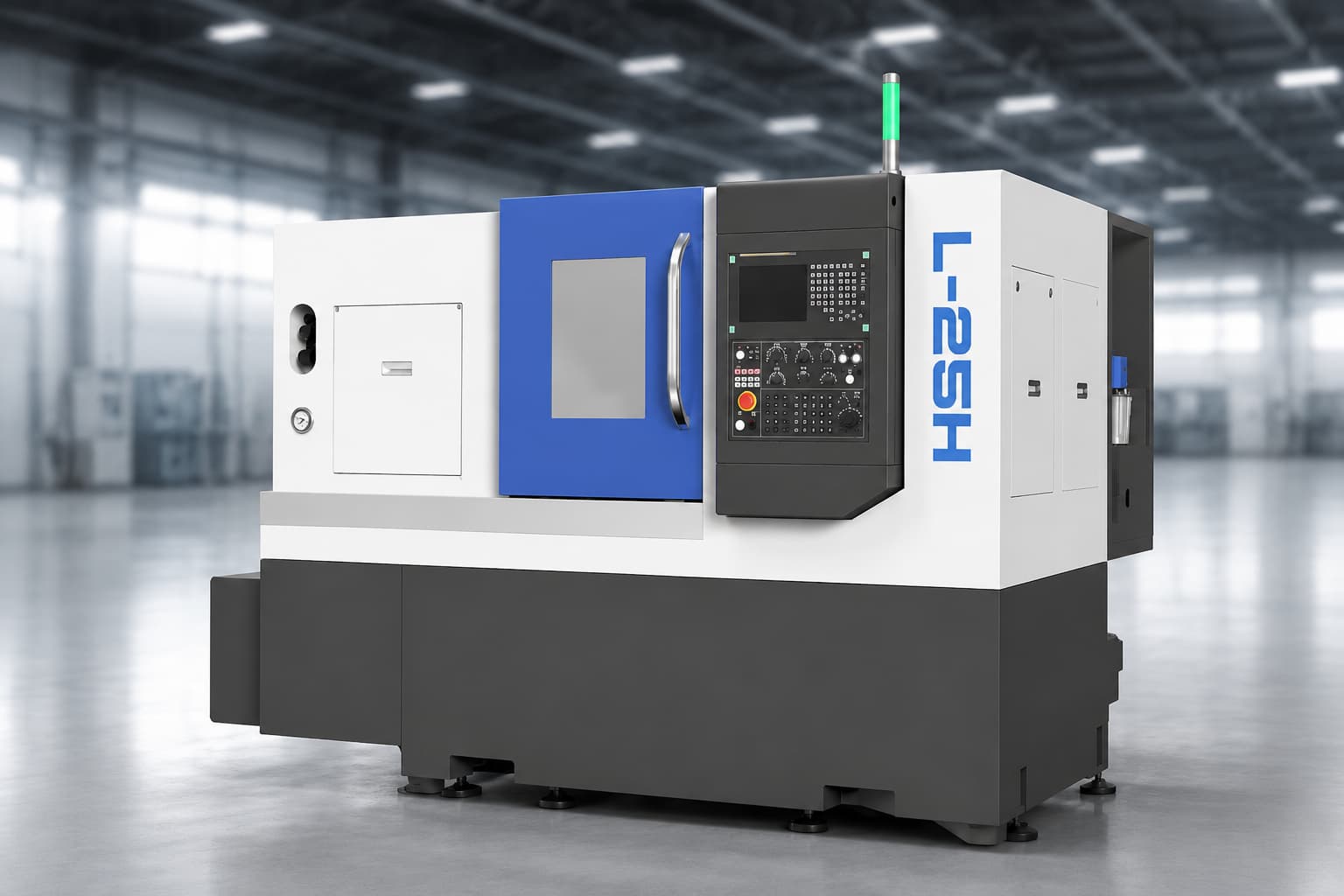
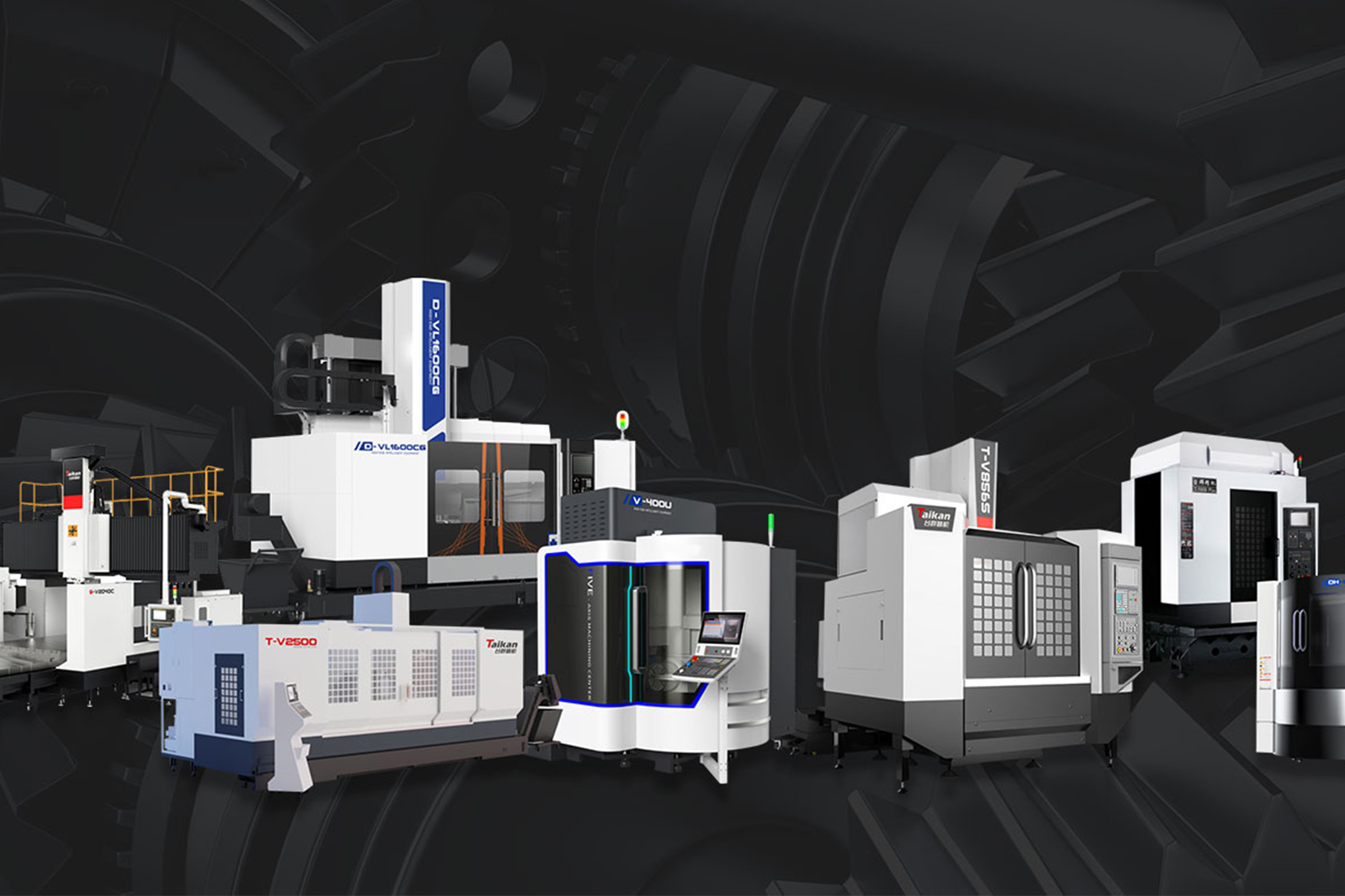
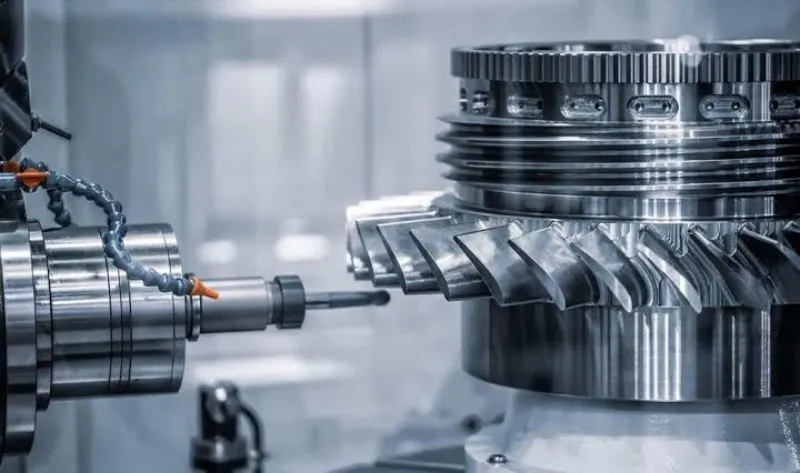
CNC turning equipment is available in many configurations, and machines that appear similar on a specification sheet can perform very differently in actual production. Automatic lathes, gang-type CNC lathes, and conventional horizontal CNC lathes can all produce precision turned components, but each machine structure is optimized for different workpiece dimensions, production volumes, tooling arrangements, and automation requirements.
Choosing the right configuration requires more than comparing spindle speed or maximum turning diameter. Manufacturers should consider how raw material enters the machine, how many tools are required, how frequently production changes, whether unattended machining is necessary, and how much flexibility is expected from the equipment over its service life.
Begin With Workpiece Size, Length, and Production Volume
The diameter and length of the workpiece usually provide the first indication of the appropriate lathe configuration.
Small precision components produced directly from bar stock often benefit from automated feeding and compact tooling arrangements. Examples can include shafts, pins, connectors, sleeves, fittings, fasteners, and other parts produced in large quantities.
Larger components such as flanges, discs, shafts, bushings, and general mechanical parts usually require more chucking capacity, spindle power, machine rigidity, and flexible tooling. In these cases, a conventional horizontal lathe may be a more practical production platform.
Production volume is equally important. A machine optimized for thousands of repeat parts may not be the best solution for a job shop that changes component types several times per day. Conversely, a highly flexible machine may carry unnecessary non-cutting time when a factory produces the same small component continuously.
When an Automatic Lathe Makes Sense
Automatic lathes are designed around repeated production and reduced operator intervention. When combined with suitable bar-feeding and parts-handling systems, they can process components continuously from bar material and support long production runs.
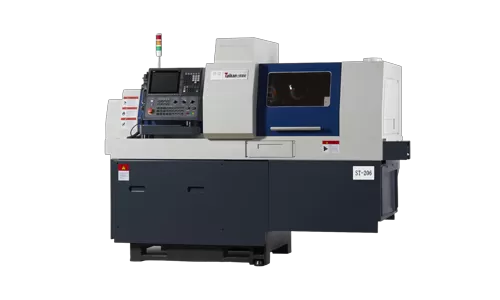
A cnc auto lathe can be particularly useful when manufacturers need to produce large quantities of relatively small turned components while controlling cycle time and consistency.
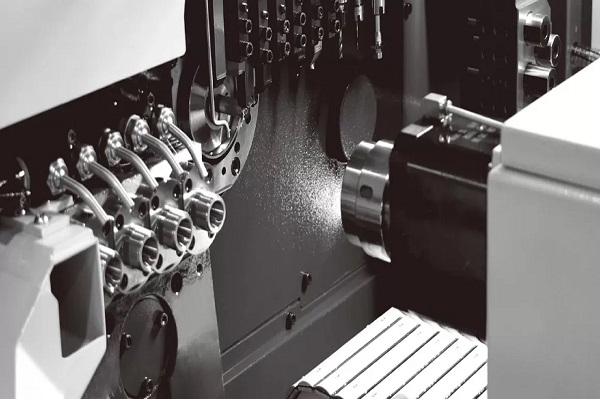
Typical applications include precision shafts, pins, connectors, electronic hardware, medical components, fasteners, fittings, and other cylindrical parts that can be manufactured efficiently from bar stock.
The main advantages of this production approach can include:
Reduced manual loading between individual cycles
Stable production of repeated part geometries
Efficient use of bar material
Potential for longer periods of unattended operation
Shorter handling time between components
However, an automatic lathe should not be selected solely because production volume is high. Manufacturers should also consider part diameter, length-to-diameter ratio, number of cross-machining operations, tooling requirements, bar feeder compatibility, chip control, and finished-part handling.
If components change frequently or require larger chucking capacity, another lathe configuration may provide greater flexibility.
Why Gang-Type CNC Lathes Can Reduce Tool Change Time
A gang-type lathe organizes multiple tools on a common slide rather than relying on a conventional indexing turret. During machining, the slide moves to position the required tool relative to the workpiece.
This arrangement can reduce the time normally associated with turret indexing, making a cnc lathe gang type configuration attractive for small precision parts with relatively straightforward turning sequences.
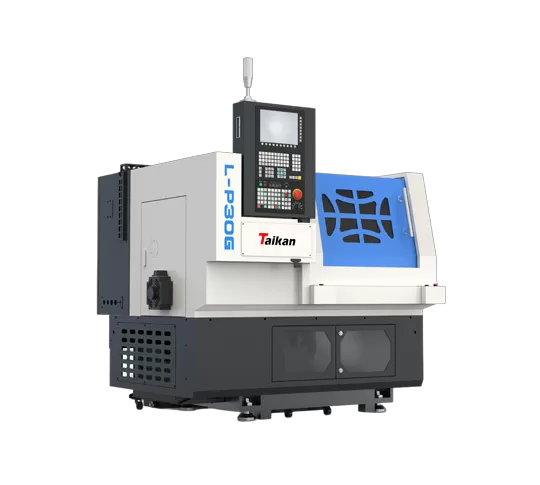
Gang tooling is often suitable when:
Components are relatively small
Cycle time is a major production priority
The machining sequence uses a manageable number of tools
Parts are produced repeatedly in medium or high volumes
The required tooling can be arranged efficiently within the available slide space
The compact distance between tools can enable rapid transitions between turning, grooving, drilling, boring, and cutoff operations. For the correct part family, this can make gang tooling highly productive.
The tradeoff is tooling capacity and flexibility. Complex components requiring many tools may become difficult to arrange on a gang plate. Tool interference must also be considered carefully during process planning. If the factory produces a very broad range of part sizes and machining sequences, a turret-equipped machine may be easier to adapt.
When a Horizontal Lathe Offers Greater Flexibility
Horizontal CNC lathes remain a widely applicable turning solution because they can accommodate a broad variety of workpiece sizes, chucking arrangements, and machining operations.
A horizontal lathe is usually the stronger option when workpieces are larger, require greater spindle torque, need secure chucking, or involve a wider range of production requirements.
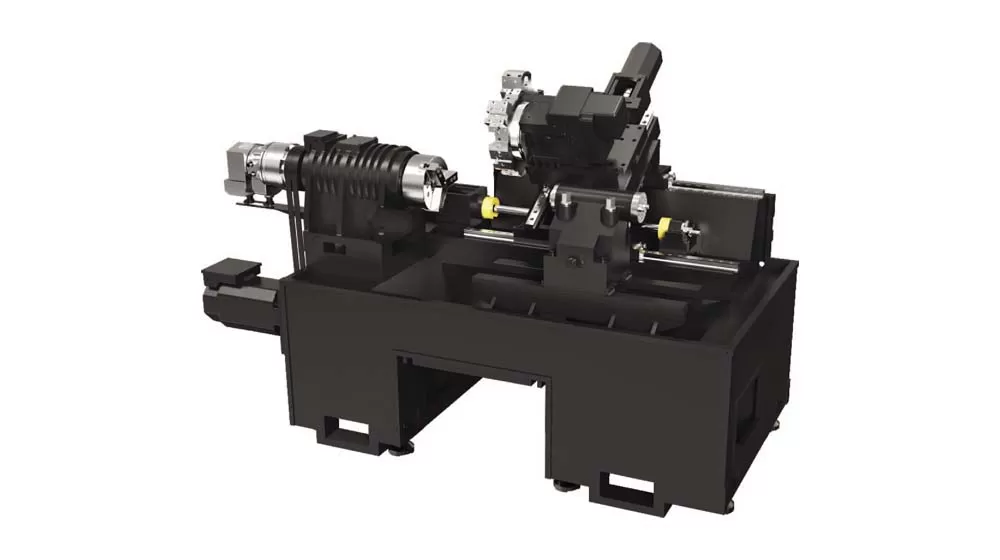
Compared with highly specialized small-part production machines, horizontal lathes can provide greater flexibility for changing jobs. Manufacturers can machine shafts, discs, sleeves, flanges, housings, and other rotational parts without limiting production to a narrow component family.
They are particularly useful for:
General industrial turning
Medium and larger diameter components
Parts requiring substantial roughing
Mixed production and job-shop environments
Applications requiring multiple chucking options
Factories that frequently change part types
When equipped with suitable tooling and automation, horizontal lathes can also support batch production. Their advantage is therefore not simply the ability to machine larger workpieces, but the flexibility to handle changing production requirements.
Tooling Strategy Can Determine Which Lathe Is More Productive
Tool arrangement has a direct effect on cycle time and production flexibility.
On a gang-type machine, tools are positioned close together on a slide. This can minimize non-cutting movement but limits the physical space available for tooling.
Automatic lathes may provide more specialized tooling configurations for bar-fed production and complex small parts. Depending on the machine design, manufacturers may combine turning tools with drilling, cross-working, or secondary spindle operations.
A turret-equipped horizontal lathe generally provides a more standardized way to manage multiple tools. Indexing introduces some non-cutting time, but the turret can make tool organization more flexible when part programs change frequently.
Manufacturers should therefore evaluate the complete tool list for representative parts before choosing the machine. A machine that looks fast based on spindle speed alone may lose that advantage if tooling changes or secondary operations create bottlenecks.
Consider Automation and Unattended Production
Labor availability is becoming an increasingly important part of machine selection. If the objective is to run production with limited operator intervention, the machine must be evaluated as part of a complete automation system.
Important considerations include bar feeding, chuck operation, parts collection, chip removal, tool-life monitoring, automatic lubrication, alarm handling, and the ability to maintain dimensional consistency over extended production periods.
Automatic lathes are naturally well suited to bar-fed production. Gang-type machines can also provide high productivity when integrated into an appropriate automated process. Horizontal lathes may require additional equipment such as bar feeders, gantry loaders, or robotic loading depending on the workpiece.
The correct choice depends on whether the factory values maximum output for a stable part family or requires an automation platform that can be adapted to many different jobs.
Choose According to Cost per Finished Part
Machine purchase price should not be considered independently from productivity. Manufacturers should calculate how machine configuration affects the complete cost of producing a finished component.
Useful factors include:
Expected cycle time
Setup and changeover time
Operator involvement
Required fixtures and tooling
Material utilization
Secondary machining requirements
Tool replacement frequency
Expected machine utilization
For a stable, high-volume component, saving only a few seconds per cycle can create a significant productivity difference over thousands of parts. For low-volume manufacturing, however, faster setup and broader machine flexibility may generate more value than minimizing every second of cutting time.
FAQ
What is the main difference between an automatic lathe and a conventional CNC lathe?
An automatic lathe is generally optimized for repeated production with a high level of automated material feeding and part processing. A conventional CNC lathe usually provides broader flexibility for different workpiece sizes and production requirements.
What type of parts are suitable for gang-type CNC lathes?
Gang-type lathes are particularly suitable for small precision turned components that require a limited, well-organized set of tools and benefit from very short movements between machining operations.
Is a horizontal CNC lathe suitable for mass production?
Yes. Horizontal CNC lathes can support high-volume production when combined with suitable tooling, bar feeders, automatic loaders, or robotic systems. Their broader workpiece capacity also makes them suitable for factories that need both productivity and flexibility.
Which lathe is best for bar-stock production?
Automatic lathes are often a strong option for continuous bar-stock production, particularly for small precision components. However, workpiece diameter, length, required operations, and production volume should be evaluated before making a final decision.
How should a manufacturer compare different CNC lathe configurations?
The most useful comparison should include representative workpiece drawings, material, bar or blank dimensions, annual production quantity, tolerance requirements, required tools, expected cycle time, automation requirements, and planned future components.
Conclusion
Automatic lathes, gang-type CNC lathes, and horizontal lathes are designed for different production priorities. Automatic lathes are well suited to repeated bar-fed production, gang-type machines can provide very short tool-to-tool transitions for compact precision components, and horizontal lathes offer broader flexibility for different workpiece sizes and machining requirements.
The right machine should therefore be selected according to the complete production process rather than a single specification. By evaluating workpiece geometry, diameter, material, production volume, tooling arrangement, automation strategy, changeover frequency, and cost per finished part, manufacturers can choose a CNC lathe configuration that delivers both current productivity and enough flexibility for future production demands.
Wayne Zhao
Chief Technical Expert, Taikan Machine
A CNC expert with 10+ years of experience in control systems and machining.
Formerly with Siemens and FANUC, Wayne specializes in system commissioning, 5-axis programming, and integrated machining applications. He is dedicated to transforming technical expertise into actionable industry insights.

 Español
  português
  русский
  العربية
  Türkçe
  français
  Deutsch
  italiano
  ไทย
ไทย  tiếng việt
  Polska
  Malay
Malay  हिंदी
हिंदी  Indonesia
  ಕನ್ನಡ
ಕನ್ನಡ 

 Vertical Machining Center Drilling and Milling Machining Center Profile Machining Center Horizontal Machining Center 5-Axis Machining Center Gantry Machining Center CNC Lathe CNC Swiss-Type Automatic LatheS series Standard Edition with 3-Axis Linear Guide Rails H Series Advanced Edition with 3-Axis Linear Guide Rails M Series Excellent Rigidity T-V Series Light Cutting W Series Hub Machining L Series Two Rails and One Hard Rail T Series 3-Axis Hard Rail HDT Series High Precision Vertical Machining CenterB Series Drilling & Milling Machining Center S Series Drilling & Milling Machining Center SE Series Drilling & Milling Machining CenterT Series Moving Column Type & BT30 (Tilt-Disc Tool Magazine) V Series Moving Column Type & BT40 (Tilt-Disc Tool Magazine)HT-H11 Horizontal Machining Center HHQ5 High Rigidity Horizontal Machining Center HDH-63 Horizontal Machining Center HDH-100S Horizontal Machining CenterT-U Series 5-Axis Tapping Machining Center V-U Series Vertical 5-Axis Machining Center FH Series 5-Axis Milling and Turning Machining Center CX700-2000 Seven-axis Five-simultaneous Milling And Turning Machining CenterG-V Series 3-Axis Linear Guides G-VU Series 5-Axis Gantry Machining Center G-BU Series Bridge 5-Axis Gantry Machining Center