What Can a Profile Machining Center Do for Your Aluminum Extrusion and Light Alloy Processing?
Views: 0 Author: Site Editor Publish Time: 2026-05-15 Origin: Site
- 1. How Profile Machining Centers Improve Aluminum Extrusion Processing
- 2. Key Advantages of Using a Profile Machining Center for Light Alloy Parts
- 3. Applications of Profile Machining Centers in Different Industries
- 4. How to Choose the Right Profile Machining Center for Your Production Needs
- 5. Traditional Machining vs. Profile Machining Center
- 6. Explore Related Resources on Taikan
- 7. FAQs About Profile Machining Center
- 7.1 Q: What is a profile machining center used for?
- 7.2 Q: Why is aluminum extrusion processing suitable for CNC profile machining?
- 7.3 Q: What industries commonly use profile machining centers?
- 7.4 Q: How accurate is a CNC profile machining center?
- 7.5 Q: What spindle speed is suitable for aluminum profile machining?
- 7.6 Q: How can automation improve aluminum profile manufacturing?
- 8. Conclusion
Aluminum extrusion and light alloy components are widely used in industries that require lightweight structures, high strength, and precision manufacturing. A profile machining center handles drilling, milling, tapping, and cutting on long aluminum profiles with high accuracy and automated operation. Compared with traditional methods, it improves production efficiency, reduces manual labor, and ensures consistent machining quality in large-scale production.
How Profile Machining Centers Improve Aluminum Extrusion Processing
A profile machining center is a CNC system designed for automated drilling, milling, tapping, cutting, and multi-face machining of aluminum extrusion profiles and lightweight metal components.
Traditional machining methods often rely on multiple machines and repeated repositioning. A modern profile machining center combines these processes into one automated workflow, improving efficiency and reducing positioning errors.
For aluminum extrusion processing, it can complete drilling, slot milling, threading, routing, and end machining in a single setup. Advanced 3-axis, 4-axis, and 5-axis configurations allow multiple surfaces to be processed automatically, improving dimensional consistency and reducing downtime.
High-speed spindles and automatic tool changers help deliver clean cutting performance, faster production, and lower labor costs. Manufacturers processing architectural aluminum profiles, industrial frames, and transportation components benefit from higher throughput, improved surface quality, and lower scrap rates.
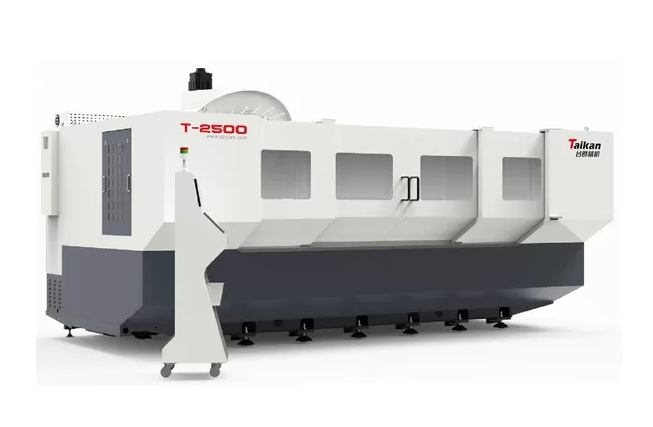
Key Advantages of Using a Profile Machining Center for Light Alloy Parts
Light alloy machining refers to the precision processing of lightweight metals such as aluminum, magnesium, and titanium alloys used in modern industrial manufacturing.
Machining accuracy and stability are critical for lightweight structures and high-strength light alloy components. A profile machining center improves production efficiency, dimensional consistency, and surface finish quality when processing light alloy components.
Modern CNC profile machining centers provide high positioning accuracy for stable mass production. Compared with traditional machining methods, automated systems reduce repeated clamping, minimize positioning errors, and lower material waste.
High-speed spindle systems allow efficient cutting of aluminum and other light alloys while maintaining clean surface finishes and stable machining performance. Automatic tool changers and intelligent CNC controls further improve productivity and reduce manual operation.
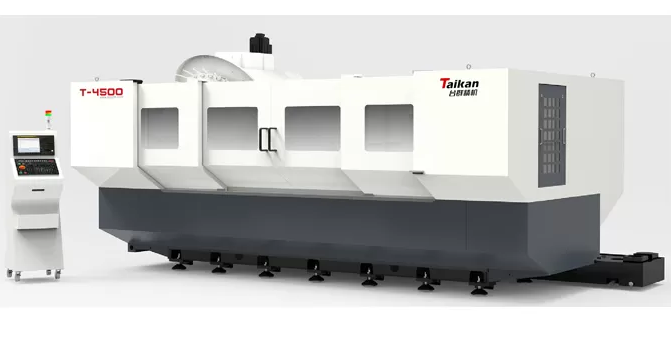
Applications of Profile Machining Centers in Different Industries
Profile machining centers are widely used for high-precision processing of aluminum profiles and lightweight structural components.
Aerospace industry: Used for aircraft structural parts, cabin frames, and support components requiring high dimensional accuracy.
Automotive industry: Used to produce EV battery trays, roof rails, side beams, and chassis components to support lightweight design and efficiency.
Architectural industry: Used for curtain walls, window frames, sliding doors, and customized aluminum systems with precise assembly requirements.
Industrial equipment: Used for automation frames, conveyor systems, and robotic structures requiring stable and accurate machining.
Growing demand from transportation, renewable energy, and industrial automation continues to drive the need for advanced CNC profile machining solutions.
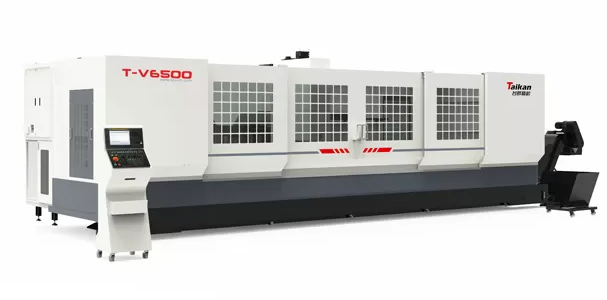
How to Choose the Right Profile Machining Center for Your Production Needs
Selecting a profile machining center requires evaluating machining capacity, axis configuration, automation level, spindle performance, and production requirements.
Axis configuration: A 3-axis machine is suitable for standard drilling and milling, while 4-axis and 5-axis systems support multi-face and angled machining.
Workpiece size: Maximum profile length, travel range, and clamping capacity must match aluminum extrusion processing needs.
Automation level: Features such as automatic tool changers, loading systems, barcode scanning, and CNC control improve efficiency and reduce labor.Spindle performance: Higher spindle speeds (typically above 18,000 RPM for aluminum) support smoother cutting and better surface quality.
Production demand: High-volume manufacturing may require dual-station or fully automated systems to maintain stable output.
Supplier factors: Machine stability, software compatibility, spare parts availability, and after-sales service should also be considered. Taikan provides profile machining center solutions for aluminum extrusion and light alloy applications.
Traditional Machining vs. Profile Machining Center
| Feature | Traditional Machining | Profile Machining Center |
| Processing Method | Multiple standalone machines | Integrated CNC automation |
| Positioning Accuracy | Moderate | High (±0.05 mm) |
| Production Efficiency | Lower | 30–50% higher |
| Labor Requirement | High | Reduced |
| Multi-face Machining | Limited | Supported |
| Material Waste | Higher | Lower |
| Automation Level | Low | High |
| Suitable Industries | General fabrication | Aerospace, automotive, architectural systems |
Explore Related Resources on Taikan
Applications of CNC Profile Machining Center in Modern Manufacturing
Applications of Profile Machining Center in Modern Industries
Profile Machining Center: High-Speed and Efficient Light-Cutting Solutions
FAQs About Profile Machining Center
Q: What is a profile machining center used for?
A profile machining center is mainly used for drilling, milling, tapping, cutting, and routing aluminum extrusion profiles and lightweight alloy components with high precision and automation.
Q: Why is aluminum extrusion processing suitable for CNC profile machining?
Aluminum extrusion profiles are lightweight and easy to machine at high spindle speeds, making them ideal for automated CNC processing with excellent surface finish quality.
Q: What industries commonly use profile machining centers?
Industries such as aerospace, automotive, rail transportation, architectural systems, industrial automation, and renewable energy widely use profile machining centers.
Q: How accurate is a CNC profile machining center?
Most modern CNC profile machining centers achieve positioning accuracy within ±0.05 mm, depending on machine configuration and tooling conditions.
Q: What spindle speed is suitable for aluminum profile machining?
Many aluminum machining applications use spindle speeds between 18,000 and 24,000 RPM to achieve smooth cutting performance and efficient chip removal.
Q: How can automation improve aluminum profile manufacturing?
Automation reduces manual handling, shortens production cycles, improves machining consistency, lowers labor costs, and reduces material waste during production.
Conclusion
Profile machining centers have become essential equipment for aluminum extrusion and light alloy processing. By integrating drilling, milling, tapping, and multi-face machining into one system, they improve precision, efficiency, and production stability.
Across aerospace, automotive, architectural, and industrial applications, CNC profile machining helps reduce waste and increase productivity.
Taikan profile machining centers provide a reliable solution for long-term manufacturing performance.


