

In the highly automated world of mechanical manufacturing, the stable operation of a CNC (Computer Numerical Control) Machine Tool is the direct driver of production throughput and machining precision. As the industry shifts towards Smart Manufacturing, equipment fault diagnosis is evolving from traditional "reactive maintenance" to data-driven "predictive maintenance."
For field service engineers and shop-floor managers, encountering an alarm code or machining anomaly requires more than just a quick fix; it demands an understanding of the underlying mechanism. This article provides a root-cause analysis of eight common CNC machine tool faults. We will explore the fundamental causes, diagnostic logic, and systemic solutions to help businesses maximize their Overall Equipment Effectiveness (OEE).
Failure Mechanism:
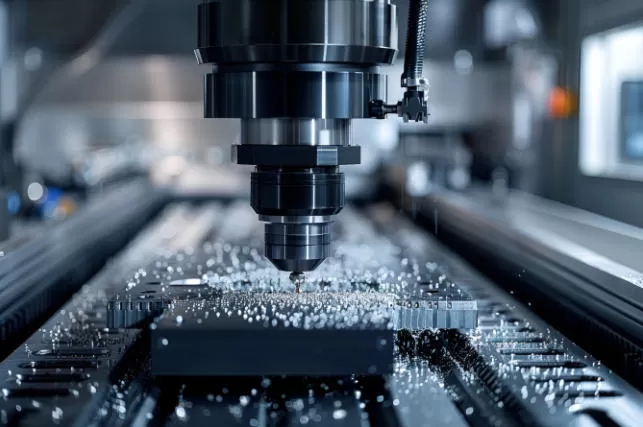
The CNC system is the "brain" of the machine. A system freeze or black screen is typically triggered by a hardware watchdog timer circuit, corrupted system software logic, or loss of critical parameters. An alarm code display is the system's self-diagnosis function identifying a specific anomaly.
In-Depth Diagnosis & Solutions:
Hardware Level: First, verify the stability of the power supply (DC 5V/24V) to the NCU or PCU unit. Voltage fluctuations can cause erratic CPU operation. If the fault persists after a reboot, check the voltage of the motherboard battery; low voltage can lead to parameter loss in the SRAM (Static Random Access Memory).
Software & Parameters: For system startup failures, consider a "total clear" or initialization (e.g., an NCK reset on Siemens controls or PSRAM clear on FANUC). To troubleshoot false alarms, utilize the PLC (Programmable Logic Controller) ladder diagram monitoring function. Tracing the signal state (via I/O interface status tables) allows for rapid localization of faulty external input sensors or actuators.
Industry Insight: Modern high-end CNC systems feature integrated remote diagnostics. By monitoring system logs in real time via the Industrial Internet of Things (IIoT), technicians can perform remote parameter adjustments and patch vulnerabilities.
Failure Mechanism:
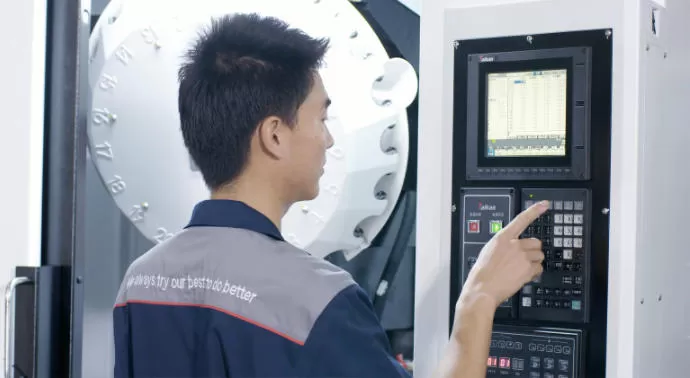
As the machine's power core, abnormal spindle vibration often stems from mechanical imbalance (e.g., poor dynamic balance of the tool/holder), bearing wear (leading to increased clearance), or loss of tension in drive components (belts/gears). Unstable speed is typically related to incorrect speed loop parameters in the servo drive or feedback signal interference from the encoder.
In-Depth Diagnosis & Solutions:
Mechanical Diagnosis: Use a vibration analyzer to detect characteristic frequencies of the spindle bearings, distinguishing between poor lubrication (high-frequency vibration) and bearing race fatigue (low-frequency impacts). For belt drives, check the tension against the manufacturer's specifications using a tension meter.
Electrical Diagnosis: For speed fluctuations, focus on the encoder feedback cable. Ensure it uses twisted-pair shielding and has a dedicated ground to prevent interference. Perform an "Auto-tuning" function on the drive to optimize the PID parameters of the speed and current loops, perfectly matching the motor characteristics to the mechanical load.
Maintenance Criticality: For motorized spindles, strictly adhere to the specified lubricant type and re-lubrication intervals. Over-greasing can be as detrimental as under-greasing, leading to poor heat dissipation and seizure.
Failure Mechanism:
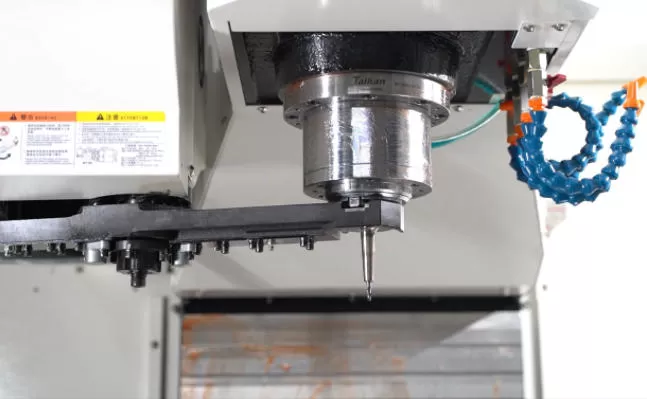
Axis "stick-slip" (jerky motion) is fundamentally caused by a significant difference between static and dynamic friction coefficients or insufficient servo system rigidity for low-speed stability. Positioning inaccuracy is usually linked to wear in the mechanical transmission (e.g., reduced ball screw preload, loose couplings) or an improperly set following error in the servo system.
In-Depth Diagnosis & Solutions:
Mechanical Compensation: Regularly verify positioning accuracy and repeatability using a laser interferometer. Compensate for the reversal dead zone by entering measured values via the CNC's "Backlash Compensation" parameter. If the backlash is excessive (typically > 0.02-0.03 mm), inspect the ball screw nut preload or replace worn components.
Servo Optimization: In case of over-travel alarms, beyond manual recovery, check the soft limit parameters (e.g., FANUC parameters 1320/1321) and the reliability of the hardware limit switches.
Precision Maintenance: On heavy-duty machines, verify the functionality of the guideway lubrication system. Lubrication failure directly destroys the oil film on the ways, leading to stick-slip and premature wear.
Failure Mechanism:
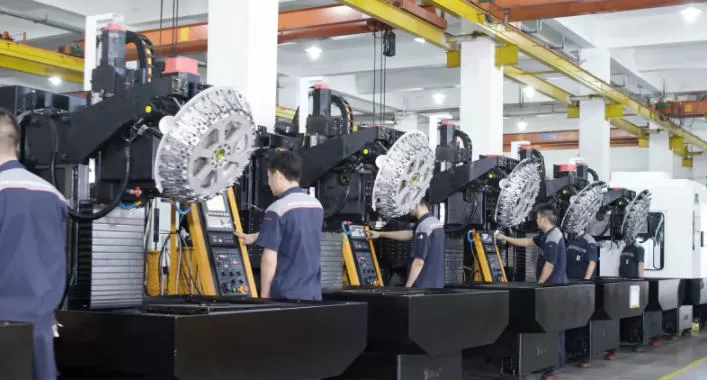
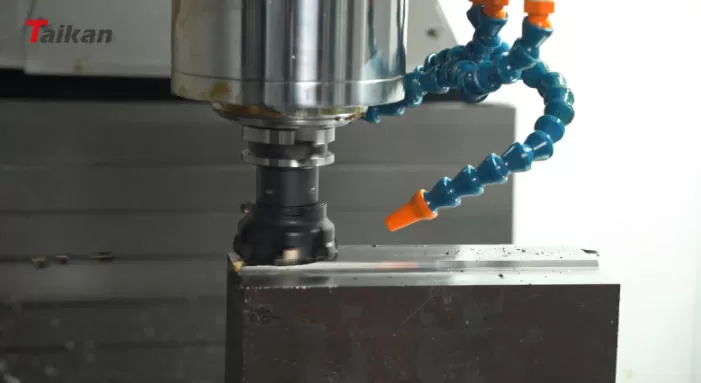
Automatic Tool Changer (ATC) faults in CNC machine tools often stem from a complex interplay of mechanical and electrical issues. Failure to clamp the tool typically results from fatigued disc springs in the drawbar mechanism or an insufficient stroke of the unclamp cylinder. Meanwhile, jamming during a tool change is caused by incorrect interlock signals that disrupt sequential operations such as pot tilting and the manipulator arm’s rotation or extension..
In-Depth Diagnosis & Solutions:
Pneumatic/Hydraulic Logic: Check the pressure switch in the pneumatic system for proper activation. Inspect hydraulic solenoid valve spools for sticking. For hydraulic drawbars, check fluid levels and seals for internal leakage that can reduce clamping force.
Signal Interlocking: Use the PLC status display to monitor the tool change sequence. In the event of a tool drop, prioritize checking the manipulator arm position sensors (e.g., magnetic or proximity switches) for signal corruption or delay. Verify that the spindle orientation is accurate and consistent.
Precision Alignment: The alignment between the manipulator arm, the tool pot, and the spindle must be maintained within micron-level tolerances. Use a master tool or a setting gauge for precise arm origin calibration.
Failure Mechanism:
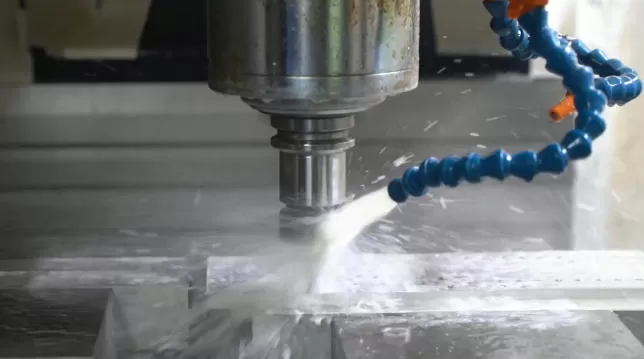
Cooling system failures often originate from "clogging." Swarf (chips) accumulating in the coolant can block lines or damage the pump impeller. Motor overload trips are usually due to a seized pump or a phase loss in the power supply.
In-Depth Diagnosis & Solutions:
Electrical Check: Measure the three-phase resistance of the coolant pump motor for balance and check insulation resistance. For a non-starting pump, besides checking the main power, ensure the thermal overload relay hasn't tripped and needs resetting.
Fluid Management: The primary step is cleaning the coolant tank and replacing/cleaning filters. For line leaks, determine if they are due to loose fittings or hose degradation from coolant corrosion. Implementing level switches and flow sensors provides real-time monitoring to prevent workpiece burn-out from coolant starvation.
Failure Mechanism:
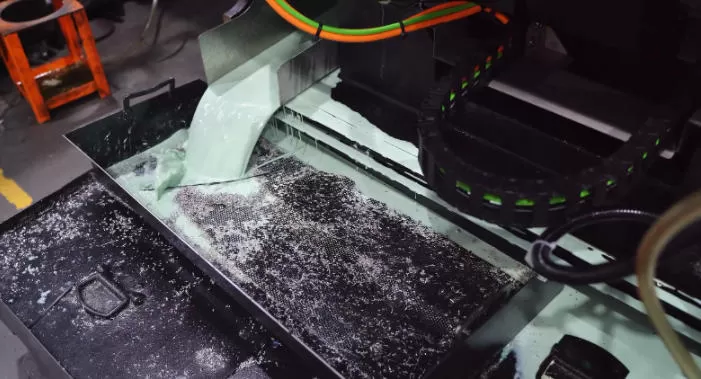
Chip conveyors (typically hinge-belt or screw type) fail when the motor doesn't run (power/electrical issue) or when chips fail to discharge efficiently (mechanical overload). This overload is often due to excessively high cutting volume or the chain derailing and jamming due to improper tension.
In-Depth Diagnosis & Solutions:
Overload Handling: When a conveyor alarm occurs, first clear any accumulated chips from the inlet and outlet. Manually rotate the motor shaft (or coupling) to determine if the mechanism is mechanically seized.
Mechanical Maintenance: Inspect the hinge belt for wear and adjust the chain tension according to the manual (e.g., some cnc vmc machines specify a belt slack of 6–10 mm). Chronic overloading can blow the drive motor's fuse or damage the torque limiter.
Automation Integration: Program the conveyor to run intermittently in sync with the machining cycle, preventing massive chip surges that can overwhelm the system.
Failure Mechanism:
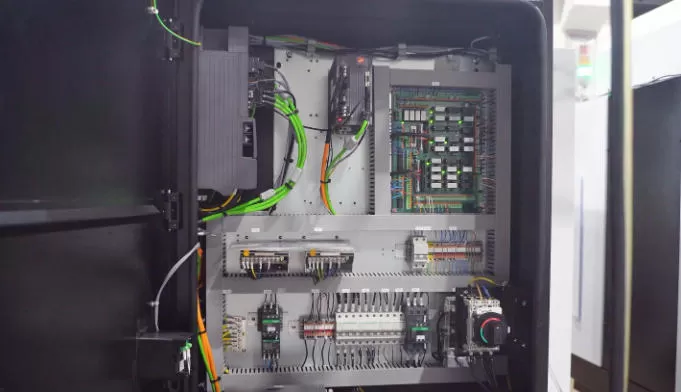
Electrical faults are often the most random. Pitted contactor contacts lead to intermittent circuits, while a failing relay coil can render a control circuit dead. Beyond component failure, Electromagnetic Interference (EMI) is a major culprit, frequently corrupting encoder signals and causing axis "stuttering" or position drift.
In-Depth Diagnosis & Solutions:
Component-Level Checks: Use a multimeter to measure voltage drop across contacts to check for excessive resistance. For switch-mode power supplies, measure the output voltage for excessive ripple.
Noise Countermeasures: Strictly adhere to wiring practices that separate signal cables from power cables. For drives (VFDs) causing interference, install EMC filters on the power input and ensure the machine's ground resistance is less than 1 Ω.
Predictive Monitoring: Using infrared thermography to scan the electrical cabinet can effectively identify "hot spots" caused by poor connections or failing components before they cause a shutdown.
Failure Mechanism:
Failure to meet part tolerance is a complex, multi-faceted issue. It can stem from loss of geometric accuracy (e.g., changes in machine level, worn guideway straightness), process system deflection (tool/workpiece push-off), or thermal errors (spindle growth, ball screw thermal expansion).
In-Depth Diagnosis & Solutions:
Geometric Calibration: Use electronic levels and laser interferometers to verify fundamental geometric accuracies (e.g., table flatness, spindle perpendicularity to axes). If out of tolerance, corrective actions range from precision scraping to adjusting leveling mounts.
Thermal Error Compensation: For dimensional drift during long production runs, implement thermal error compensation. This involves placing temperature sensors (e.g., PT100 RTDs) at key points, creating a thermal deformation model (e.g., using neural networks), and having the CNC system compensate axis motion in real-time.
Process Optimization: Check for tool wear (which can be monitored via spindle load), and verify that cutting parameters (speeds, feeds, depth of cut) are optimal to prevent process-induced vibration or deflection.
The landscape of CNC machine fault diagnosis is firmly entering a new, data-driven era. By combining a deep understanding of physical mechanisms with advanced signal processing techniques (such as vibration analysis and motor current signature analysis), engineers can not only resolve existing issues faster but also predict and prevent future ones through continuous condition monitoring. Mastering the diagnostic logic outlined above is a key step in the evolution from a "maintenance technician" to a "machine tool health manager."


