What is 5-Axis and 7-Axis CNC Machining?
Views: 0 Author: Site Editor Publish Time: 2026-08-06 Origin: Site
- 1. Introduction: The Evolution of CNC Machining
- 2. What is 5-Axis CNC Machining?
- 3. How Does 5-Axis CNC Machining Work?
- 4. What is 7-Axis CNC Machining?
- 5. Advantages of 7-Axis CNC Machining
- 6. 5-Axis vs 7-Axis CNC Machining: What is the Difference?
- 7. Applications of 5-Axis and 7-Axis CNC Machining
- 8. Taikan Machine: Advanced CNC Solutions for Global Manufacturing
- 9. Choose Advanced Multi-Axis CNC Technology with Taikan Machine
Introduction: The Evolution of CNC Machining
Modern manufacturing is moving toward higher precision, greater complexity, and shorter production cycles. As industries such as aerospace, automotive, medical, energy, and high-end equipment continue to demand more sophisticated components, traditional 3-axis machining often cannot meet the requirements for complex geometries and tight tolerances.
This is where multi-axis CNC machining technology becomes essential.
Among advanced machining solutions, 5-axis CNC machining and 7-axis CNC machining represent two important levels of high-performance manufacturing technology. By adding rotary movements to traditional linear axes, these machines provide greater flexibility, improved machining efficiency, and the ability to produce complex parts in fewer setups.
As a professional CNC machine tool manufacturer, Taikan Machine is committed to developing advanced machining solutions to help global manufacturers achieve greater accuracy, improved productivity, and more efficient production processes.
What is 5-Axis CNC Machining?
A 5-axis CNC machine is a machining center that controls five independent axes simultaneously. Unlike traditional 3-axis machining, which moves along the X, Y, and Z linear axes only, 5-axis machining adds two rotary axes to control the cutting tool or workpiece from multiple directions.
The five axes typically include:
X-axis: Linear movement from left to right
Y-axis: Linear movement from front to back
Z-axis: Vertical movement of the spindle
A/B/C-axis: Rotary movement around the corresponding linear axis
The specific rotary configuration depends on the machine structure, such as A+B, A+C, or B+C axis combinations.
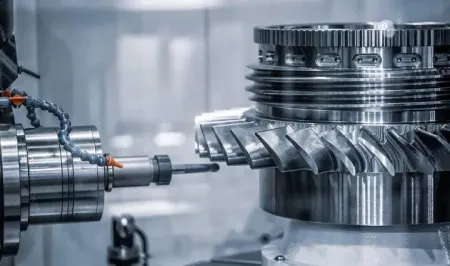
By controlling these five axes simultaneously, a 5-axis CNC machining center can position the cutting tool at the optimal angle, allowing manufacturers to machine complex surfaces, deep cavities, and multi-sided components with high precision.
How Does 5-Axis CNC Machining Work?
The key advantage of 5-axis CNC machining is the ability to approach a workpiece from multiple angles without repeatedly repositioning it.
When using a conventional 3 axis machining center, complex parts often require several setups. Each additional setup increases preparation time and may introduce positioning errors.
A 5-axis machining center reduces these limitations by allowing:
Single Setup Machining
Complex components can often be completed in one clamping process, reducing fixture changes and improving machining consistency.
Better Tool Accessibility
The rotary axes allow the cutting tool to reach difficult areas, including angled surfaces, curved geometries, and complex contours.
Improved Surface Quality
Maintaining an optimized tool angle helps achieve smoother surface finishes and more stable cutting conditions.
Higher Machining Efficiency
Fewer setups and shorter machining processes contribute to reduced production time and improved overall efficiency.
For industries requiring precision components with complicated geometries, 5-axis CNC machining provides a significant advantage over conventional machining methods.
What is 7-Axis CNC Machining?
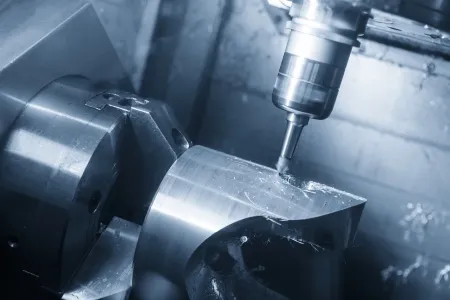
A 7-axis CNC machine expands multi-axis machining capability by adding two additional controlled axes compared with a standard 5-axis configuration.
While 5-axis machining typically combines three linear axes with two rotary axes, 7-axis machining introduces additional movements to provide even greater flexibility and machining freedom.
A typical 7-axis CNC system may include:
X, Y, Z linear axes
Multiple rotary axes
Additional auxiliary movement axes depending on machine structure
The exact axis configuration varies according to machine design and application requirements.
The purpose of 7-axis CNC machining is to achieve more complex motion control, allowing manufacturers to process highly complicated components with fewer manual operations.
Advantages of 7-Axis CNC Machining
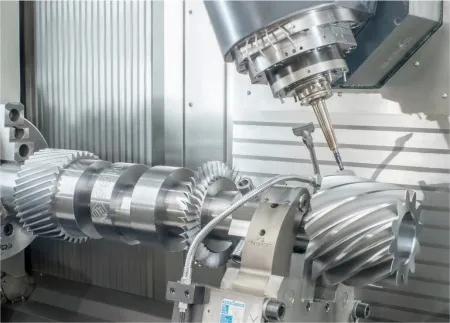
With additional axis capability, 7-axis machining provides several benefits for advanced manufacturing applications.
Maximum Machining Flexibility
The increased number of controlled movements allows the machine to approach parts from more directions, making it suitable for extremely complex geometries.
Reduced Setup Operations
More machining operations can be completed within a single process, helping reduce fixture changes and improve production efficiency.
Complex Part Capability
7-axis CNC machining is especially suitable for components that require multiple machining angles, compound surfaces, or integrated manufacturing processes.
Higher Production Efficiency
By combining multiple machining operations into one platform, manufacturers can simplify production workflows and improve overall productivity.
5-Axis vs 7-Axis CNC Machining: What is the Difference?
Although both technologies belong to advanced multi-axis CNC machining, they serve different manufacturing need
Feature | 5-Axis CNC Machining | 7-Axis CNC Machining |
Axis Configuration | 3 linear axes + 2 rotary axes | 3 linear axes + additional controlled axes |
Machining Capability | Complex surfaces and multi-angle machining | More advanced multi-directional machining |
Application Focus | Aerospace parts, automotive components, medical parts, molds | Highly complex components and specialized manufacturing |
Production Flexibility | High | Extremely high |
Machine Complexity | Advanced | More advanced |
For most high-precision machining applications, 5-axis CNC machining provides an excellent balance between flexibility, accuracy, and cost efficiency.
For specialized manufacturing environments requiring maximum motion freedom, 7-axis CNC machining offers further possibilities.
Applications of 5-Axis and 7-Axis CNC Machining
Advanced multi-axis machining technology is widely used across industries where precision and complexity are critical.
Aerospace Industry
Aircraft structural components, turbine parts, and complex aerodynamic surfaces require high accuracy and excellent surface quality.
Automotive Industry
5-axis machining is widely used for high-performance automotive components, lightweight structural parts, and precision molds.
Medical Industry
Medical implants and surgical components often require complex geometries and strict dimensional accuracy.
Mold and Die Manufacturing
Multi-axis machining enables efficient production of complex mold surfaces with superior finishing quality.
Energy Equipment
Large and complex components for energy applications benefit from advanced multi-axis machining capabilities.
Taikan Machine: Advanced CNC Solutions for Global Manufacturing
As a listed CNC machine tool manufacturer, Taikan Machine focuses on providing high-performance machining solutions for global customers.
With strong expertise in CNC technology development, precision manufacturing, and application engineering, Taikan Machine delivers machining centers designed for:
High rigidity machining structures
High-speed and high-precision processing
Stable long-term operation
Complex part manufacturing capability
Flexible solutions for different industries
From 5-axis machining centers to advanced multi-axis CNC solutions, Taikan Machine continues to support manufacturers worldwide in achieving higher machining standards and production efficiency.
Choose Advanced Multi-Axis CNC Technology with Taikan Machine
As manufacturing requirements continue to evolve, advanced CNC technology has become essential for achieving higher productivity and precision.
Whether your production requires 5-axis CNC machining for complex components or advanced 7-axis CNC machining for specialized applications, Taikan Machine provides reliable solutions designed for modern manufacturing challenges.
Contact Taikan Machine today to explore advanced CNC machining solutions for your industry.


