Taikan Robot Structural Parts Machining Solutions
Views: 0 Author: Site Editor Publish Time: 2026-07-31 Origin: Site
- 1. High-Precision CNC Machine Tools for Humanoid Robots and Quadruped Robots
- 2. Manufacturing Challenges in Robot Structural Parts
- 2.1 High-Mix, Low-Volume Production
- 2.2 Tight Dimensional Accuracy
- 2.3 Complex Multi-Face Geometry
- 2.4 Thin-Wall Deformation
- 2.5 Process Planning Gap
- 2.6 Five-Axis Is Not Always Necessary
- 3. Four Major Categories of Robot Structural Parts
- 3.1 1. Cavity-Type Components
- 3.2 2. Dexterous Hand Components
- 3.3 3. Multi-Angle Freeform Structural Components
- 3.4 4. Shaft, Pin and Disc Components
- 4. CNC Machining Strategy for Different Production Stages
- 4.1 Prototype and Small-Batch Production
- 4.2 High-Volume Production
- 5. Taikan Machine Solutions for Robot Manufacturing
- 5.1 High-Speed Tapping Centers
- 5.2 Vertical Machining Centers
- 5.3 5-Axis Tapping Machining Centers
- 5.4 5-Axis Vertical Machining Centers
- 6. Additional Manufacturing Solutions
- 7. Why Manufacturers Choose Taikan Machine
- 8. Explore Taikan Machine Robot Manufacturing Solutions
High-Precision CNC Machine Tools for Humanoid Robots and Quadruped Robots
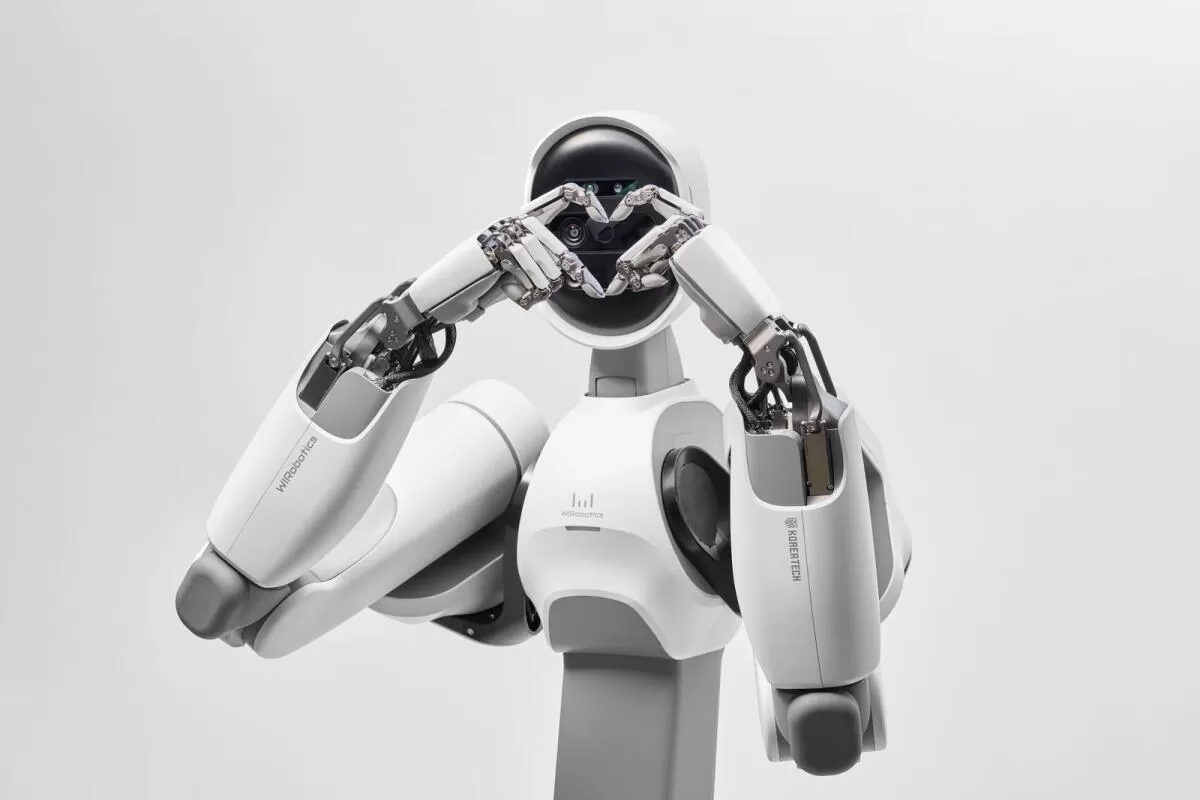
Humanoid robots and quadruped robots are entering commercial production faster than ever. As manufacturers move from prototypes to volume production, machining consistency and production efficiency become as important as product design.
A typical humanoid robot includes hundreds of precision robot structural parts. These range from hip frames and thigh housings to finger joints, center shafts, flanges, and other critical components. Most robot structural parts are machined from 6061 or 7075 aluminum alloys, while selected transmission components are made from 40Cr or 45# steel.
For manufacturers, achieving micron-level accuracy while maintaining production efficiency has become one of the biggest challenges.
As a leading CNC machine tool manufacturer, Taikan Machine supports robot manufacturers with machining solutions for every stage of production—from prototype development to mass production. Our solutions help improve machining quality, reduce setup time, and increase manufacturing efficiency.
Manufacturing Challenges in Robot Structural Parts
Robot structural parts are markedly different from traditional industrial components. They combine lightweight designs, tight tolerances, and complex geometries in a single workpiece, making machining much more demanding.
High-Mix, Low-Volume Production
The robot industry is still evolving rapidly. Most projects involve engineering validation, pilot production, or continuous design iterations. Frequent model updates require flexible cnc machining center capable of handling numerous part variations while minimizing programming time.
Tight Dimensional Accuracy
Most structural parts require machining accuracy within 0.02 mm. Critical joint components demand tolerances as tight as ±0.005 mm. Every setup must maintain that accuracy to ensure reliable assembly. Maintaining this level of precision throughout multiple machining operations is essential for final assembly performance.
Complex Multi-Face Geometry
Components such as hip frames feature multiple mounting holes, locating surfaces, deep pockets, lightweight cavities, and compound angles.
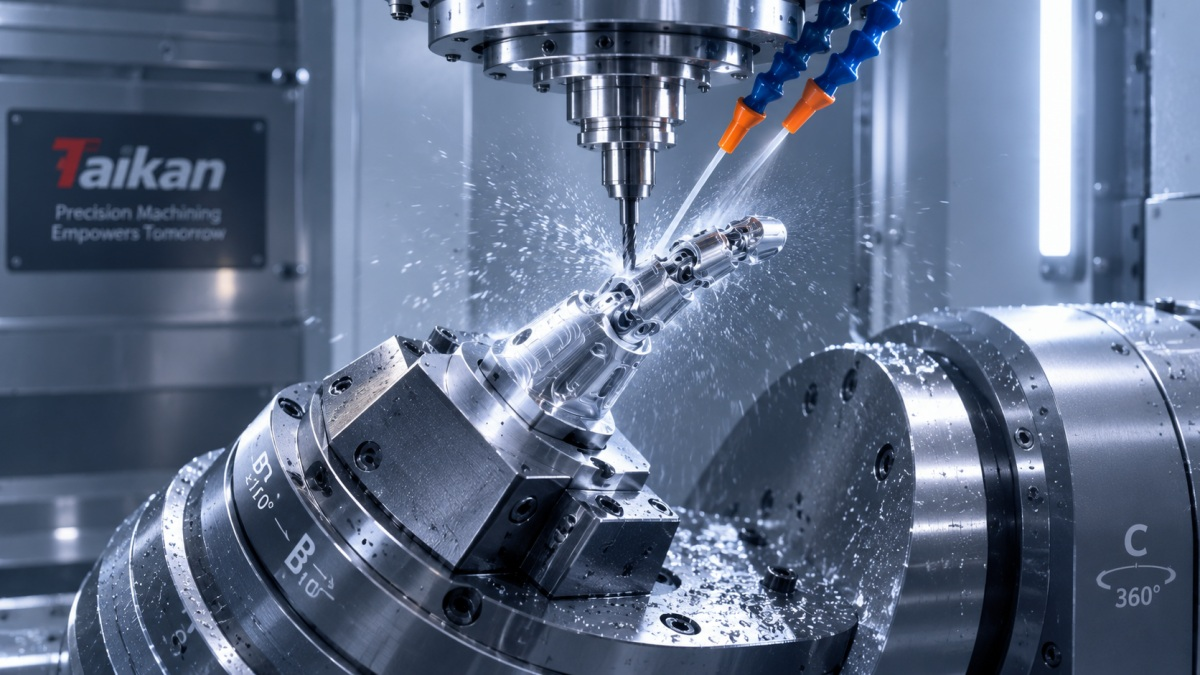
Traditional 3-axis machining often requires multiple setups. Each repositioning may introduce 0.005–0.008 mm of deviation. After several setups, the accumulated error can exceed 0.03 mm.
Thin-Wall Deformation
Many aluminum alloy structural frames incorporate wall thicknesses below 1 mm to reduce weight. Maintaining rigidity during cutting is critical to minimizing chatter, tool deflection, and dimensional distortion.
Process Planning Gap
Since the humanoid robot industry remains in an early development stage, manufacturing specifications are still evolving. In some cases, unnecessarily conservative design requirements increase machining costs without delivering measurable performance improvements.
Five-Axis Is Not Always Necessary
A common misconception is that all complex robot components require simultaneous 5-axis machining. In reality, 3+2 machining configurations already meet the needs of most robot structural-part applications, offering an excellent balance of flexibility, productivity, and investment.
Four Major Categories of Robot Structural Parts
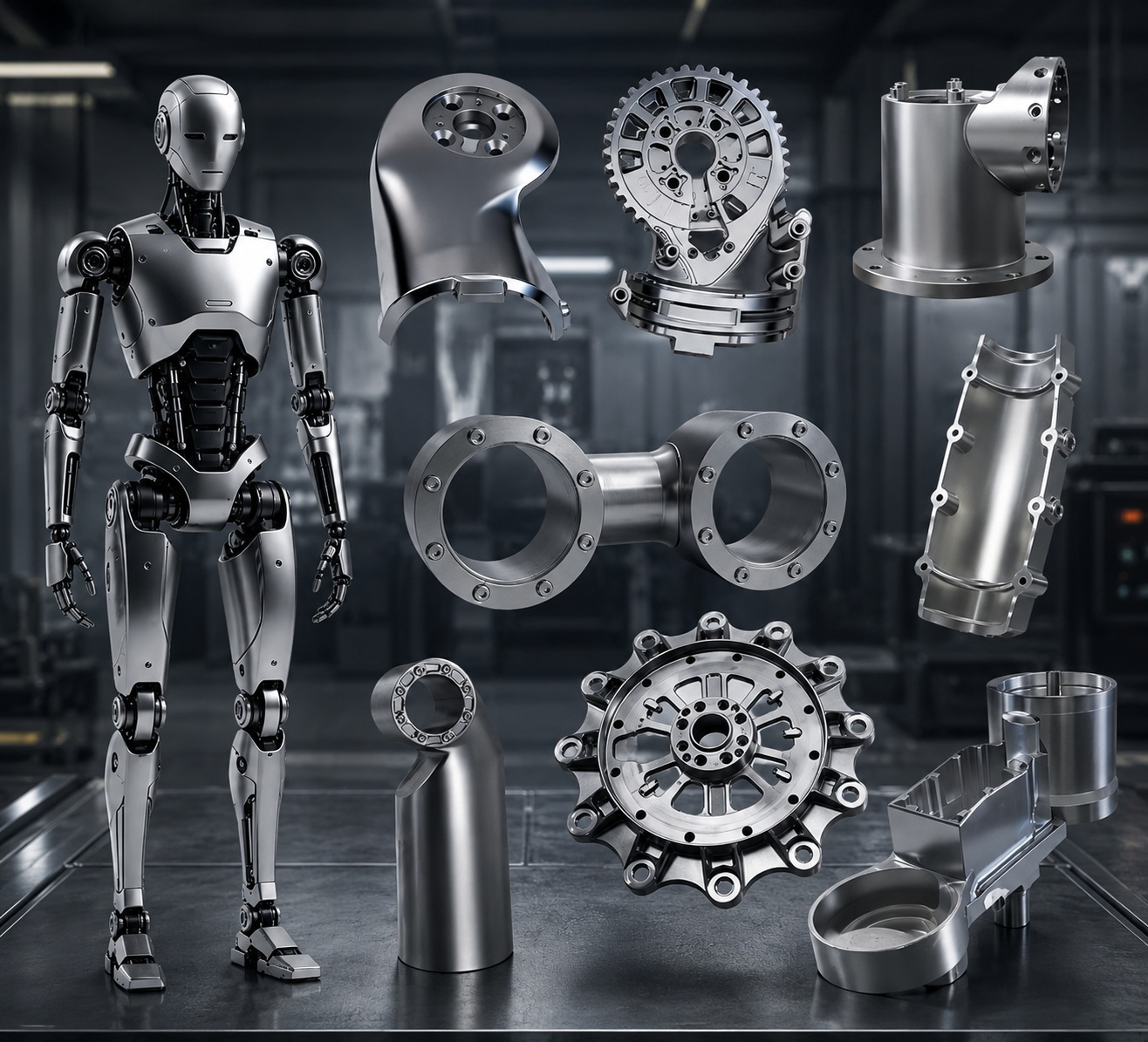
Robot structural components can generally be classified into four machining categories.
1. Cavity-Type Components
Typical parts include:
Clamps
Flanges
Mounting plates
Support plates
Heat dissipation covers
Connecting links
These components primarily involve planar milling, drilling, tapping, and pocket machining.
2. Dexterous Hand Components
Including:
Fingertips
Finger bases
End caps
Palm housings
Although relatively small, these components contain highly intricate geometries and require excellent machining stability.
3. Multi-Angle Freeform Structural Components
Typical examples include:
Hip frames
Lower leg structures
Waist frames
These parts feature complex freeform surfaces, multiple angular features, and intersecting holes that benefit from multi-axis machining.
4. Shaft, Pin and Disc Components
Including:
Gear center shafts
Bushings
Flanges
Precision pins
These rotational parts are ideally suited for a cnc swiss type automatic lathe or turn-mill machining, especially when producing small-diameter shafts, pins, bushings, and sleeves in consistent batches.
Together, these four categories cover almost every structural part of a humanoid robot. They range from the main body frame to precision finger assemblies.
CNC Machining Strategy for Different Production Stages
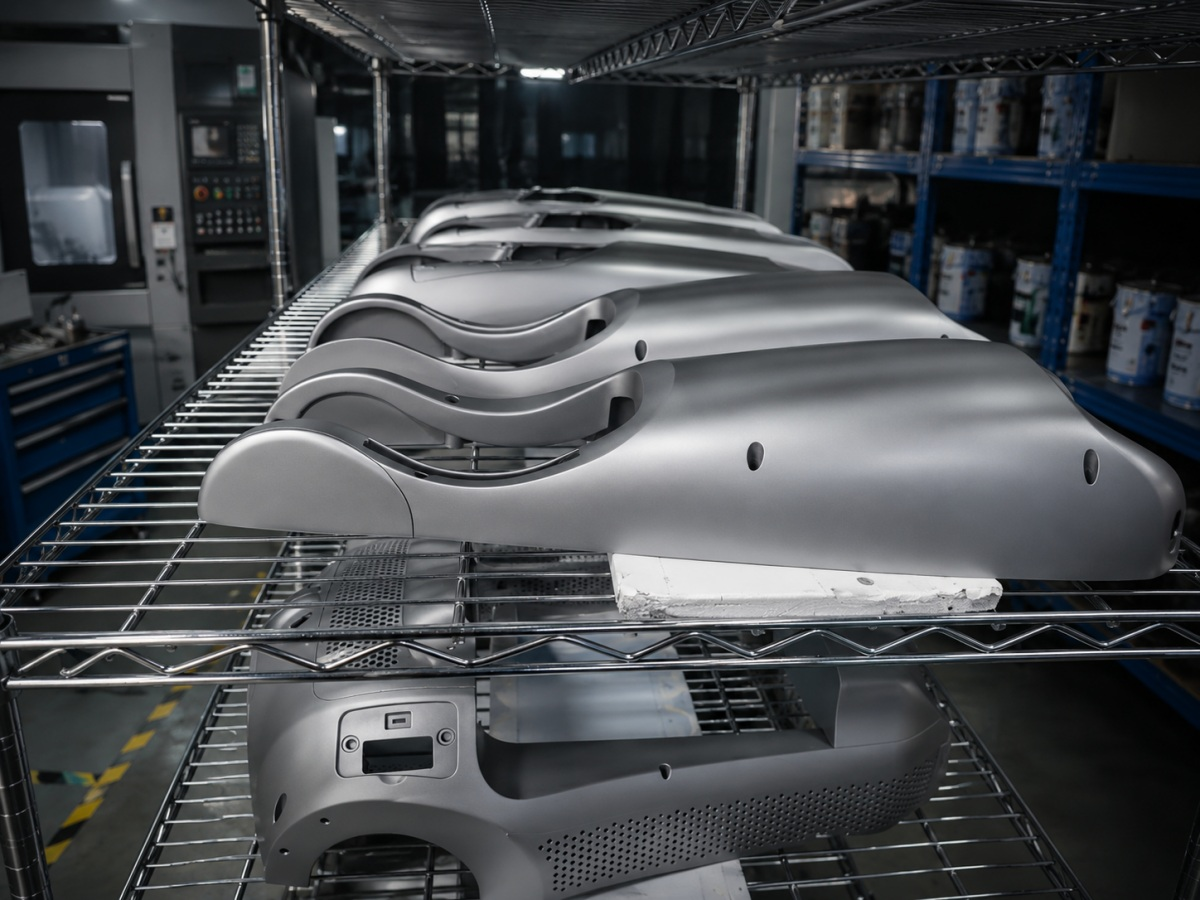
Selecting the right machining solution depends not only on part geometry but also on production volume.
Type | Proportion of part quantity | Proportion of processing time | Typical Applications |
3-Axis Machining Center | 50.3% | 43.4% | Flat and bored components such as flanges, end caps, and housings |
3+2 / 5-Axis Machining Center | 22.7% | 43.2% | Complex components such as hip joints, shoulder housings, and wrist assemblies |
Turning / Swiss-type Lathe | 20.8% | 5% | Rotational parts such as shafts, pins, and sleeves |
5-Axis Simultaneous Machining | 2.4% | 6.5% | Components with curved surfaces such as head housings and upper arm sections |
Prototype and Small-Batch Production
During product development, machining flexibility is the highest priority.
Recommended solutions include:
Cavity-type parts: T-500S Tapping Center with touch probe for in-machine inspection
Complex freeform components: T-500U 5-Axis Tapping Machining Center for complete multi-face machining in a single setup
Medium-sized structural components: T-V856H Vertical Machining Center equipped with a 4th-axis or 3+2 rotary table
High-Volume Production
As robot manufacturing enters large-scale production, machining priorities shift toward cycle time, consistency, and cost efficiency.
Typical production strategies include:
Integrated die-casting blanks with CNC finishing of critical mounting surfaces and precision holes
Three-axis and 3+2 machining centers as the primary production equipment
Swiss-type lathes and turn-mill centers for one-step machining of shafts and pin components
Taikan Machine Solutions for Robot Manufacturing
Taikan Machine offers a complete CNC equipment portfolio covering virtually every machining requirement within the robot manufacturing industry.
High-Speed Tapping Centers
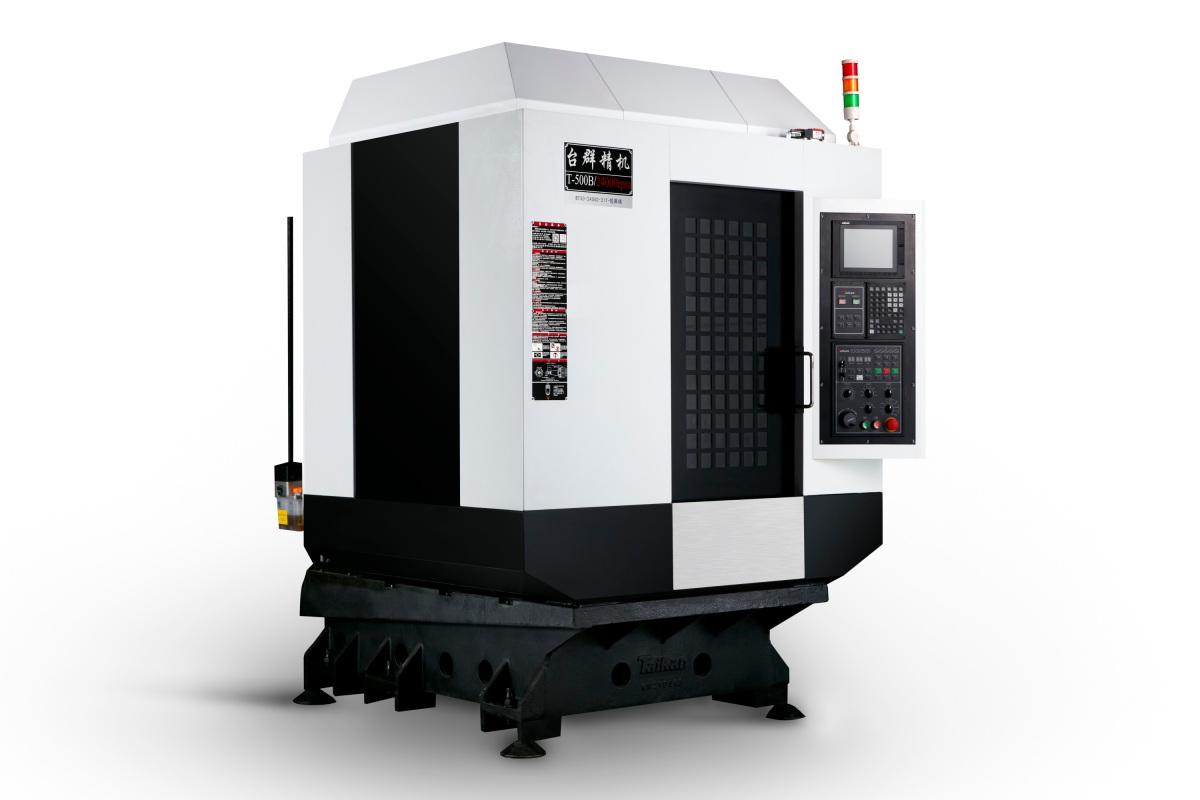
Designed for high-speed production of small and medium precision components.
Key advantages include:
24,000 rpm spindle
1.0-second tool change
Lightweight moving structure
BT30 spindle interface
Optional touch probe for in-machine measurement
Models | Travel(mm) | Tool magazine | Corresponding structural components |
T-500S | 500/400/320 | 21/26T | Joint connectors, battery mounting brackets |
T-600S | 600/390/320 | 21/26T | Medium-load-bearing components, array hole patterns |
T-700S | 700/400/320 | 21T | Medium-load-bearing components, multi-stepped surfaces |
Ideal for high-efficiency production of aluminum robot structural parts.
Vertical Machining Centers
Designed for long-term stability and precision, Taikan vertical machining centers provide the rigidity required for demanding robot structural parts.
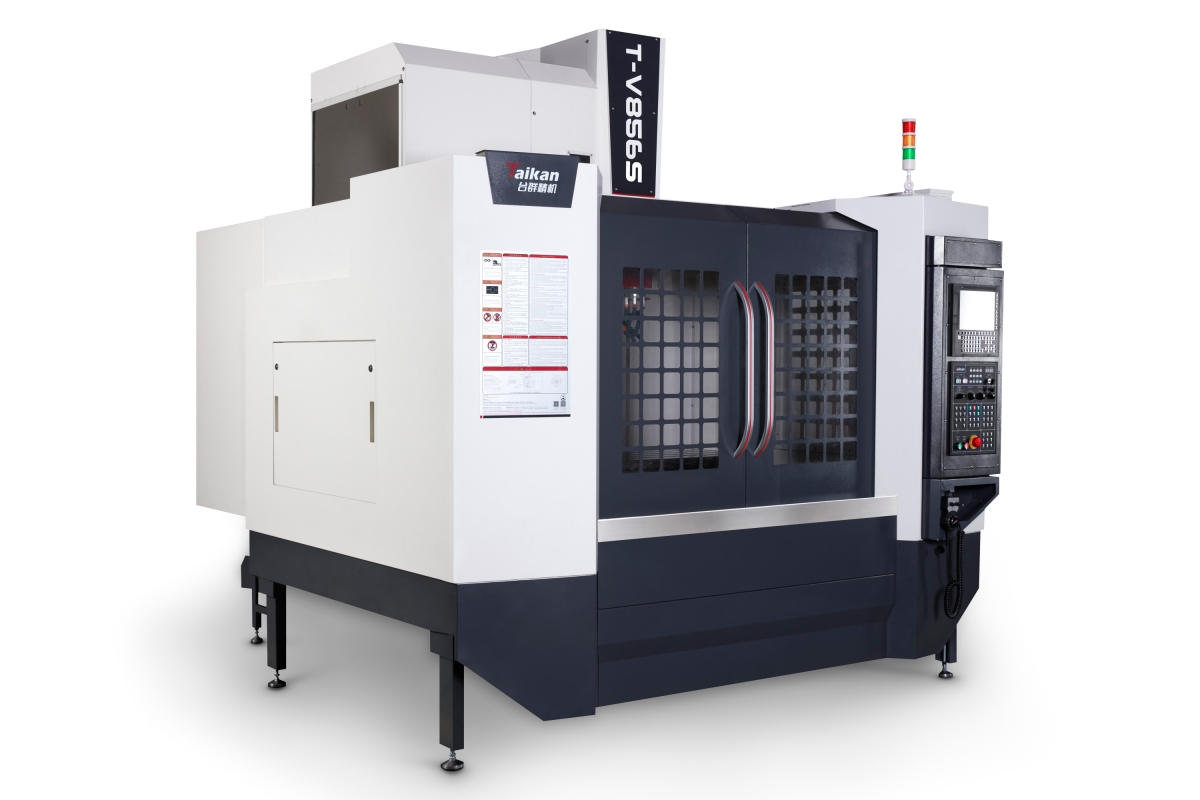
Features include:
BT40 spindle
One-piece cast iron machine structure
C3-grade precision ball screws
The S Series provides an economical machining solution, while the H Series features hollow cooling ball screws for enhanced thermal stability.
When equipped with a 4th-axis or 3+2 rotary table, these machines efficiently process multi-angle structural components.
Models | Travel(mm) | Load | Corresponding structural components |
T-V856S | 800/550/600 | 450kg | Upper/lower leg casings and battery compartment components |
T-V856H | 800/550/600 | 450kg | High-precision load-bearing components |
T-V1165H | 1100/650/600 | 800kg | Large-scale load-bearing components and deep-cavity milling |
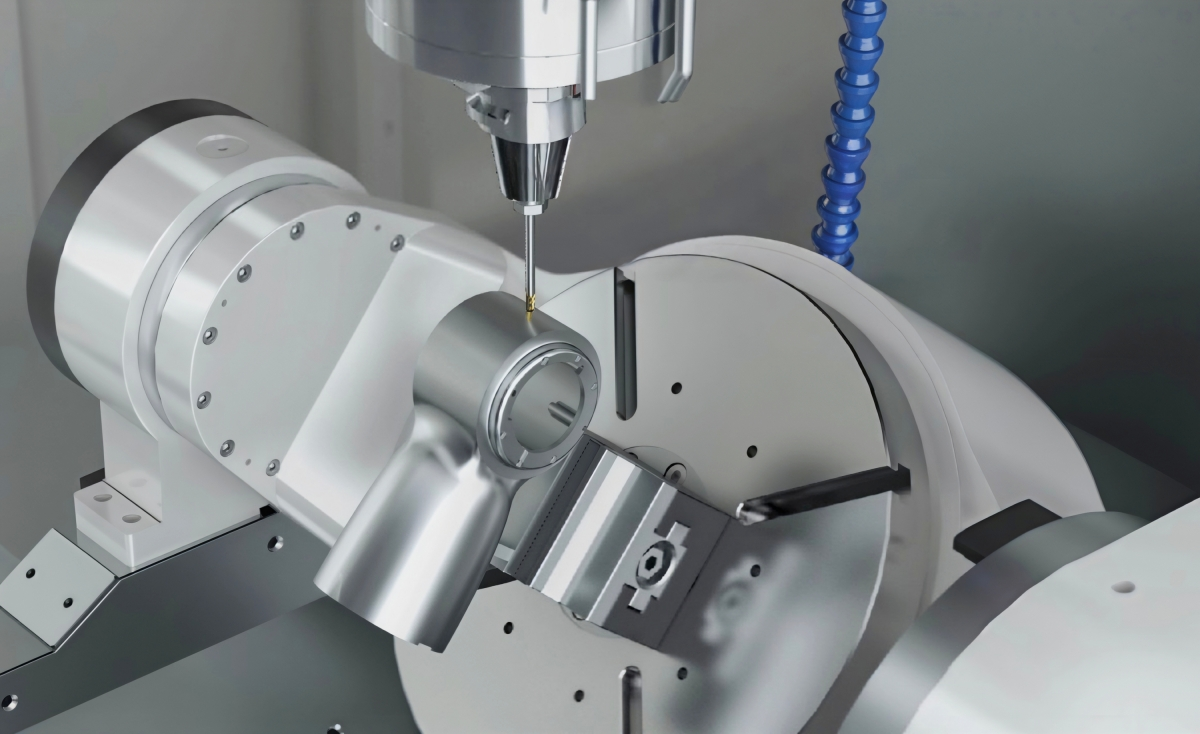
5-Axis Tapping Machining Centers
Designed specifically for complex multi-face machining.
Key features include:
DD direct-drive A/C rotary table
Large-diameter C3-grade precision ball screws
48 m/min rapid traverse
Full simultaneous 5-axis configuration
Ideal for complex robot structural parts requiring multiple machining orientations.
5-Axis Vertical Machining Centers
For larger structural components and demanding materials, a 5-axis vertical machining center can complete multiple surfaces, angled holes, deep cavities, and complex contours in fewer setups.
Highlights include:
Dual direct-drive 5-axis rotary table
BT40 high-power spindle with 22.5 kW peak output
Roller linear guideways for high rigidity
Suitable for one-setup machining of larger multi-face robot components while maintaining excellent surface quality and dimensional accuracy.
Additional Manufacturing Solutions
Beyond standard machining centers, Taikan Machine also provides specialized equipment for diverse robot manufacturing applications.
These include:
High-end gantry and moving-column 5-axis machining centers for larger workpieces with machining capacities up to Ø650–Ø1000 mm
Profile machining centers for long-frame structures and base components
Multi-spindle, multi-channel machining systems for high-volume production
CNC lathes, Swiss-type lathes, and turn-mill centers for shafts, bushings, flanges, and other rotational components
Why Manufacturers Choose Taikan Machine
Robot manufacturing demands more than precision machining. It requires the right equipment, proven application expertise, and reliable long-term support.
Taikan Machine helps manufacturers meet those demands with complete CNC machining solutions for robot structural parts. From prototype development to mass production, our solutions improve machining accuracy, reduce setup time, and increase production efficiency.
Backed by more than 20 years of CNC machine tool manufacturing experience, five production bases, over 785,000 m² of manufacturing facilities, and an annual production capacity of 32,000 CNC machine tools, Taikan Machine is ready to support robot manufacturers around the world.
Explore Taikan Machine Robot Manufacturing Solutions
Looking for the right CNC solution for robot structural parts?
Discover how Taikan Machine can help improve machining efficiency, accuracy, and production scalability for your robotics manufacturing projects. Visit our website to explore our complete portfolio of CNC machining solutions for the robotics industry.