Views: 0 Author: Site Editor Publish Time: 2026-07-16 Origin: Site
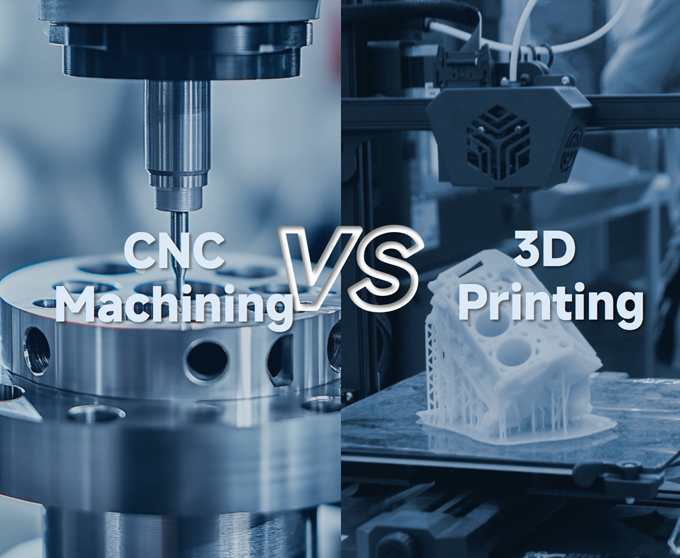
3D printing and CNC machining represent two distinctly different approaches to manufacturing parts. While both technologies are capable of producing highly complex and functional components, they diverge significantly in their underlying processes, material capabilities, and production scalability. For engineers and production managers, understanding these differences is critical to selecting the right manufacturing strategy.
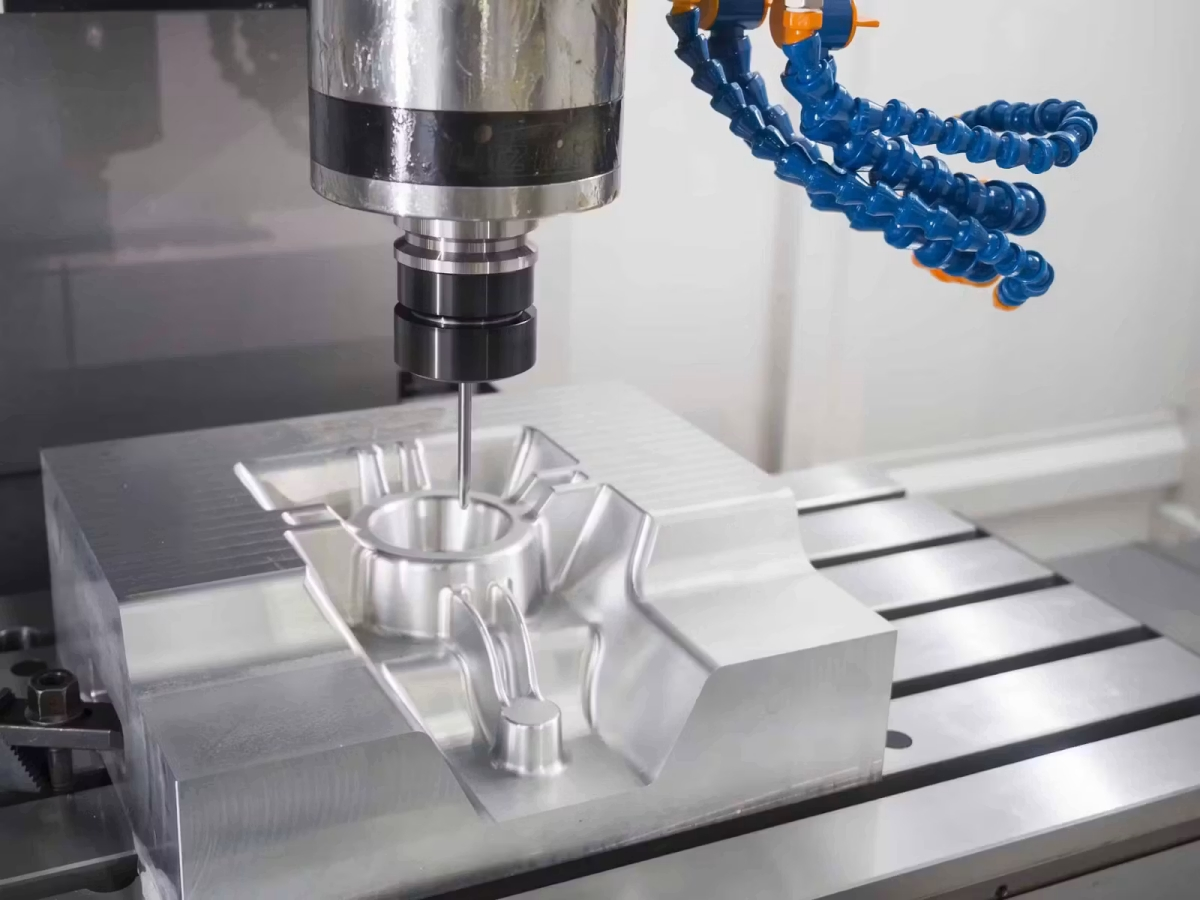
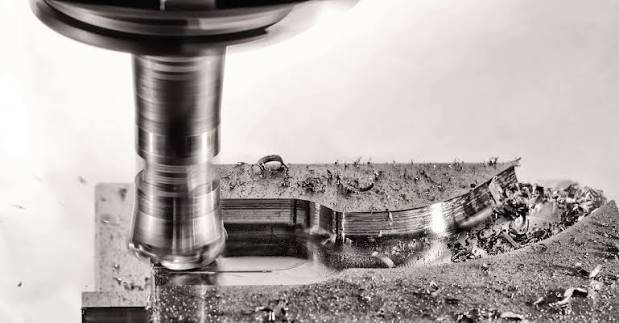
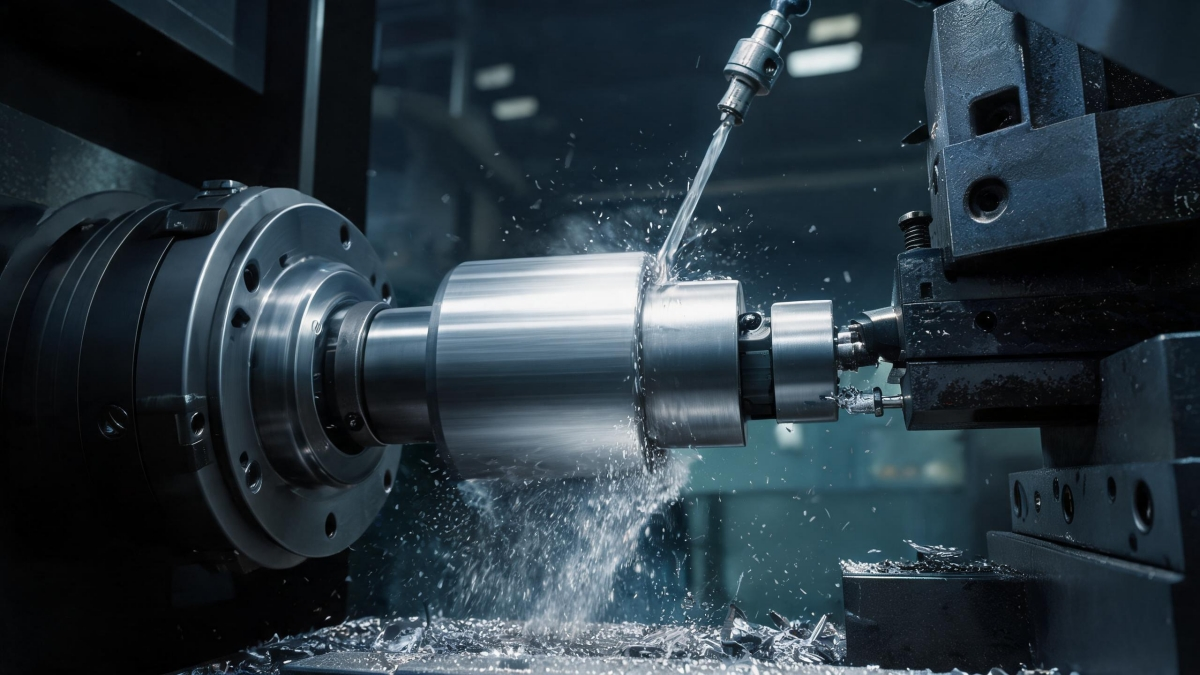
CNC machining is a subtractive manufacturing process. A solid block, bar, or billet of material—aluminum, steel, titanium, engineering plastic—is fixtured in a machine tool. Computer numerical control directs rotating cutting tools to remove material precisely until the final geometry emerges. Turning, milling, drilling, boring, and tapping are all variations on this principle.
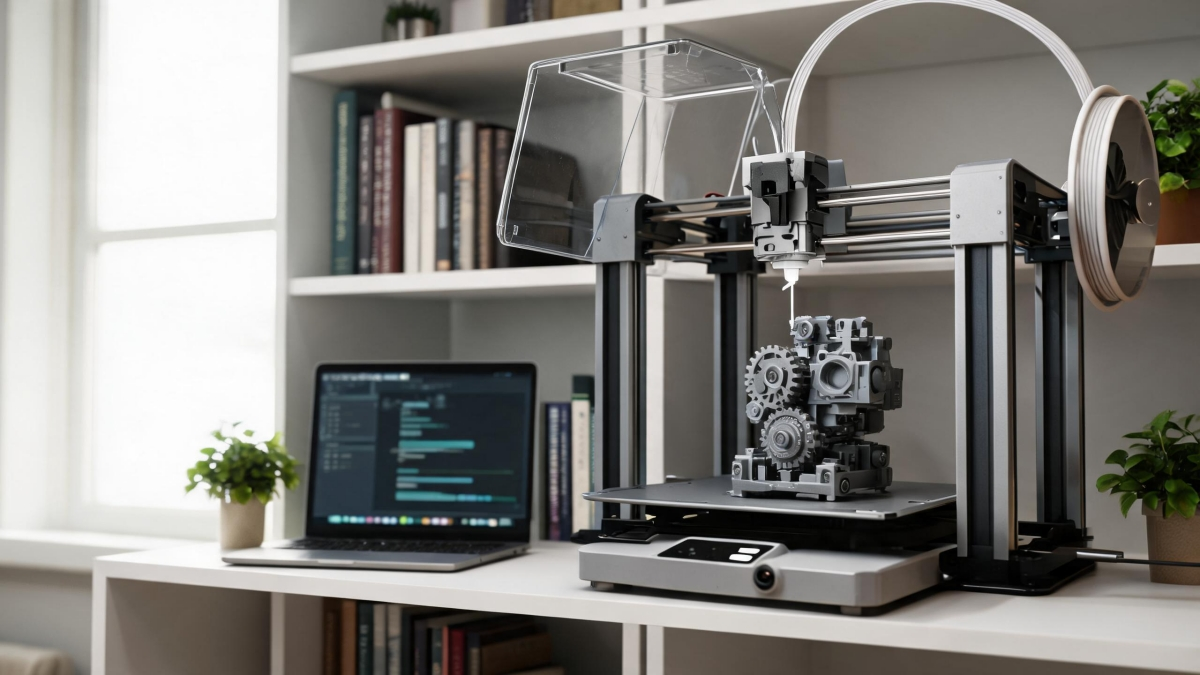
3D printing (additive manufacturing) starts from nothing. Material—filament, resin, or powder—is deposited, fused, or cured layer by layer, typically at thicknesses between 50 and 200 microns, building the part upward from a build platform. Common processes include FDM, SLA, SLS, and DMLS.
While both are indispensable to modern engineering, their primary differences can be summarized as follows:
Core Process: 3D printing builds by adding material layer by layer, whereas CNC machining creates parts by subtracting material from a solid block.
Material Selection: CNC machining supports nearly all industrial-grade metals, rigid plastics, and composites, while 3D printing is generally limited to specific printable thermoplastics, resins, and specialized metal powders.
Precision and Tolerances: CNC machining consistently achieves superior micron-level precision and excellent surface finishes right off the machine.
Geometric Complexity: 3D printing excels at creating internal cavities, lattice structures, and intricate organic shapes that cutting tools cannot easily reach.
Cost Economics: 3D printing is highly cost-effective for single prototypes and low-volume runs, whereas CNC machining offers significantly better economies of scale.
Mass Production: CNC machining is engineered for rapid, continuous, high-volume production, while 3D printing remains primarily a tool for prototyping or low-volume specialty manufacturing.
The fundamental physics of how a part is formed dictates the strengths of each method. Because 3D printing is additive, it generates very little waste material. However, building a part layer by layer inherently introduces microscopic weak points between those layers (anisotropy).
CNC machining, being subtractive, cuts into a solid, continuous block of extruded or cast material (isotropy). This means a CNC-machined part retains the original, uniform structural integrity of the raw material, making it ideal for components that must endure high mechanical stress, heavy loads, or extreme temperatures.
When it comes to material versatility, CNC machining holds a decisive advantage. A CNC machine can mill, turn, and drill virtually any hard material. Whether your application requires aerospace-grade titanium, stainless steel, aluminum, brass, or engineered plastics like PEEK and Delrin, CNC machining can handle it.
While 3D printing materials have advanced significantly—now encompassing strong composites and direct metal laser sintering (DMLS)—the selection is still narrower. Furthermore, 3D printed metals and plastics often require extensive post-processing to achieve the mechanical properties of their machined counterparts.
For industries like aerospace, automotive, and medical device manufacturing, precision is non-negotiable. CNC machining is the industry standard for tight tolerances. High-performance machine tools can hold tolerances as tight as ±0.005 mm (or better) and deliver mirror-like surface finishes in a single setup.
At Taikan Machine, our CNC machining centers are engineered with high-rigidity structures and advanced thermal compensation to ensure this micron-level accuracy remains consistent, whether you are cutting the first part or the ten-thousandth. 3D printing, by contrast, often leaves visible layer lines (stair-stepping) and generally struggles to meet the extreme dimensional accuracy of a precision-machined part without secondary CNC finishing.
This is the area where 3D printing truly shines. Because it builds from the bottom up, 3D printing can effortlessly create complex internal channels, enclosed hollow spaces, and weight-saving lattice structures.
CNC machining is constrained by tool access. If a cutting tool cannot physically reach a surface, it cannot machine it. However, an advanced 5 axis cnc machine center can drastically reduce this limitation by allowing cutting tools to approach a workpiece from virtually any angle and produce highly complex geometries. Purely enclosed internal structures, however, still remain the domain of additive manufacturing.
Cost efficiency between the two technologies depends entirely on the production stage. 3D printing requires zero tooling and minimal setup time. You simply load the CAD file and print. This makes it incredibly cost-effective for creating a single prototype or a batch of five parts.
CNC machining requires programming (CAM), machine setup, and custom workholding (fixtures). This upfront setup cost makes CNC expensive for a single prototype. However, once the machine is set up, the cost per part plummets. For anywhere from 50 to 50,000 parts, CNC machining becomes exponentially more cost-effective than 3D printing.
Manufacturing is ultimately about reliable scalability. 3D printing is comparatively slow; building a part layer by layer can take hours or even days, and scaling up means buying banks of printers.
CNC machining is synonymous with mass production. Modern CNC machines offer blistering spindle speeds, rapid tool changes, and high feed rates. A part that takes 10 hours to 3D print might take 10 minutes to machine. For buyers evaluating a china cnc machine manufacturer, Taikan Machine provides high-speed drilling and tapping centers and versatile vertical machining centers designed to meet the rigorous cycle times and 24/7 reliability demanded by global automated production lines.
The debate isn't truly about which technology is "better"—it is about which technology is right for the job. 3D printing is an unparalleled tool for rapid prototyping, concept verification, and manufacturing impossibly complex internal structures.
However, when a project transitions from a prototype to end-use parts, CNC machining remains the undisputed heavyweight champion. For superior material strength, tight tolerances, pristine surface finishes, and scalable mass production, subtractive manufacturing is the industry backbone. On modern factory floors, the most successful manufacturers don't choose between the two; they use 3D printing to innovate quickly, and they rely on robust CNC equipment like those from Taikan Machine to manufacture at a global scale.
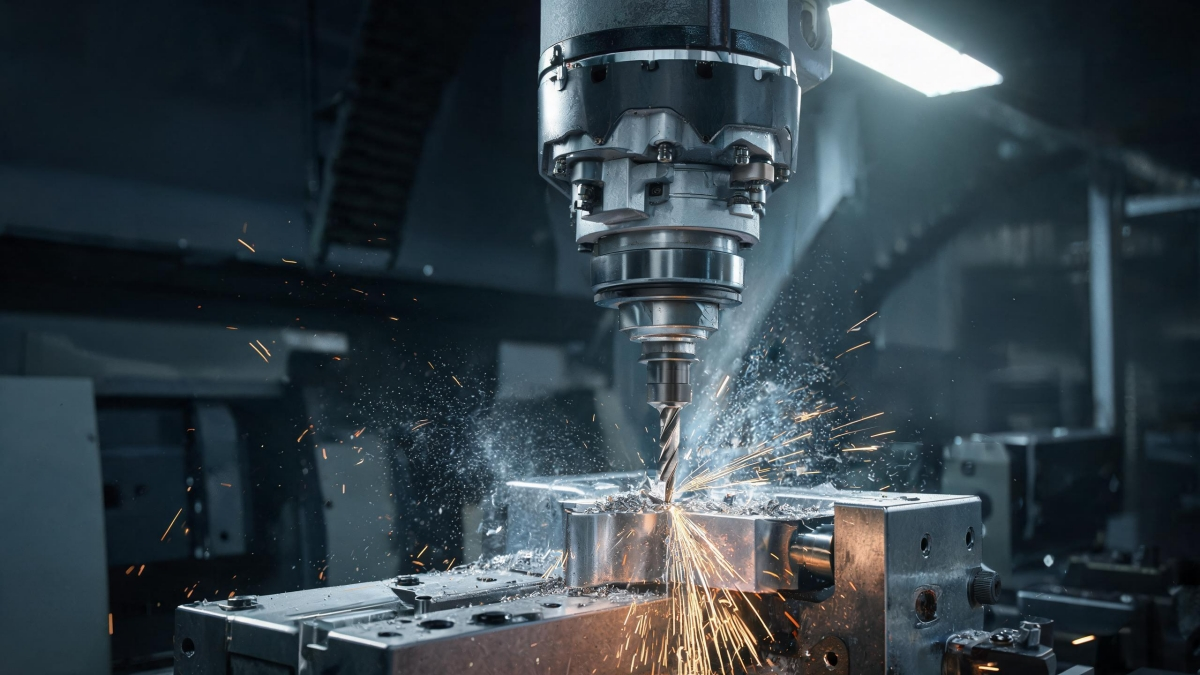
CNC machined parts are generally much stronger. Because they are cut from a solid block of extruded or cast metal/plastic, they maintain uniform structural integrity across all axes. 3D printed parts are often weaker along the Z-axis where the layers bond.
It depends entirely on volume. 3D printing is cheaper for prototypes and volumes typically under 10-50 units due to zero setup costs. CNC machining is vastly more cost-effective for medium to high-volume production because the cycle time per part is much faster.
No. The two technologies are complementary. While additive manufacturing will continue to grow for specialized applications and prototyping, CNC machining will remain the standard for producing high-precision, high-strength, and high-volume industrial components.
Taikan machining centers are engineered with rigid cast iron structures, precision linear guides, and thermally stable designs that enable consistent micron-level positioning accuracy in real production environments—not just in a climate-controlled lab.