What Is the Best RPM for Tapping?
Views: 0 Author: Site Editor Publish Time: 2026-08-18 Origin: Site
- 1. What RPM Is Best for Tapping?
- 2. RPM and Feed Rate Must Work Together
- 3. Why Higher RPM Is Not Always Better
- 4. How to Calculate Tapping RPM
- 5. How Thread Pitch Affects Tapping
- 6. What Makes a CNC Machine Suitable for High-Speed Tapping?
- 6.1 High-Speed Spindle Response
- 6.2 Accurate Spindle and Feed Synchronization
- 6.3 High Machine Rigidity
- 6.4 Appropriate Spindle Configuration
- 7. Best Practices for Choosing Tapping RPM
- 8. Taikan Machine: High-Speed Technology for CNC Tapping
- 9. FAQ: What Is the Best RPM for Tapping?
- 9.1 What is the best RPM for tapping?
- 9.2 Is higher RPM better for tapping?
- 9.3 How do you calculate tapping RPM?
- 9.4 What is the relationship between tapping RPM and feed rate?
- 9.5 Can a 24,000 rpm CNC spindle tap at 24,000 rpm?
Tapping is one of the most common machining operations in CNC manufacturing, but choosing the right spindle speed is not as simple as selecting the highest available RPM. The best RPM for tapping depends on several factors, including tap diameter, thread pitch, workpiece material, tap material, coolant, and machine performance.
For CNC machining centers, the goal is to find a spindle speed that provides a good balance between thread quality, tool life, machining efficiency, and process stability.
But does a 24,000 rpm spindle mean tapping should always be performed at 24,000 rpm? No. The spindle's maximum speed and the correct tapping speed are two different things.
What RPM Is Best for Tapping?
There is no single RPM that is best for every tapping operation.
The correct tapping RPM should be selected according to the tap size, thread pitch, workpiece material, tap type, and machining conditions. Smaller taps generally allow higher spindle speeds, while larger taps require lower speeds because they generate greater cutting loads.
The basic principle is straightforward: Higher RPM can reduce cycle time, but excessive spindle speed can increase heat, cutting load, and the risk of tap failure.
For this reason, CNC manufacturers should select tapping parameters based on the complete machining process rather than spindle speed alone.
Key factors that affect tapping RPM include:
Tap diameter: Larger taps normally require lower spindle speeds.
Thread pitch: Pitch determines the required feed rate during synchronized tapping.
Workpiece material: Different materials create different cutting loads and heat conditions.
Tap material and geometry: High-performance taps may support higher cutting speeds than conventional tooling.
Coolant and lubrication: Proper lubrication helps control heat and friction.
Machine rigidity: A stable machine structure helps maintain accurate synchronization between spindle rotation and feed motion.
CNC control and spindle response: Rigid tapping requires accurate synchronization of spindle RPM and axial feed.
RPM and Feed Rate Must Work Together
One of the most important points in CNC tapping is that spindle speed cannot be considered separately from feed rate.
During rigid tapping, the spindle rotation and the Z-axis feed must remain synchronized with the thread pitch. In simple terms, the feed rate is determined by:
Feed Rate = Spindle Speed × Thread Pitch
For example, if the spindle rotates at a certain RPM, the Z-axis must advance at a feed rate that matches the thread pitch. This synchronization allows the tap to follow the thread accurately during cutting and reversal.
This is why rigid tapping is fundamentally different from simply rotating a tap at a fixed speed.
A cnc machining center with accurate spindle feedback and fast response can better maintain this synchronization, which is especially important when tapping at higher spindle speeds. Haas documentation, for example, describes rigid tapping as synchronizing spindle RPM with feedrate during the tapping operation.
Why Higher RPM Is Not Always Better
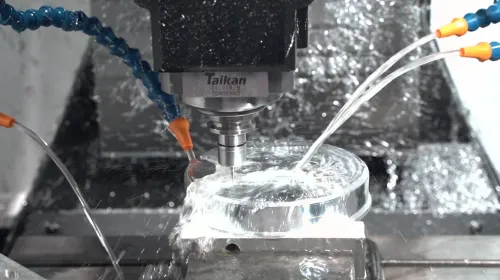
Modern CNC machining centers can offer very high spindle speeds. However, maximum spindle RPM should not be confused with recommended tapping RPM.
Running a tap too fast can create several problems:
Excessive cutting heat
Faster tool wear
Poor thread quality
Increased risk of tap breakage
Greater sensitivity to synchronization errors
Reduced process stability
This is particularly important when machining difficult materials or using larger-diameter taps.
The right strategy is to use the spindle speed that matches the tool, material, thread geometry, and machine conditions. High spindle speed is valuable when the application can use it effectively, but process stability should remain the priority.
How to Calculate Tapping RPM
For applications where a recommended cutting speed is available from the tap manufacturer, spindle speed can be calculated using the standard cutting-speed relationship:
RPM = (Cutting Speed × 1000) ÷ (π × Tap Diameter)
Where:
RPM = spindle speed
Cutting Speed = recommended cutting speed in m/min
Tap Diameter = nominal tap diameter in mm
The actual cutting speed should come from the tooling manufacturer's recommendation for the specific tap and workpiece material.
This approach is more reliable than using a fixed RPM for every tapping operation.
How Thread Pitch Affects Tapping
Thread pitch is another critical factor.
For example, an M6 × 1.0 thread has a 1.0 mm pitch, while an M8 × 1.25 thread has a 1.25 mm pitch. At the same spindle speed, the M8 × 1.25 thread requires a higher axial feed rate than the M6 × 1.0 thread.
This relationship becomes particularly important in CNC rigid tapping because the spindle and Z-axis must remain synchronized throughout the tapping cycle.
The CNC control therefore plays an important role in maintaining accurate thread geometry and reliable tool motion.
What Makes a CNC Machine Suitable for High-Speed Tapping?
A high-speed spindle is only one part of a successful tapping system.
For efficient CNC tapping, the machine should provide:
High-Speed Spindle Response
A responsive spindle helps the machine accelerate, decelerate, and reverse quickly during tapping. This is especially important for short tapping cycles and high-production applications.
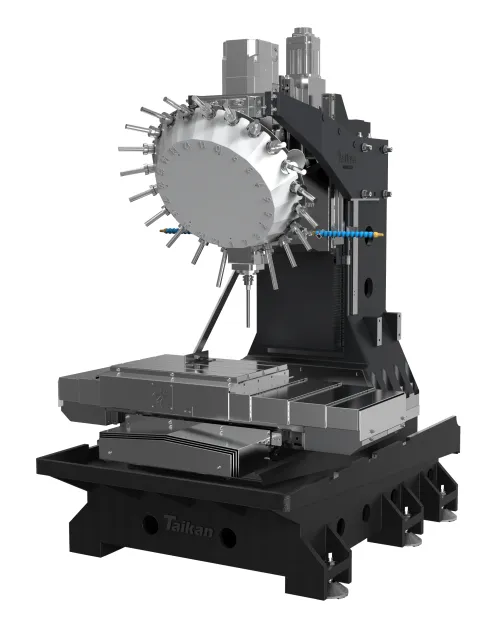
Taikan's HT-500U uses a 24,000 rpm BT30 direct-coupled precision spindle. The direct-coupled design is intended to reduce errors during high-speed tapping while providing fast spindle response.
Accurate Spindle and Feed Synchronization
Rigid tapping depends on precise synchronization between spindle rotation and Z-axis movement. Without accurate synchronization, thread accuracy and tool life can suffer.
High Machine Rigidity
Tapping generates cutting forces that the machine structure must absorb. A rigid machine helps reduce vibration and maintain stable cutting conditions.
The HT-500U uses a high-rigidity structure with a six-point-supported base. Its cast-iron structure is manufactured using the Meehanite casting process and then heat-treated to improve rigidity and vibration resistance.
Appropriate Spindle Configuration
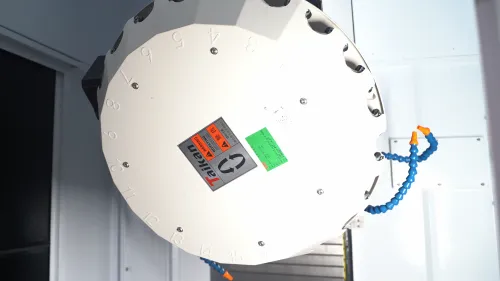
A high-speed spindle should be matched with the intended machining application. Taikan's cnc tapping centers are designed around high-speed machining requirements. The company's HT-500B, for example, is specified with a BT30 spindle with a speed range of 20–24,000 rpm.
The important point is not simply achieving a higher RPM. It is creating a complete machining system in which the spindle, CNC control, feed system, machine structure, tooling, and cutting conditions work together.
Best Practices for Choosing Tapping RPM
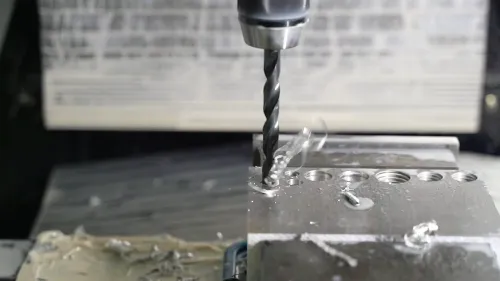
When setting up a CNC tapping operation, a practical approach is to:
1. Identify the tap diameter and thread pitch.
2. Check the tooling manufacturer's recommended cutting speed.
3. Consider the workpiece material and machining conditions.
4. Calculate the corresponding spindle RPM.
5. Set the feed rate according to spindle speed and thread pitch.
6. Use the appropriate rigid tapping cycle and CNC settings.
7. Check thread quality, tool wear, and machining stability.
8. Optimize the RPM based on actual production results.
This method is more reliable than choosing a tapping RPM based only on the machine's maximum spindle speed.
Taikan Machine: High-Speed Technology for CNC Tapping
As a listed machine tool manufacturer, Taikan Machine focuses on combining high-speed spindle technology, rigid machine structures, and precise CNC motion control to support demanding machining applications.
The T-500U 5-axis tapping machining center demonstrates this approach. It combines a BT30 24,000 rpm direct-coupled precision spindle with a high-rigidity machine structure and a DD direct-drive A/C rotary table. The machine supports five-axis simultaneous machining and is designed for efficient machining of complex parts from multiple directions.
Taikan's drilling and tapping machining centers also emphasize high spindle speed and rapid machine response. This makes them well suited to applications where short cycle times, stable tapping, and efficient production are important.
The result is not simply a machine with a high RPM number. It is a machining platform designed to make high-speed and high-precision production more practical.
FAQ: What Is the Best RPM for Tapping?
What is the best RPM for tapping?
There is no universal best RPM. The correct tapping RPM depends on tap diameter, thread pitch, workpiece material, tooling, coolant, and machine conditions.
Is higher RPM better for tapping?
Not necessarily. Higher RPM can improve productivity, but excessive speed may increase heat, tool wear, and the risk of tap failure. The recommended cutting speed should always be considered first.
How do you calculate tapping RPM?
When a recommended cutting speed is available, use:
RPM = (Cutting Speed × 1000) ÷ (π × Tap Diameter)
The recommended cutting speed should come from the tap manufacturer's data for the specific application.
What is the relationship between tapping RPM and feed rate?
During rigid tapping, spindle speed and feed rate must match the thread pitch. The basic relationship is:
Feed Rate = RPM × Thread Pitch
Accurate synchronization between spindle rotation and Z-axis feed is essential for reliable CNC tapping.
Can a 24,000 rpm CNC spindle tap at 24,000 rpm?
A spindle with a maximum speed of 24,000 rpm has the capability to operate up to that speed, but that does not mean 24,000 rpm is appropriate for every tapping operation. The actual tapping RPM must be selected according to the tool, material, thread, and cutting conditions.


