Vertical Machining Center vs. Horizontal Machining Center: Key Differences Explained
Views: 0 Author: Site Editor Publish Time: 2026-04-03 Origin: Site
A Vertical Machining Center (VMC) and a Horizontal Machining Center (HMC) are two primary types of CNC machining centers used in modern manufacturing. The main difference lies in the spindle orientation: VMCs use a vertically mounted spindle, while HMCs use a horizontal spindle.
Vertical machining centers are widely used for precision machining, mold manufacturing, and small-to-medium batch production due to their flexibility, lower cost, and easy setup. Horizontal machining centers, on the other hand, are designed for high-volume production and heavy-duty machining, offering better chip evacuation, longer tool life, and higher automation potential.
Understanding the differences between VMC and HMC machines helps manufacturers choose the right machining solution to improve productivity, machining accuracy, and overall production efficiency.
VMC vs HMC Comparison Table
| Feature | VMC | HMC |
| Spindle Orientation | Vertical spindle | Horizontal spindle |
| Chip Removal | Chips accumulate around the workpiece | Chips fall away naturally, improving chip evacuation |
| Workholding Setup | Flat worktable for simple fixturing | Tombstone fixtures allow multiple parts |
| Production Type | Low to medium volume production | High-volume production |
| Part Complexity | Ideal for complex geometries and precision parts | Ideal for large and heavy parts |
| Machine Footprint | Smaller footprint, suitable for compact workshops | Requires larger floor space |
| Cost | Lower initial investment | Higher upfront cost but higher productivity |
| Automation Capability | Moderate automation | Often equipped with pallet changers and automation systems |
| Typical Industries | Aerospace, mold making, electronics, prototyping | Automotive, energy, heavy equipment manufacturing |
Key Differences Between Vertical and Horizontal Machining Centers
The most significant difference between Vertical Machining Centers (VMCs) and Horizontal Machining Centers (HMCs) is the orientation of the spindle and the resulting machining dynamics.
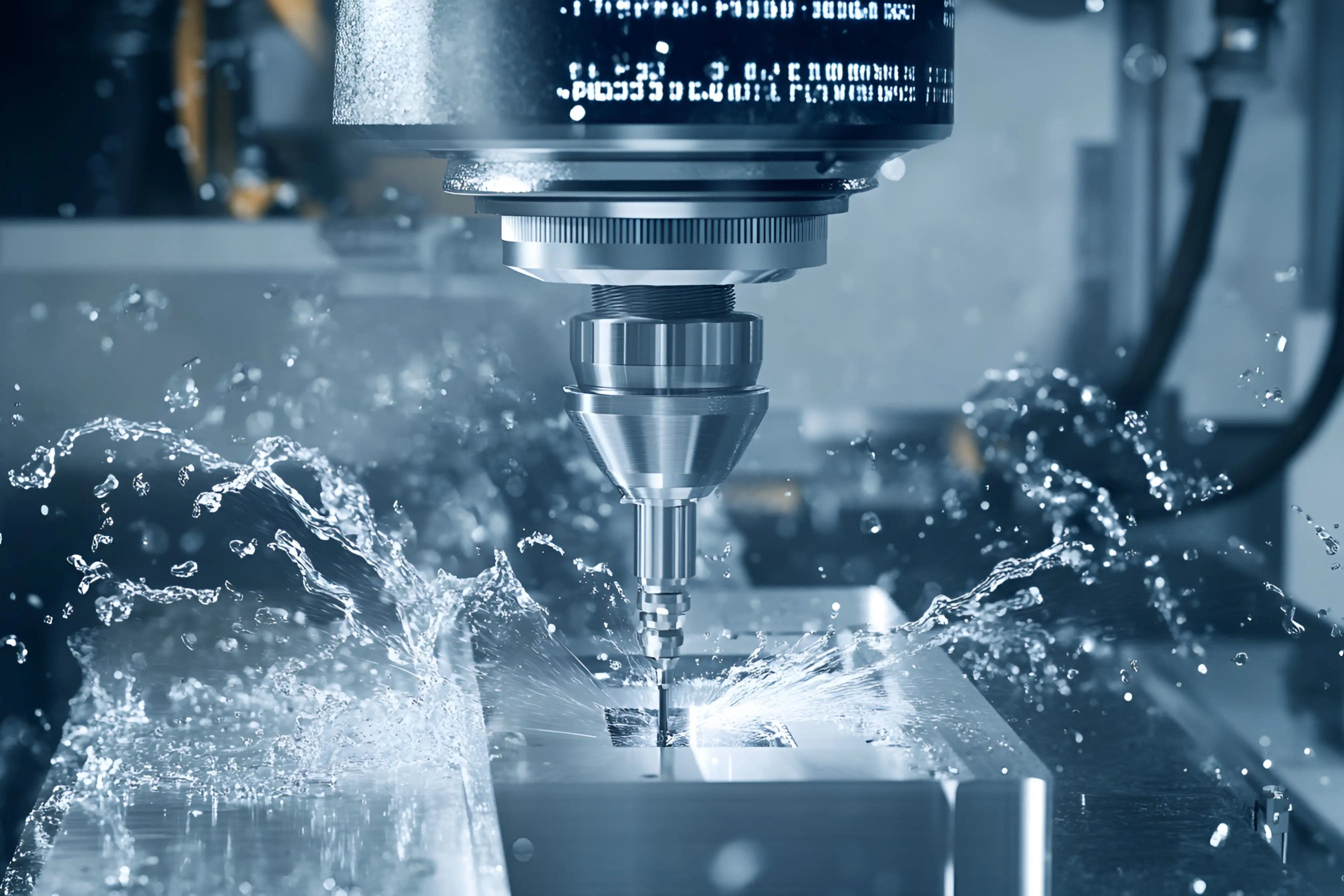
In a vertical machining center, the spindle moves vertically along the Z-axis, allowing operators to clearly see the cutting area. This visibility simplifies setup and inspection, making VMCs highly suitable for precision machining and complex part production.
In contrast, HMCs position the spindle horizontally. This design allows chips to fall away from the cutting zone, reducing chip accumulation and improving machining stability. As a result, HMCs often provide better tool life and are widely used for high-volume manufacturing.
Another structural difference is the workholding system. VMCs generally use flat tables that make fixture setup simple and flexible. HMCs often employ tombstone fixtures that allow multiple parts to be machined in a single setup, improving production efficiency.
Advantages of CNC Vertical Machining Centers
CNC Vertical Machining Centers (VMCs) are widely used in modern manufacturing due to their flexibility, precision, and ease of operation. Their vertical spindle design provides excellent visibility and accessibility, making them suitable for machining complex components with tight tolerances.
Key Advantages of VMCs
1. Excellent Visibility and Easy Setup
The vertical spindle orientation allows operators to clearly observe the cutting area. This improves setup efficiency and makes it easier to monitor machining operations and adjust parameters when needed.
2. Ideal for Complex and Precision Parts
VMCs are well suited for machining complex geometries and precision components. Industries such as aerospace, mold manufacturing, and consumer electronics rely on VMCs for high-accuracy machining.
3. Efficient Machining of Lightweight Materials
Vertical machining centers perform particularly well when machining materials such as aluminum, plastics, and light alloys. Their high spindle speeds enable efficient high-speed machining and improved productivity.
4. Easy Operation and Flexible Production
Modern VMCs often include user-friendly CNC interfaces and advanced software integration. This simplifies programming, shortens operator training time, and allows manufacturers to quickly adapt to different production tasks. For example, Taikan Machine offers multiple VMC solutions, including the S Series, H Series, and M Series, designed to support various machining requirements across different industries.
Benefits of Horizontal Machining Centers
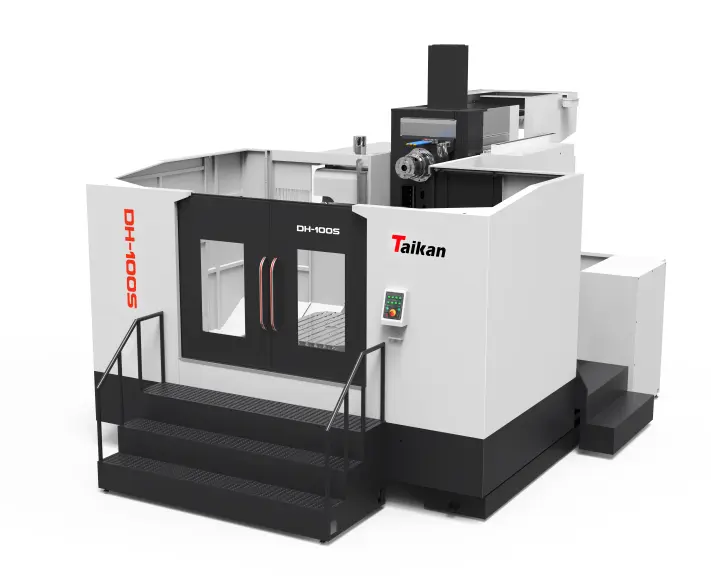
Horizontal Machining Centers (HMCs) are designed for high-efficiency and heavy-duty machining. Their horizontal spindle structure improves chip evacuation and supports stable machining for large components and high-volume production.
Key Advantages of HMCs
1. Superior Chip Evacuation
Because the spindle is positioned horizontally, chips naturally fall away from the cutting zone. This prevents chip accumulation, reduces tool wear, and improves machining stability.
2. Suitable for Large and Heavy Workpieces
HMCs provide strong structural support for machining larger and heavier components. The horizontal design distributes cutting forces more effectively and reduces the risk of part deformation.
3. Higher Productivity in Mass Production
Horizontal machining centers are commonly used in high-volume manufacturing environments such as automotive and energy industries. Their efficiency helps maintain consistent throughput and production stability.
4. Advanced Automation Capabilities
Many modern HMCs are equipped with pallet changers and automated workholding systems, enabling unattended machining and continuous production cycles. This significantly improves productivity and reduces labor costs. Taikan’s horizontal machining center integrates rigid machine structures and advanced automation technologies to support demanding industrial applications.
When to Choose Vertical Over Horizontal Machining
Selecting between a Vertical Machining Center (VMC) and a Horizontal Machining Center (HMC) depends mainly on production requirements, part characteristics, and factory conditions.
In general, VMCs are preferred for flexibility and precision machining, while HMCs are better suited for high-volume production and heavy components.
| Decision Factor | Vertical Machining Center (VMC) | Horizontal Machining Center (HMC) |
| Production Volume | Low to medium production runs | High-volume mass production |
| Part Characteristics | Complex geometries requiring precision machining | Large or heavy components |
| Setup Frequency | Frequent setup changes | Long continuous production cycles |
| Chip Removal Requirement | Less critical | Critical for stable machining |
| Automation Capability | Basic automation or manual operation | Advanced automation such as pallet changers |
| Factory Space Requirement | Suitable for limited workshop space | Requires larger floor space |
| Typical Applications | Prototyping, mold making, custom machining | Automotive parts, energy equipment, heavy machinery |
Choosing the right machining center can boost productivity, efficiency, and competitiveness. Taikan Machine combines advanced technologies, reliable equipment, and expert guidance to help manufacturers select the most suitable solution, balancing upfront investment with long-term production efficiency.
Ready to optimize your production? Contact us today to discuss your machining needs and find the perfect solution for your factory. Our experts are here to provide tailored advice and ensure your investment delivers maximum value.


