Swiss-Type Lathe vs Conventional CNC Lathe: Guide Bushing, Part Size, Cycle Time and Applications
Views: 0 Author: Site Editor Publish Time: 2026-08-07 Origin: Site
- 1. What Is a Swiss-Type Lathe and How Does It Work?
- 2. Swiss Lathe vs Conventional CNC Lathe: Key Differences
- 3. Why Does a Swiss Lathe Need a Guide Bushing?
- 4. Part Size and Cycle Time: Which Machine Is More Suitable?
- 4.1 Small Diameter Precision Parts
- 4.2 Larger Parts and Flexible Production
- 4.3 Cycle Time Considerations
- 5. Applications of Swiss-Type Automatic Lathes
- 6. How to Choose Between a Swiss Lathe and a CNC Lathe?
- 7. Conclusion
- 7.1 What is the main advantage of a Swiss lathe?
- 7.2 Why does a Swiss-type lathe use a guide bushing?
- 7.3 Is a Swiss lathe only suitable for small parts?
- 7.4 Is a CNC Swiss Lathe faster than a conventional CNC lathe?
- 7.5 What industries commonly use Swiss-type automatic lathes?
Swiss-type lathes and conventional CNC lathes are both designed for precision turning, but they solve different manufacturing challenges. A swiss lathe uses a guide bushing to support the bar material close to the cutting tool, making it ideal for small-diameter, long, and high-precision components. A conventional CNC lathe uses a fixed chuck structure and is better suited for larger workpieces, flexible machining tasks, and general turning applications. Choosing between a CNC Swiss Lathe and a conventional CNC lathe depends on factors such as part size, tolerance requirements, production volume, material type, and machining complexity. Understanding the structural differences between these machines helps manufacturers select the right equipment for efficient and stable production. Taikan provides precision CNC machining solutions for manufacturers requiring high accuracy, stable performance, and efficient production of complex components.
What Is a Swiss-Type Lathe and How Does It Work?
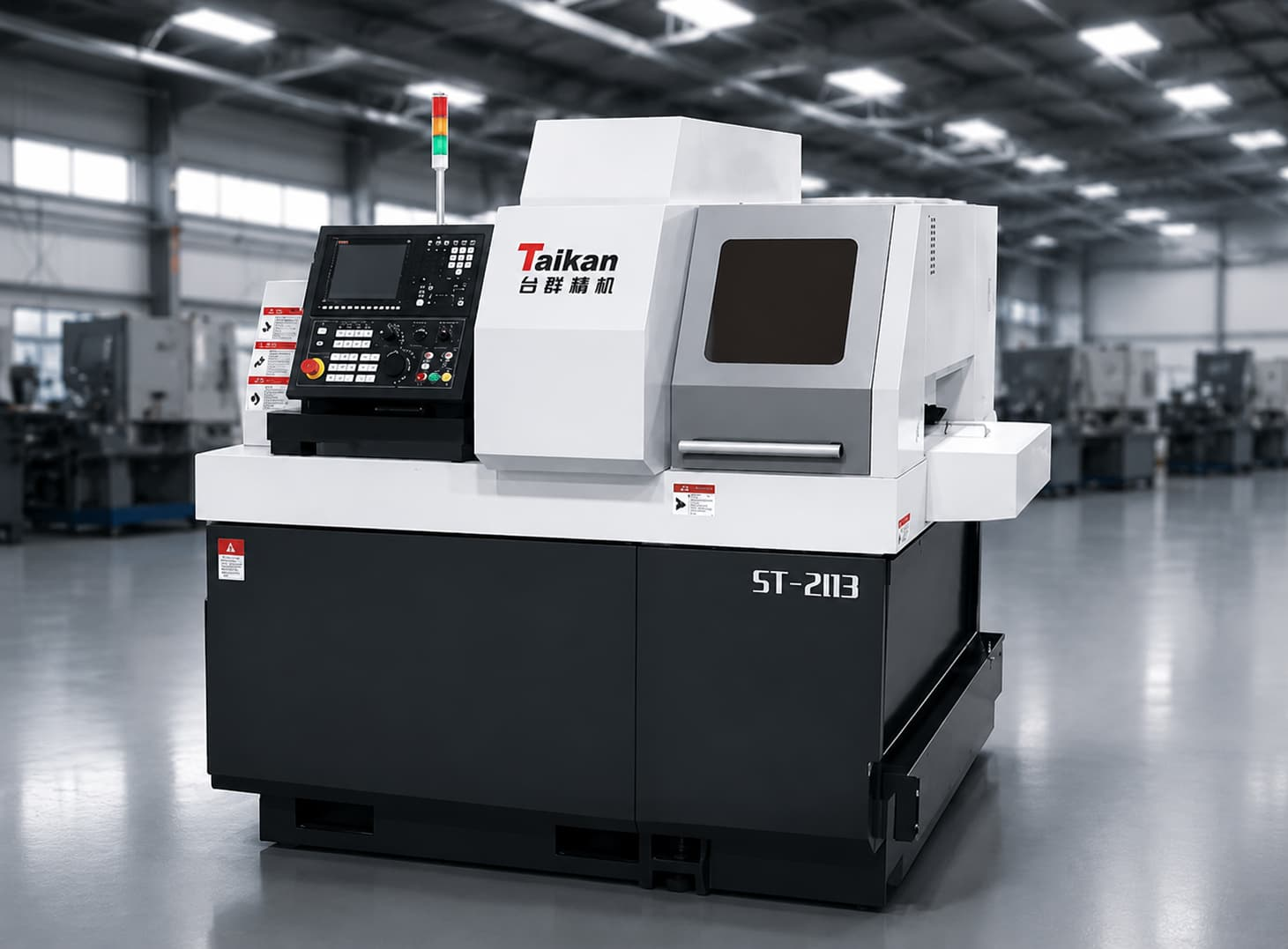
A swiss type lathe is a precision turning machine originally developed for producing small and complex components with extremely tight tolerances. Unlike traditional turning machines where the workpiece remains fixed while tools move around it, a Swiss-type machine moves the bar stock through a guide bushing while the cutting tools engage the material.
The key feature of a Swiss lathe is the sliding headstock and guide bushing system.
The guide bushing supports the material close to the cutting area, reducing vibration and improving machining stability. This design is especially beneficial when producing long, slender parts where conventional chuck holding methods may create deflection problems.
The basic machining process includes:
Bar material passes through the guide bushing.
The sliding headstock moves the material along the Z-axis.
Cutting tools perform turning, drilling, milling, and other operations.
The finished part is automatically separated and collected.
Because the cutting point remains close to the support area, a swiss lathe machine can maintain excellent accuracy even when machining parts with small diameters and high length-to-diameter ratios.
Common applications include medical instruments, electronic connectors, watch components, automotive precision parts, and aerospace components.
Swiss Lathe vs Conventional CNC Lathe: Key Differences
Although both machines use CNC control systems, their mechanical structures create significant differences in performance and applications.
| Comparison | Swiss-Type Lathe | Conventional CNC Lathe |
| Workpiece support | Guide bushing support near cutting area | Chuck or collet holding |
| Main machining method | Sliding headstock movement | Fixed headstock turning |
| Ideal part size | Small diameter and slender parts | Medium to large diameter parts |
| Precision performance | Excellent for long and thin components | Suitable for general precision turning |
| Production volume | High-volume automated production | Flexible batch manufacturing |
| Vibration control | Strong due to guide bushing support | Depends on chuck holding stability |
| Complex machining | Turning, drilling, milling, and back machining | Mainly turning with optional live tooling |
| Typical industries | Medical, electronics, automotive, aerospace | General machinery, automation, industrial parts |
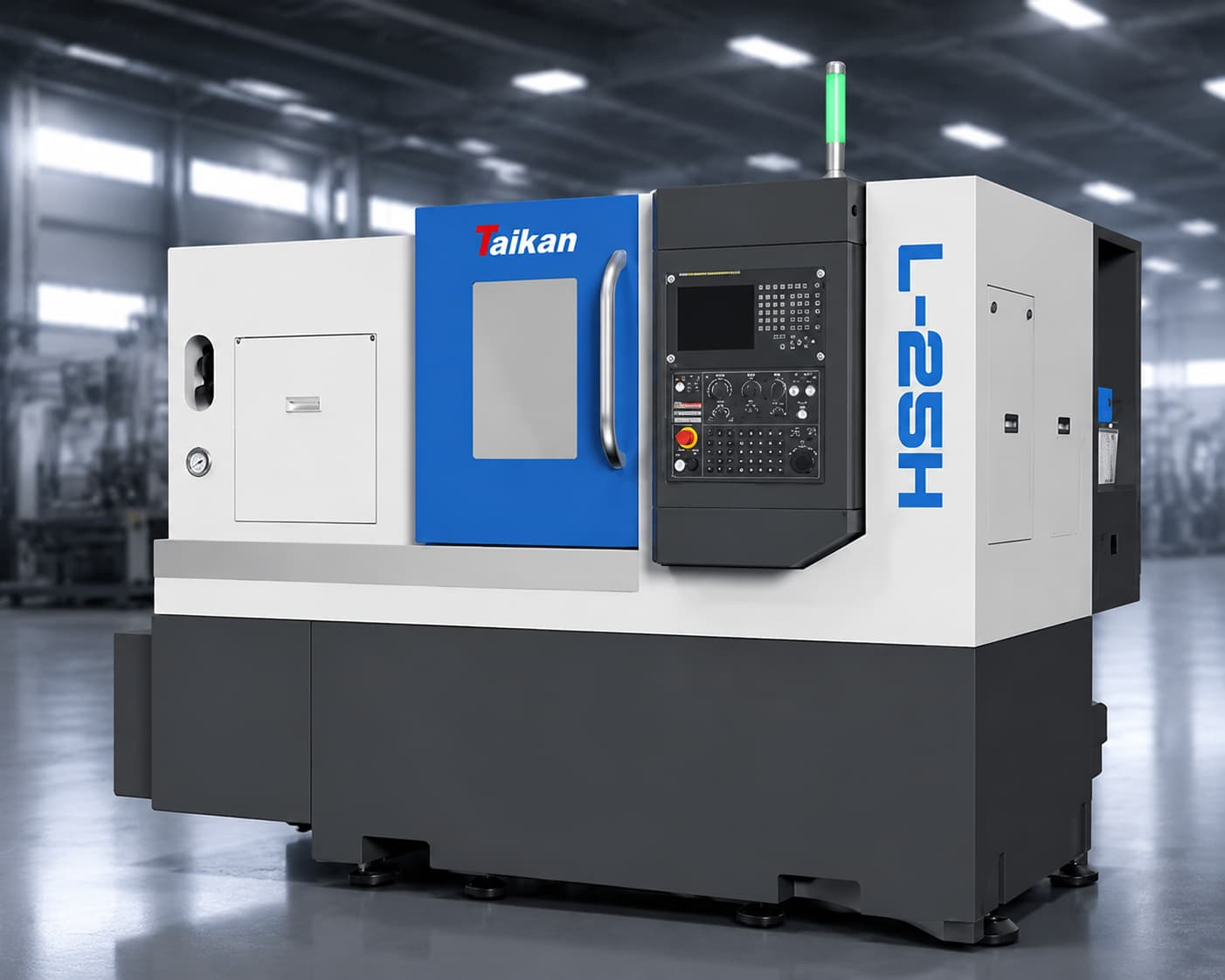
A CNC Swiss Lathe is usually selected when manufacturers need consistent production of thousands or millions of small precision parts. A conventional CNC lathe is often preferred when part sizes vary frequently or when larger components are required.
Why Does a Swiss Lathe Need a Guide Bushing?
The guide bushing is one of the most important components that separates a Swiss-type automatic lathe from a conventional CNC turning machine. For small-diameter parts, especially those with long machining lengths, unsupported material can easily bend or vibrate during cutting. This can affect surface finish, dimensional accuracy, and tool life.
The guide bushing solves this problem by providing continuous support close to the cutting tools.
Main advantages include:
Improved machining stability
The material remains firmly supported during cutting, reducing vibration.Higher precision for slender parts
Long shafts, pins, and miniature components can maintain tighter tolerances.Better surface finish
Reduced tool vibration improves the quality of machined surfaces.Longer tool life
Stable cutting conditions reduce unnecessary tool impact.
For industries requiring micro components or precision parts, the guide bushing design makes a swiss lathe more suitable than traditional turning equipment. However, not every application requires a guide bushing. For large-diameter shafts, heavy cutting operations, or frequently changing part sizes, a conventional CNC lathe may provide a more practical solution.
Part Size and Cycle Time: Which Machine Is More Suitable?
The choice between a Swiss lathe and a conventional CNC lathe often depends on the size and production requirements of the component.
Small Diameter Precision Parts
A swiss lathe machine is designed for small and complex parts, commonly machining components with small diameters and tight tolerances.
Typical examples include:
Medical screws and surgical components
Electronic connector pins
Micro shafts
Precision watch parts
Small automotive components
The guide bushing allows continuous support during machining, which helps maintain accuracy during high-speed production.
Larger Parts and Flexible Production
Conventional CNC lathes are generally more suitable for larger workpieces that require stronger chuck holding force.
Examples include:
Hydraulic components
Machine shafts
Industrial fittings
Large rotating parts
These machines provide flexibility for different part sizes and are easier to adjust for low-volume production.
Cycle Time Considerations
For high-volume production, Swiss-type machines often achieve shorter cycle times because multiple tools can operate simultaneously and many machining processes can be completed in one setup. This production advantage is especially important for manufacturers requiring a precision automatic lathe solution for continuous and stable machining of precision components.
Advantages include:
Reduced secondary operations
Higher automation level
Consistent production quality
Lower labor requirements
For manufacturers producing thousands of identical precision components, a swiss type automatic lathe can significantly improve production efficiency.
Applications of Swiss-Type Automatic Lathes
Swiss-type automatic lathes are widely used in industries where precision, repeatability, and small component manufacturing are important. For manufacturers looking for reliable automated production equipment, a automatic lathe china solution can provide efficient machining capability for high-volume precision parts.
| Industry | Typical Applications |
| Medical | Surgical instruments, implants, medical screws |
| Electronics | Connectors, terminals, precision pins |
| Automotive | Fuel system components, sensor parts, shafts |
| Aerospace | Lightweight precision components |
| Optical Industry | Precision mechanical parts |
| Automation Equipment | Small transmission components |
Compared with general CNC turning machines, Swiss-type equipment provides advantages when components require:
Small diameter machining
Complex geometries
Multiple machining operations
High production consistency
Tight dimensional tolerances
A swiss type automatic lathe is especially valuable for manufacturers looking to combine turning, drilling, milling, and automatic production in one machining platform.
How to Choose Between a Swiss Lathe and a CNC Lathe?
The correct machine depends on the actual production requirements rather than simply choosing the more advanced technology.
Consider the following factors before purchasing:
| Selection Factor | Recommended Choice |
| Small diameter precision parts | Swiss-Type Lathe |
| Long slender components | Swiss-Type Lathe |
| High-volume production | Swiss Automatic Lathe |
| Large diameter parts | Conventional CNC Lathe |
| Frequent product changes | Conventional CNC Lathe |
| Complex small components | CNC Swiss Lathe |
| Heavy cutting operations | Conventional CNC Lathe |
A Swiss lathe is the better choice when precision and production efficiency are priorities. A conventional CNC lathe remains valuable for manufacturers requiring flexibility and larger machining capability. Depending on part size and machining requirements, manufacturers may also consider a high precision cnc lathe for applications requiring stable turning performance and accuracy.
Before selecting equipment, manufacturers should evaluate:
Part diameter and length
Required tolerance
Material characteristics
Annual production quantity
Required machining processes
Automation requirements
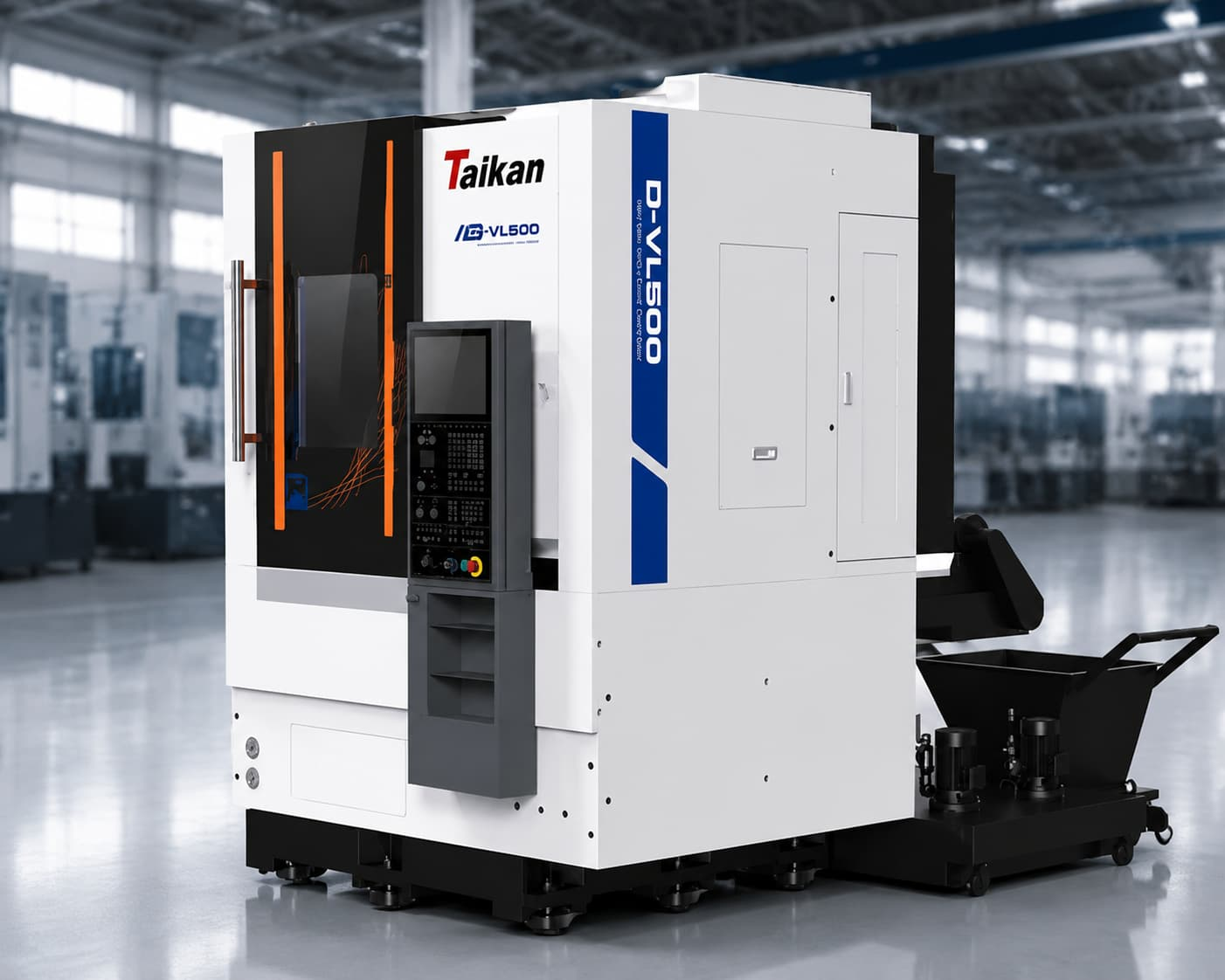
Taikan offers precision machining equipment designed for different production scenarios, helping manufacturers select suitable CNC solutions based on actual application needs.
Conclusion
Swiss-type lathes and conventional CNC lathes are not competing technologies; they are designed for different machining requirements. A Swiss lathe uses guide bushing support to achieve high precision for small, slender, and complex components, while conventional CNC lathes provide flexibility for larger and general turning applications.
For manufacturers producing high-volume precision parts, a CNC Swiss Lathe can improve stability, efficiency, and consistency. For larger components and flexible production, conventional CNC turning machines remain an effective choice. Selecting the right machine based on part size, production volume, and machining requirements is the key to achieving reliable manufacturing performance.
FAQ
What is the main advantage of a Swiss lathe?
The main advantage of a Swiss lathe is its ability to machine small, slender, and complex components with high accuracy. The guide bushing provides stable support near the cutting area, reducing vibration and improving precision.
Why does a Swiss-type lathe use a guide bushing?
A guide bushing supports the bar material during machining, preventing deflection and vibration. This allows Swiss-type machines to produce long and small-diameter parts with consistent accuracy.
Is a Swiss lathe only suitable for small parts?
Swiss lathes are mainly designed for small precision components, but some models can handle different material sizes depending on machine specifications and production requirements.
Is a CNC Swiss Lathe faster than a conventional CNC lathe?
For high-volume production of small complex parts, a CNC Swiss Lathe can achieve faster cycle times because multiple operations can be completed in one setup. For larger or simpler parts, conventional CNC lathes may be more efficient.
What industries commonly use Swiss-type automatic lathes?
Swiss-type automatic lathes are commonly used in medical, electronics, automotive, aerospace, optical, and precision equipment industries.


