What Is a VMC? A Complete Guide to Vertical Machining Centers
Views: 0 Author: Site Editor Publish Time: 2026-06-26 Origin: Site
- 1. What Is a Vertical Machining Center (VMC)?
- 2. How Does a Vertical Machining Center Work?
- 3. Why Manufacturers Prefer Vertical Machining Centers
- 4. Core Application Areas for VMCs
- 5. How to Choose the Right Vertical Machining Center
- 6. Leading Vertical Machining Center Manufacturers
- 7. FAQ
- 8. Conclusion
What Is a Vertical Machining Center (VMC)?
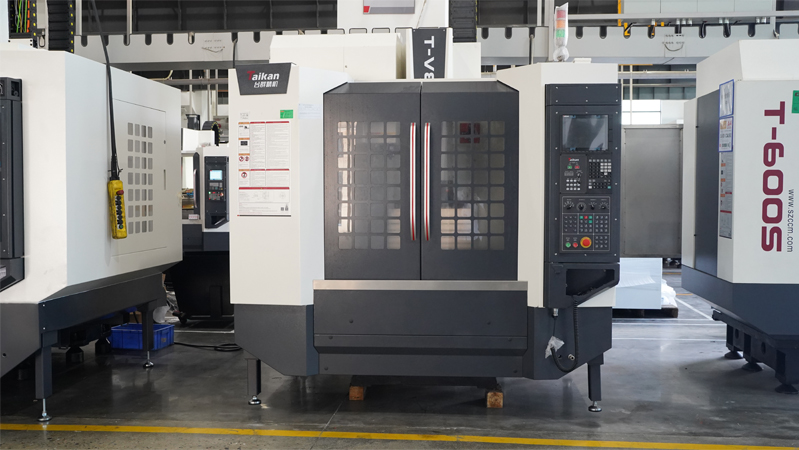
A Vertical Machining Center, commonly called a VMC(also known as Vertical Milling Machines), is a computer numerically controlled (CNC) milling machine where the spindle axis is oriented vertically. In simple terms, the cutting tool points straight down toward the workpiece, which sits on a table that moves in the X and Y axes, while the spindle head moves vertically along the Z axis.
Modern VMCs are built around a few core structural elements: a heavily ribbed cast iron bed and column for vibration dampening, precision linear guideways or box ways, a high-speed spindle, an automatic tool changer, and a CNC control that translates G-code into fluid multi-axis motion. Many machines also integrate chip management, coolant systems, and even pallet changers. From simple 3-axis configurations to full 5-axis simultaneous machining, the platform scales with your ambitions.

The VMC family ranges from simple to highly advanced:
· 3-axis VMC – Moves the tool in X, Y, and Z. The workhorse for prismatic parts and general machining. A 3 axis vertical machining center is widely used in standard production environments due to its stability and efficiency in handling most machining tasks.
· 4-axis VMC – Adds a rotary axis (typically a rotary table on X or Y), enabling work on multiple part faces in one setup.
· 5-axis VMC – Adds two rotary axes, allowing the tool to reach compound angles and undercuts. Available as full 5-axis simultaneous or 3+2 positioning configurations. This class of 5 axis vertical machining center eliminates multiple setups and improves accuracy on complex parts.
Explore Taikan’s range of VMC machines in China
How Does a Vertical Machining Center Work?
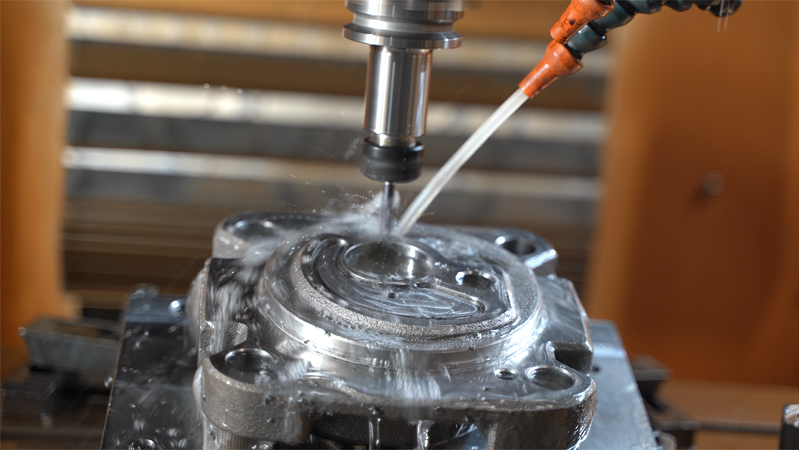
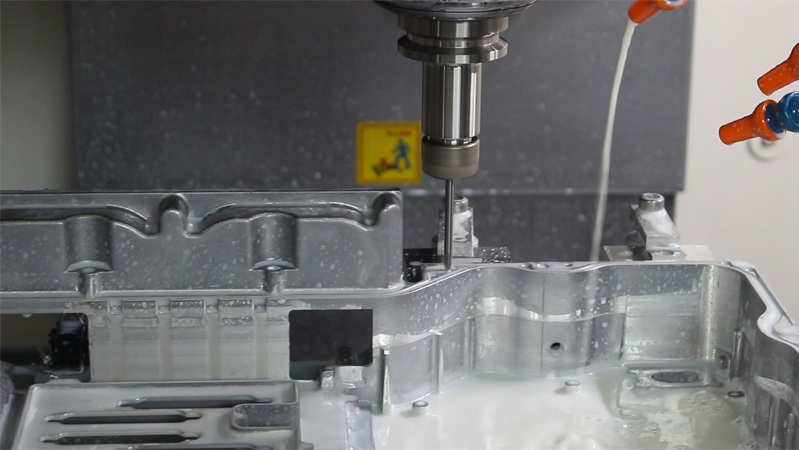
A CNC program drives the entire process. Once the workpiece is clamped on the table, the spindle spins the cutting tool at the programmed speed. The machine then moves the tool along X, Y, and Z axes to remove material. An automatic tool changer swaps tools in seconds, so one machine can mill, drill, tap, bore, and ream without manual intervention. High-pressure coolant flushes chips away, keeping the cutting zone clean and the process stable.
The result is repeatable, micron-level accuracy across short runs and high volumes alike.
Why Manufacturers Prefer Vertical Machining Centers
When buyers compare machine tools, they care about vertical machining center advantages, VMC machine price, rigidity, spindle uptime, and long-term support. Here is where VMCs win:
· Operator access – The open vertical design makes setup, inspection, and part loading quick. Spindle visibility directly increases machine utilization.
· Rigidity with cost efficiency – Cutting forces push straight down into the heavy base. A well-built VMC delivers finishes and accuracies that meet ISO, AS, and IATF standards at a VMC machine price that supports rapid ROI.
· Versatility – A single VMC cuts aluminum, steel, stainless steel, titanium, and plastics. It handles milling, drilling, and rigid tapping in one cycle.
· Scalability – Add probes, through-spindle coolant, chip conveyors, or robot loading. A VMC grows with your production needs and fits into Industry 4.0 workflows.
· Resale value and support – The VMC architecture is globally understood. Machines hold value, and choosing a CNC ecosystem supported by established cnc vertical machining center manufacturers ensures long-term productivity and reliable service support.
Core Application Areas for VMCs
The VMC’s flexibility makes it the workhorse of countless industries. Here is where you’ll find them every day:
· Automotive and EV components: Engine blocks, cylinder heads, transmission housings, battery tray components, and electric motor end caps.
· Aerospace and defense: Structural brackets, actuator housings, ribbed panels, and instrument casings—often in aluminum and titanium.
· Medical device manufacturing: Orthopedic implants, surgical instruments, and diagnostic equipment parts that demand flawless surface finishes and traceability.
· General engineering and job shops: Short-run production, one-off prototypes, repair parts, and toolroom work.
· Electronics and 3C: Smartphone frames, laptop housings, and heat sinks that require high-speed, high-feed machining in high volumes.
· Mold and die: Injection mold cores, cavities, and electrode manufacturing where profile accuracy is critical.
How to Choose the Right Vertical Machining Center
Choosing the right VMC is not about buying the most expensive machine—it’s about matching the machine’s capability to your part portfolio and your factory’s ambition. Use this structured guide to frame your evaluation.
1. Work envelope – Your machine travels must fit your largest raw part plus fixtures and tool clearance.
2. Spindle – Check RPM range, taper (BT40, HSK-A63, etc.), and torque. High-speed spindles (15,000–24,000 RPM) reduce cycle times in aluminum; low-end torque matters in steel.
3. Axis configuration – Use a 3-axis VMC for most prismatic work. A 5-axis VMC or 3+2 setup eliminates multiple setups on complex parts.
4. Automation and tool changer – More ATC pockets (24, 30, 40+) mean less downtime for job changeovers. Probing systems add in-process quality checks.
5. Control and connectivity – FANUC, Siemens, Heidenhain, or Mitsubishi controls should offer easy networking and CAM integration.
6. Total cost of ownership – Check installation support, spare parts availability, and preventive maintenance. A low VMC machine price means little without responsive local service.
Leading Vertical Machining Center Manufacturers
The global VMC market is served by several world-class builders. Understanding the landscape will help you benchmark quality, innovation, and value.
· DMG MORI: German-Japanese engineering known for high-end 5-axis solutions and integrated automation.
· Mazak: A pioneer in multi-tasking machines, offering highly rigid VMCs with smooth control technology.
· Haas Automation: A volume leader with a broad range of 3-axis and 5-axis VMCs, focused on accessibility and cost-effectiveness.
· Makino: Famed for high-speed VMCs tailored to die and mold, aerospace, and precision production.
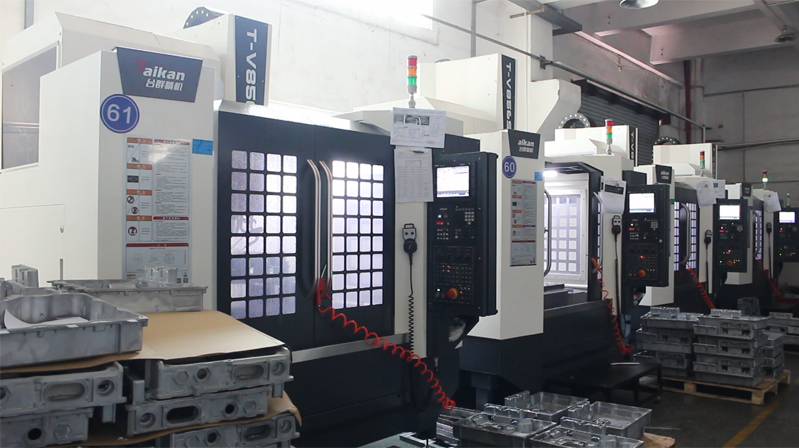
· Taikan Machine: A publicly listed CNC VMC manufacturer offering a full spectrum of vertical machining centers, from robust 3-axis models to advanced 5-axis platforms.
FAQ
What does VMC stand for in machining?
VMC stands for Vertical Machining Center, a CNC mill with a vertically oriented spindle that moves along the Z axis while the table moves in X and Y.
What is the difference between a 3-axis VMC and a 5-axis VMC?
A 3-axis VMC moves the tool in X, Y, and Z. A 5-axis VMC adds two rotary axes, allowing the tool to approach the workpiece from multiple compound angles in one setup, reducing fixturing and improving accuracy.
What is the typical VMC machine price range?
Pricing varies widely depending on travels, spindle specifications, axis count, and brand. Entry-level 3-axis VMCs may start at a modest investment level, while large-envelope, fully loaded 5-axis machines command a premium. For an accurate, competitive quote tailored to your production needs, it’s best to consult directly with a specialist.
What industries use vertical machining centers the most?
Automotive, aerospace, medical devices, general engineering, electronics, and mold making are among the largest users.
How do I choose a CNC VMC manufacturer?
Look for a publicly accountable company with a track record in your industry, local application support, spare parts availability, and transparent performance documentation. Ask for test cuts on your own material.
How long does a VMC last?
With proper maintenance, a quality VMC can deliver excellent accuracy for 10 to 20 years or more. Machine structure, guideway design, and service support are the biggest predictors of longevity.
Conclusion
Looking for a high-value, high-stability Vertical Machining Center? Taikan Machine offers a comprehensive range of VMC solutions, from 3-axis to sophisticated 5-axis. Our machines are built on proven cast structures, feature high-performance spindles, and are supported by a global service network that keeps you cutting.
Contact us for a free, no-obligation equipment selection analysis and the latest quotation. Let’s find the exact Taikan VMC that will take your shop to the next level.


