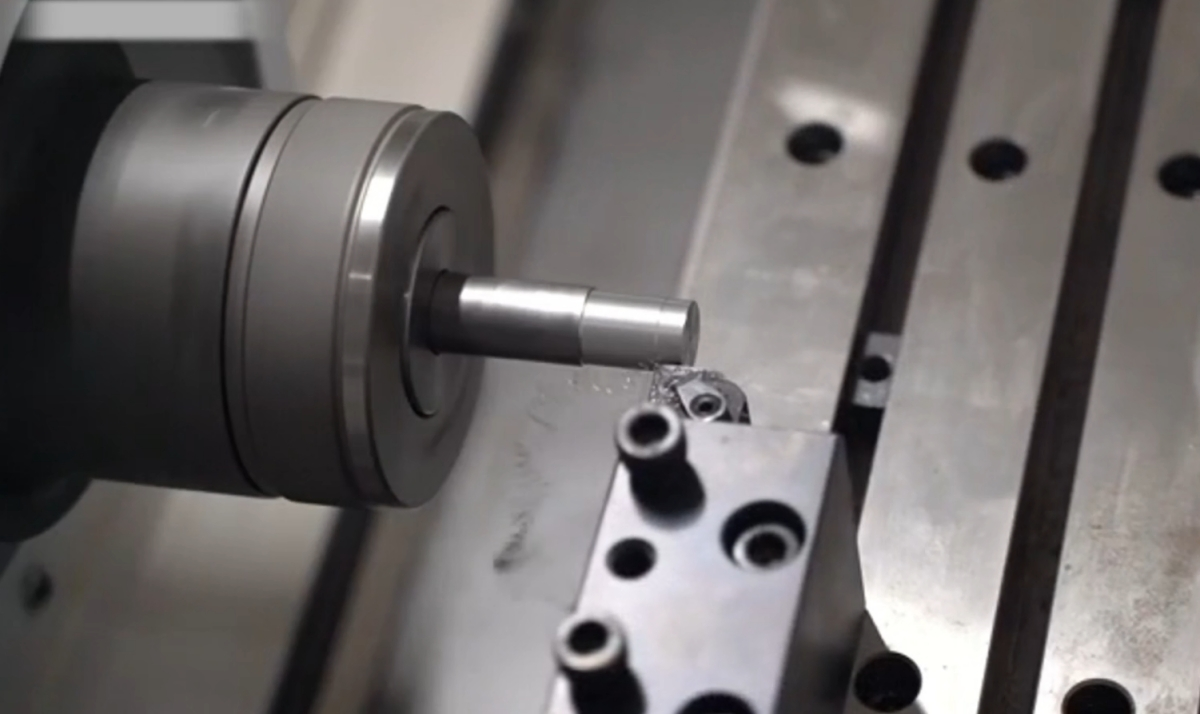
CNC Lathe Machines – What You Need to Know
Views: 0 Author: Site Editor Publish Time: 2026-07-14 Origin: Site
- 1. What Is a CNC Lathe Machine?
- 2. The Core Components That Define Performance
- 2.1 1. Bed and Base Casting
- 2.2 2. Spindle System
- 2.3 3. Guideways and Axes Drive
- 2.4 4. Turret and Tooling Flexibility
- 3. Types of CNC Lathe Machines: Matching Configuration to Application
- 3.1 2-Axis Horizontal CNC Lathes
- 3.2 Multi-Axis Turning Centers (Y-axis, Sub-spindle)
- 3.3 Vertical CNC Lathes (VTLs)
- 3.4 Swiss-Type Lathes
- 4. Key Factors to Consider When Selecting a CNC Lathe
- 4.1 1. Throughput and Cycle Time
- 4.2 2. Accuracy and Thermal Management
- 4.3 3. Control System and User Interface
- 4.4 4. Automation Readiness
- 4.5 5. Service, Support, and Parts Availability
- 5. Why choose Taikan?
If you’re running a production shop, you already know that turning operations sit at the very heart of precision machining. And in today’s competitive landscape, CNC lathe machines are no longer just “nice to have”—they are the backbone of efficient, repeatable, and profitable manufacturing. Whether you’re producing complex aerospace shafts, tight-tolerance medical implants, or high-volume automotive fittings, the right CNC lathe transforms your throughput, your accuracy, and ultimately your bottom line.
But with so many configurations, brands, and technical nuances in play, how do you make an informed decision? Let’s walk through exactly what modern CNC lathe machines offer, what matters in their construction, and how to evaluate the right machine for your floor—without the hype.
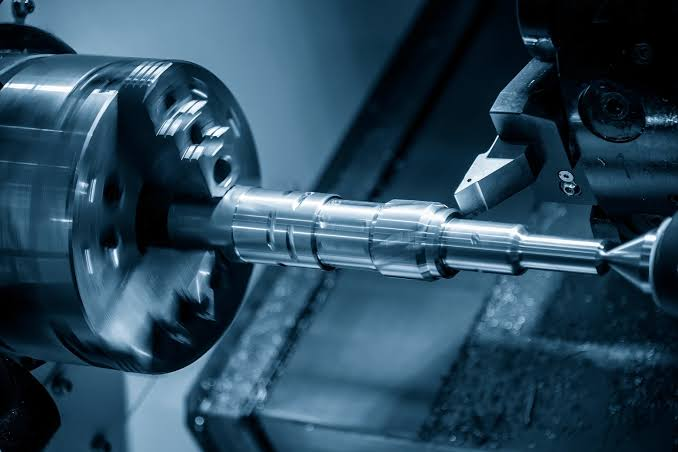
What Is a CNC Lathe Machine?
At its simplest, a CNC lathe machine is a computer-controlled turning center that rotates a workpiece against a stationary cutting tool to remove material, producing cylindrical components with extreme accuracy. The “CNC” part—Computer Numerical Control—means every axis movement, spindle speed, tool change, and coolant activation is governed by programmed G-code, ensuring parts come out identical whether you’re running one piece or ten thousand.
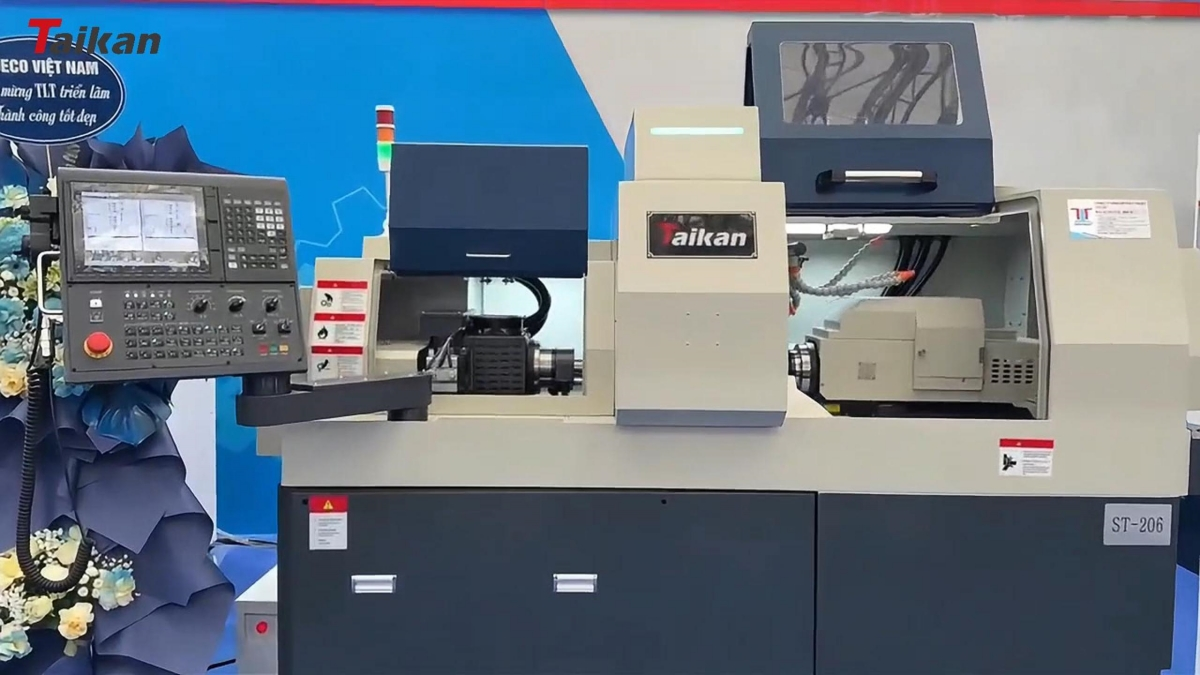
But equating today’s CNC lathes with yesterday’s manual engine lathes undersells the technology by a wide margin. Modern machines, particularly those built by Taikan Machine, integrate multi-axis capability, live tooling, sub-spindles, and automation-ready interfaces. They are complete turning cells, not just turning machines.
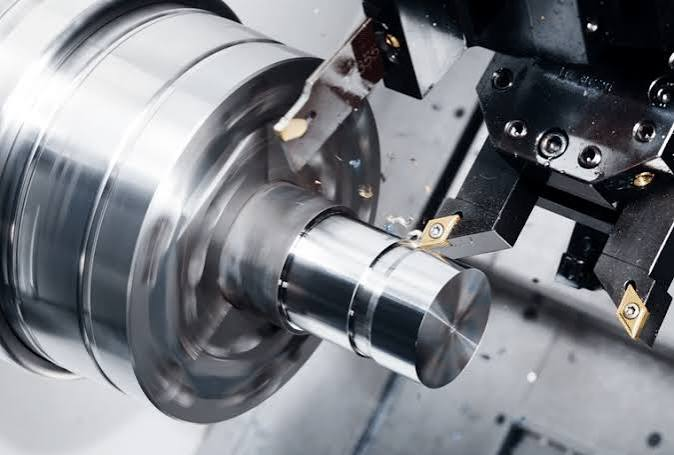
The Core Components That Define Performance
When you walk a shop floor evaluating a CNC lathe machine, four fundamental elements dictate its real-world output—rigidity, thermal stability, motion control, and spindle integrity.
1. Bed and Base Casting
Everything starts with the casting. A heavily ribbed, single-piece bed—typically from high-grade Meehanite or equivalent cast iron—absorbs vibration and resists deflection under heavy interrupted cuts. At Taikan, our structural components undergo finite element analysis (FEA) optimization before the first pour, ensuring stiffness where it counts without unnecessary bulk. A stable base means you hold tenths, year after year.
2. Spindle System
The spindle is where torque meets precision. Belt-driven spindles offer a cost-effective balance for general work, while integral motor spindles eliminate vibration and enable ultra-high-speed finishing. We configure our CNC lathe machines with cartridge-type, grease-lubricated or oil-air lubricated spindles that deliver low thermal drift and long service intervals—critical when you’re chasing consistent Cpk values.
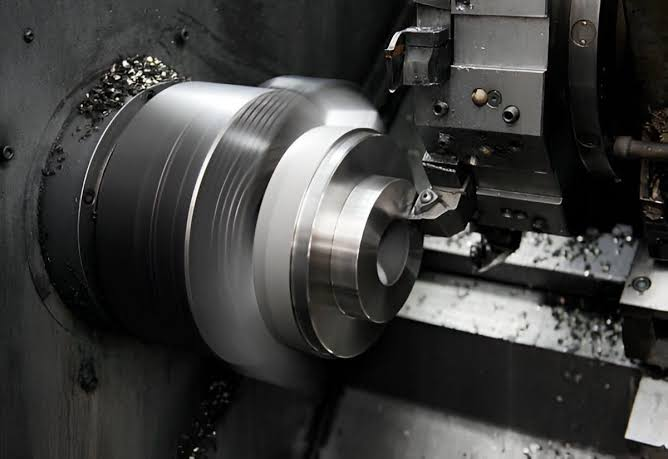
3. Guideways and Axes Drive
The choice between box ways and linear guideways directly impacts a lathe’s character. Box ways, with their massive contact area, excel in heavy stock removal and interrupted cuts—ideal for energy sector forgings or large diameter parts. Linear roller guides provide rapid traverse rates and low friction, perfect for high-speed small-part production. Many of Taikan’s turning centers offer a balanced combination: high-rigidity roller linear guides sized well above the load envelope, coupled with direct-coupled double-nut ballscrews for zero-backlash positioning.
4. Turret and Tooling Flexibility
A sluggish turret erases the speed advantage of a fast spindle. High-performance CNC lathes use servo-driven turrets with curve coupling or three-piece coupling indexing systems. Index times under 0.3 seconds for adjacent stations are standard in this class. And if you run families of parts, live tooling capability—driven tools on the turret allowing milling, drilling, and tapping in-cycle—collapses setup time and part handling. Once you combine a main spindle, a sub-spindle, and a live-tooled turret, your lathe effectively becomes a multitasking turning center.
Types of CNC Lathe Machines: Matching Configuration to Application
Not all CNC lathes are created equal, and picking the right configuration is the difference between profit and frustration.
2-Axis Horizontal CNC Lathes
The workhorse. Facing, turning, boring, threading, and grooving. If your parts are predominantly cylindrical and you don’t need off-center machining, a high-rigidity 2-axis lathe with a VDI or BMT turret delivers unmatched chip-to-chip time.
Multi-Axis Turning Centers (Y-axis, Sub-spindle)
Add a Y-axis and a sub-spindle, and suddenly you can machine complex geometries in one setup—cross holes, angled flats, hexes, and back-working operations. These machines, often equipped with live tooling, dramatically compress your manufacturing chain. Taikan Machine’s turning center lineup addresses exactly this demand: one-and-done machining for complex workpieces.
Vertical CNC Lathes (VTLs)
For large, heavy, or awkwardly shaped parts—think gear blanks, brake drums, or big pump housings—vertical lathes let gravity assist workholding. For manufacturers evaluating a cnc vertical lathe machine, this configuration provides stable loading, reliable chip evacuation, and easier handling of large-diameter components. They’re the heavyweight champions of the turning world.
Swiss-Type Lathes
When you need to turn long, slender medical pins or watch components, Swiss-type sliding headstock lathes offer guide bushing support right at the cut, reducing deflection to near zero. These are specialized but indispensable in the right sectors.
From our perspective at Taikan, the most common question we hear is, “Can I get Y-axis, sub-spindle, and live tooling without breaking my budget?” The answer is yes—our engineering focus has always been on bringing multi-tasking capability into a price-performance bracket that makes high-mix, high-complexity work accessible to more shops.
Key Factors to Consider When Selecting a CNC Lathe
Buying a CNC lathe machine is a capital decision that should be made on total cost of ownership, not just purchase price. Here are the criteria that separate a good investment from a costly shortcut.
1. Throughput and Cycle Time
Look beyond spindle speed. Evaluate rapid traverse rates, turret index speed, and acceleration curves. A machine with a 30 m/min rapid and high-g servos keeps the tool in the cut longer and the idle time shorter. That’s real money over a year of production.
2. Accuracy and Thermal Management
Thermal growth is the silent killer of precision. Leading builders—Taikan included—design temperature control loops into the spindle headstock, use symmetric machine structures, and offer active chiller options. When you’re holding ±5 µm all day, uncontrolled thermal drift is not an option.
3. Control System and User Interface
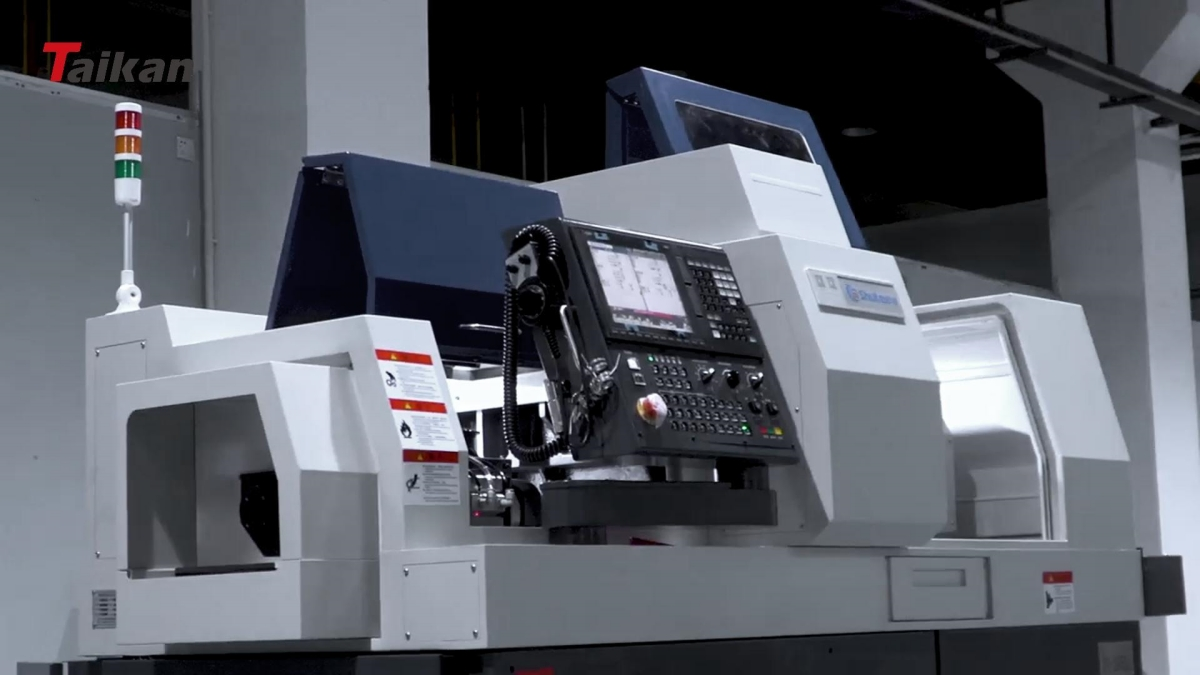
The CNC control is your daily interface with the machine. Whether you prefer Fanuc, Siemens, or Mitsubishi-based systems, the programming environment should be intuitive. Conversational programming assists, tool life management, and on-machine probing cycles remove variability and speed up job changeover. Taikan’s integration partners ensure that the human-machine interface feels natural to operators across different skill levels.
4. Automation Readiness
Even if you don’t invest in robotics today, your lathe should be automation-ready. Bar feeder interfaces, parts catcher mounting points, gantry loader provisions, and standardized robot communication protocols make scaling up straightforward. We design our CNC lathe machines with these interfaces built in, not retrofitted as an afterthought.
5. Service, Support, and Parts Availability
A machine is only as good as the team that stands behind it. For buyers comparing cnc lathe china suppliers, regional application engineering, spare-parts availability, installation support, and response time should be evaluated alongside machine specifications. This is where a publicly listed, financially stable builder like Taikan Machine separates itself from smaller suppliers. We have the scale to maintain regional application engineering support, localized spare parts inventory, and responsive technical service. That peace of mind translates directly to uptime.
Why choose Taikan?
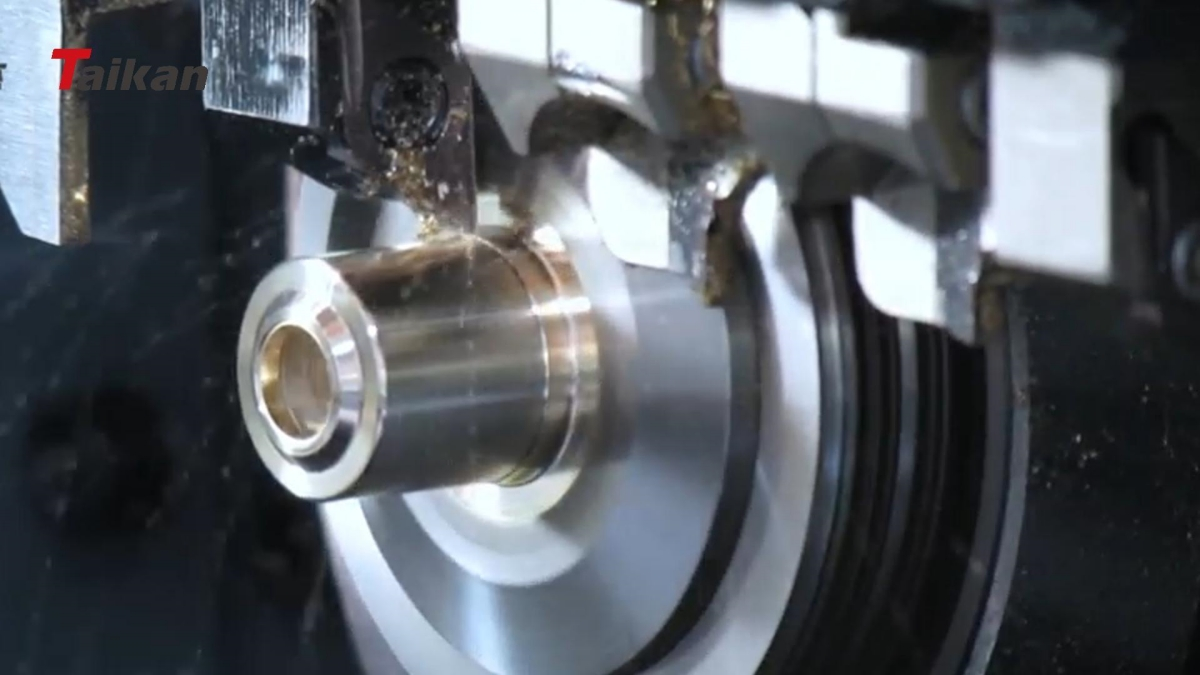
Investing in a CNC lathe isn’t about chasing the lowest price—it’s about maximizing your shop’s capability, consistency, and competitiveness. The machine you install today should still be holding tight tolerances and adapting to new part designs ten years from now. That requires thoughtful engineering, robust construction, and a builder with the staying power to support you over the long haul.
Taikan Machine exists to prove that world-class turning performance doesn’t have to come with an inaccessible price tag. Our CNC lathe machines carry the DNA of a publicly listed, globally oriented corporation that understands the realities of modern manufacturing: you need speed, accuracy, flexibility, and bulletproof reliability—and you need a supplier who treats every sale as the beginning of a decades-long relationship.
If you’re evaluating your next turning center, let’s have a conversation. We’ll talk about your needs and growth plans. No generic scripts, no inflated promises—just straightforward engineering dialogue and a machine built to deliver. Because in the end, the lathe isn’t just a piece of equipment; it’s the engine of your productivity. Choose accordingly