5-Axis CNC Machine Buying Guide: How to Choose the Right Solution for Precision Manufacturing
Views: 0 Author: Site Editor Publish Time: 2026-03-13 Origin: Site
- 1. Why 5-Axis CNC Machining Is the Industry Standard for Complex Parts?
- 2. Understanding 5-Axis CNC Machines
- 2.1 Common 5-Axis Machine Configurations
- 2.2 Taikan 5-Axis Machining Solutions
- 3. Key Advantages of 5-Axis Machining
- 4. 3-Axis vs 4-Axis vs 5-Axis CNC Machining: Key Differences
- 5. How to Choose the Right 5-Axis CNC Machine for Your Factory?
- 6. FAQs
In modern precision manufacturing, the demand for complex geometries, tighter tolerances, and faster production cycles continues to grow. Industries such as consumer electronics (3C), new energy vehicles, aerospace, and 5G communication equipment require components with intricate shapes and extremely high precision.
Traditional 3-axis machines often struggle to meet these requirements efficiently. 5-axis CNC machining has therefore become essential for manufacturers aiming to improve productivity, reduce setups, and enhance machining accuracy.
For global manufacturers, distributors, and procurement managers, choosing the right 5-axis CNC machine is a strategic investment. This guide explores how 5-axis machining works, its advantages, and the key factors to consider when selecting the best solution for your production needs.
Why 5-Axis CNC Machining Is the Industry Standard for Complex Parts?
As product designs become more sophisticated, manufacturers must produce components with curved surfaces, deep cavities, and multi-angle features. Traditional machining typically requires multiple setups to reach different sides of a workpiece, which increases production time and introduces positioning errors. A 5-axis CNC machine solves this challenge by allowing the cutting tool or workpiece to move simultaneously across five different axes. This capability enables machining from almost any angle in a single setup. According to the American Society of Mechanical Engineers (ASME), multi-axis machining significantly improves manufacturing precision and reduces errors caused by repeated part repositioning. (Source: ASME – What is 5-Axis Machining) Manufacturers adopting 5-axis machining can achieve greater design freedom, improved productivity, and higher machining accuracy compared to traditional machining methods.
Understanding 5-Axis CNC Machines
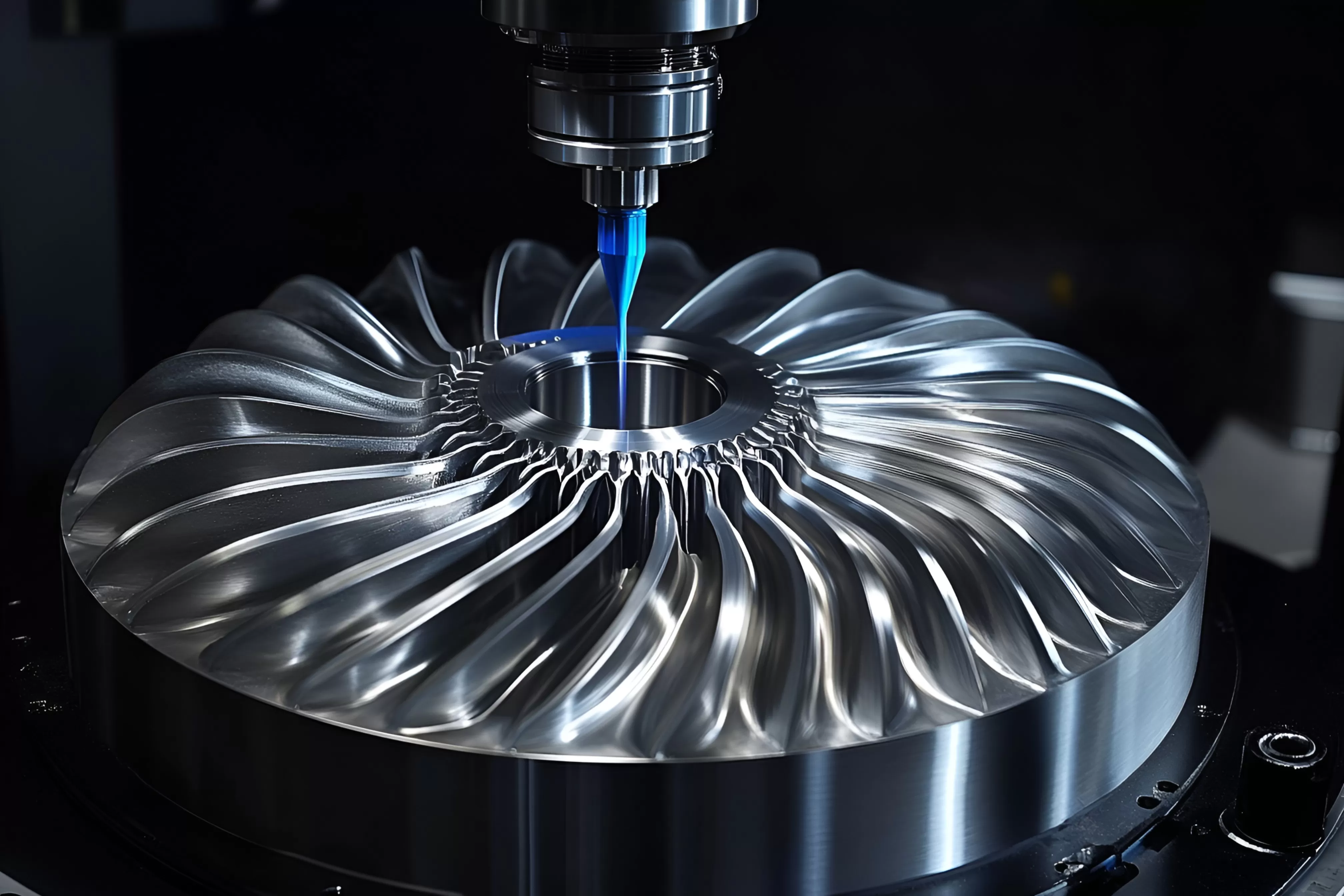
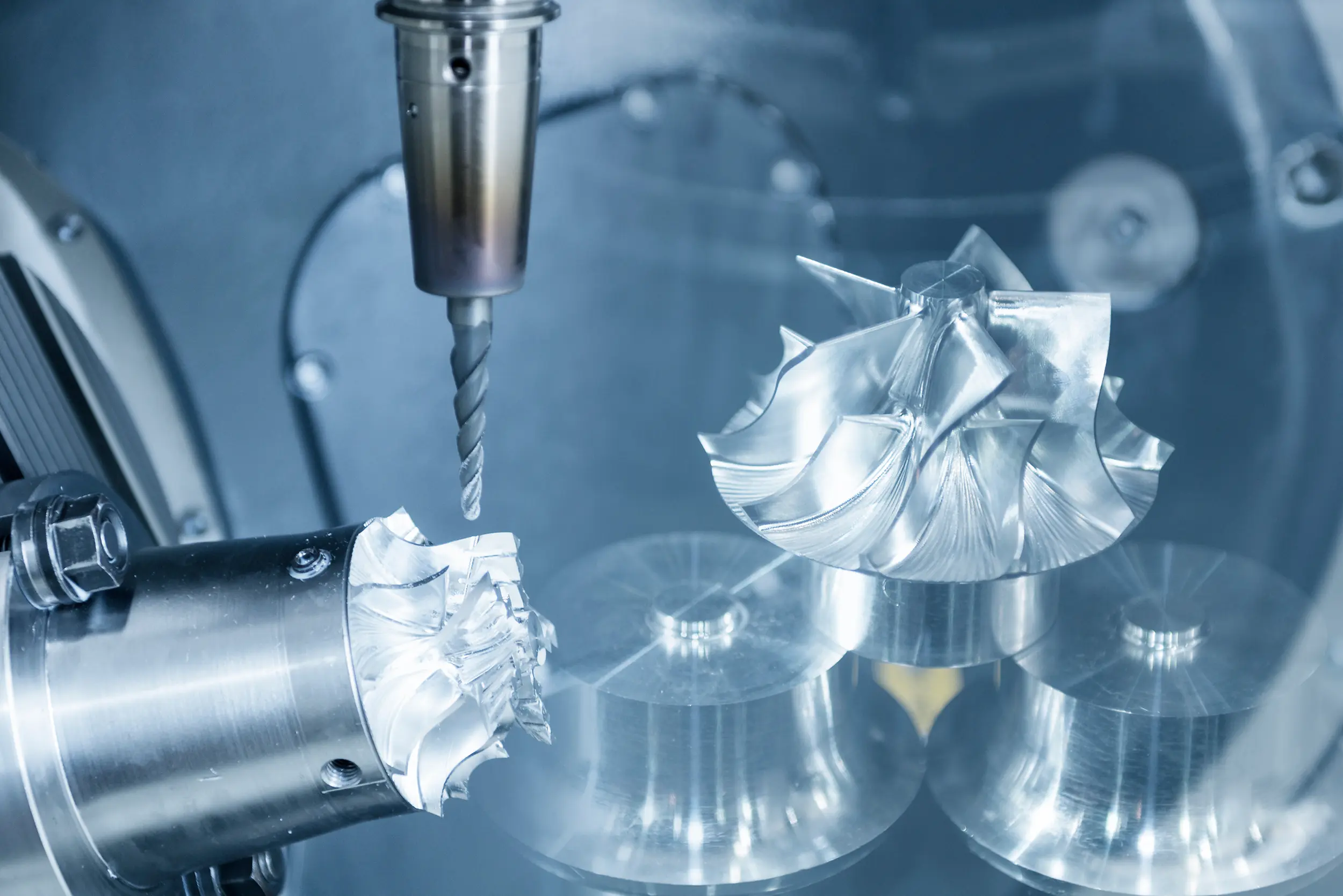
A 5-axis CNC machine operates using five axes of motion: three linear axes (X, Y, and Z) combined with two rotational axes. These additional rotational movements allow the cutting tool to approach the workpiece from multiple directions, making it possible to machine complex geometries and multi-surface parts in a single setup. Compared with traditional 3-axis machining, this multi-directional capability significantly reduces repositioning errors and improves machining accuracy, especially when producing parts with curved surfaces, deep cavities, or complex angles.
Common 5-Axis Machine Configurations
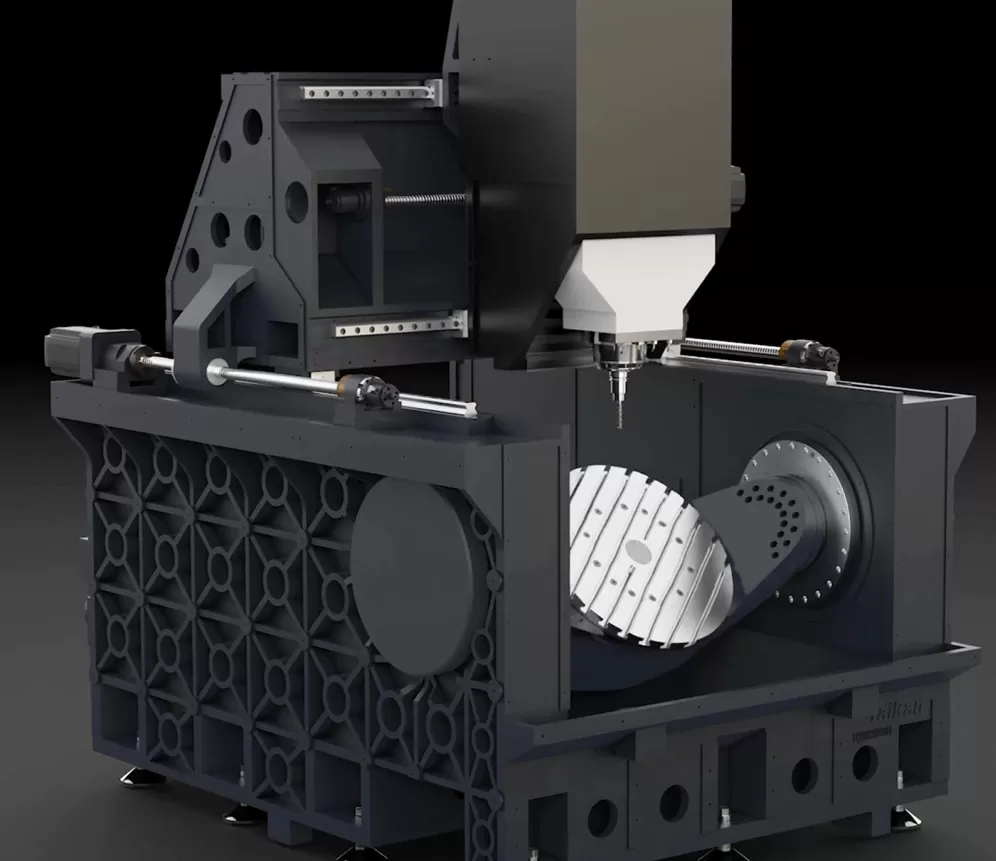

Different machine structures are designed to meet various machining requirements. The most common configurations include:
Trunnion-style machines
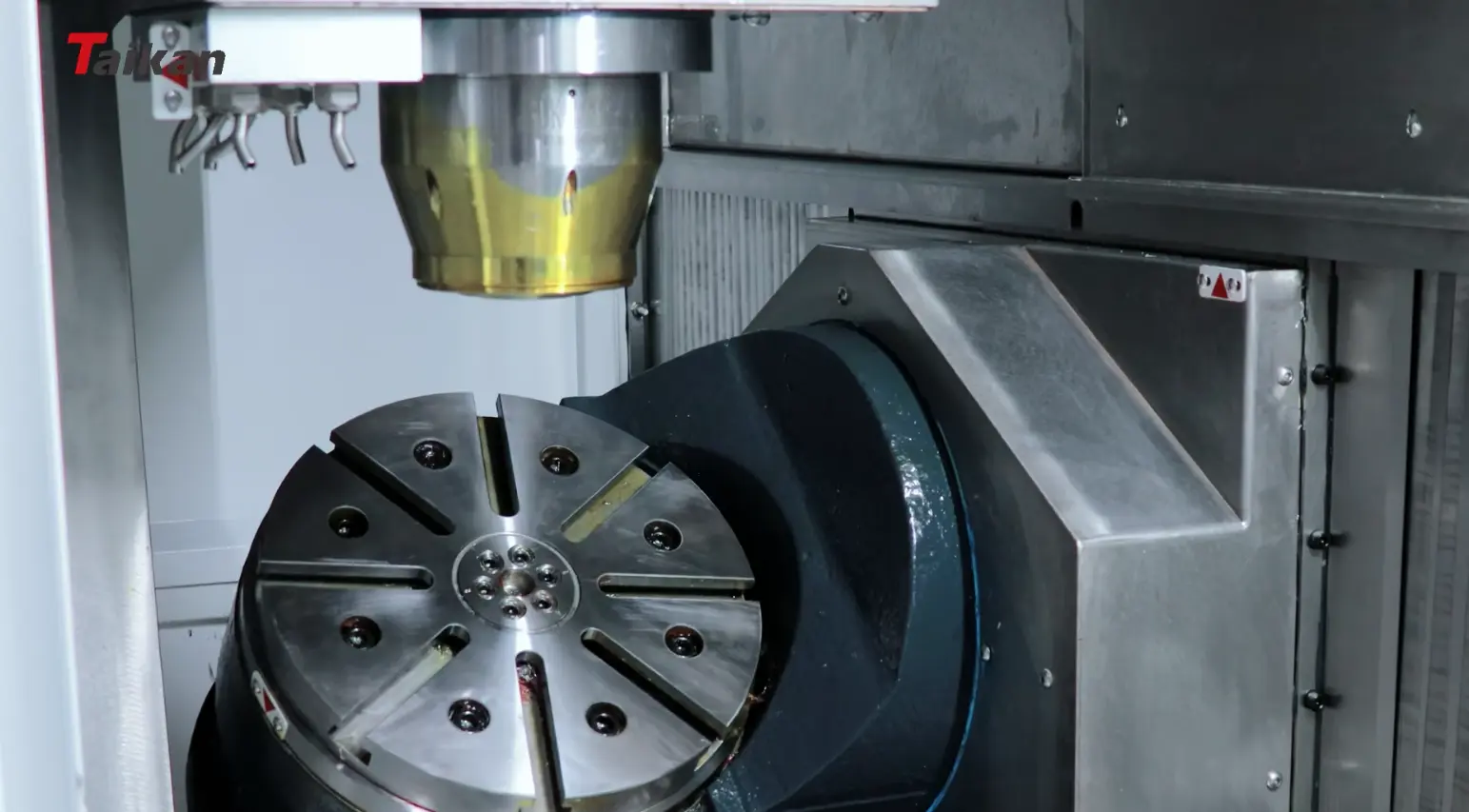
In this configuration, the table rotates and tilts while the spindle remains fixed. Trunnion machines are widely used for high-precision machining of small to medium-sized components, particularly in aerospace and precision mold manufacturing.Swivel-head machines
Here, the spindle head performs the rotational movements. This design provides greater flexibility when machining larger or taller workpieces, making it suitable for complex structural parts.Gantry-type machines
5 axis gantry type machining center features a bridge structure that provides excellent rigidity and stability. They are commonly used for large components and heavy-duty machining tasks in industries such as automotive and mechanical manufacturing.
Taikan 5-Axis Machining Solutions
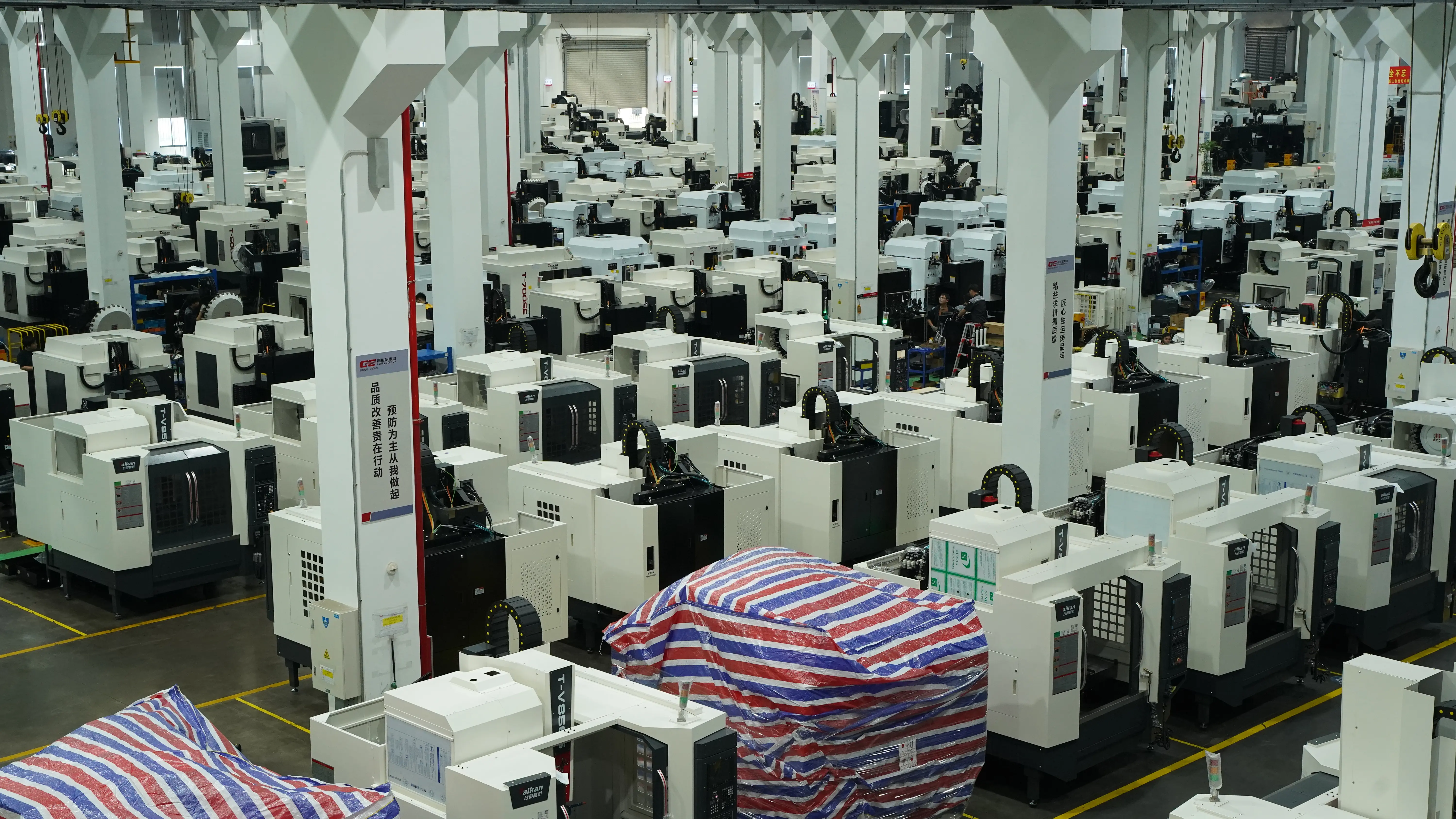
To meet the growing demand for high-precision and complex part production, Taikan Machine offers several advanced 5-axis machining solutions. For example, the 5-axis vertical machining center is designed for high-precision multi-surface machining of complex components.
In addition, Taikan provides integrated milling and turning capabilities through its FH Series 5-Axis Milling and Turning Machining Centers, allowing multiple machining processes to be completed in a single setup. For large-scale precision manufacturing, Taikan also offers gantry-type 5-axis machining centers, which provide the rigidity and stability required for machining larger workpieces.
Equipped with advanced CNC control systems and high-speed spindle technology, these machines are designed to support efficient and stable machining in demanding industrial applications.
Key Advantages of 5-Axis Machining

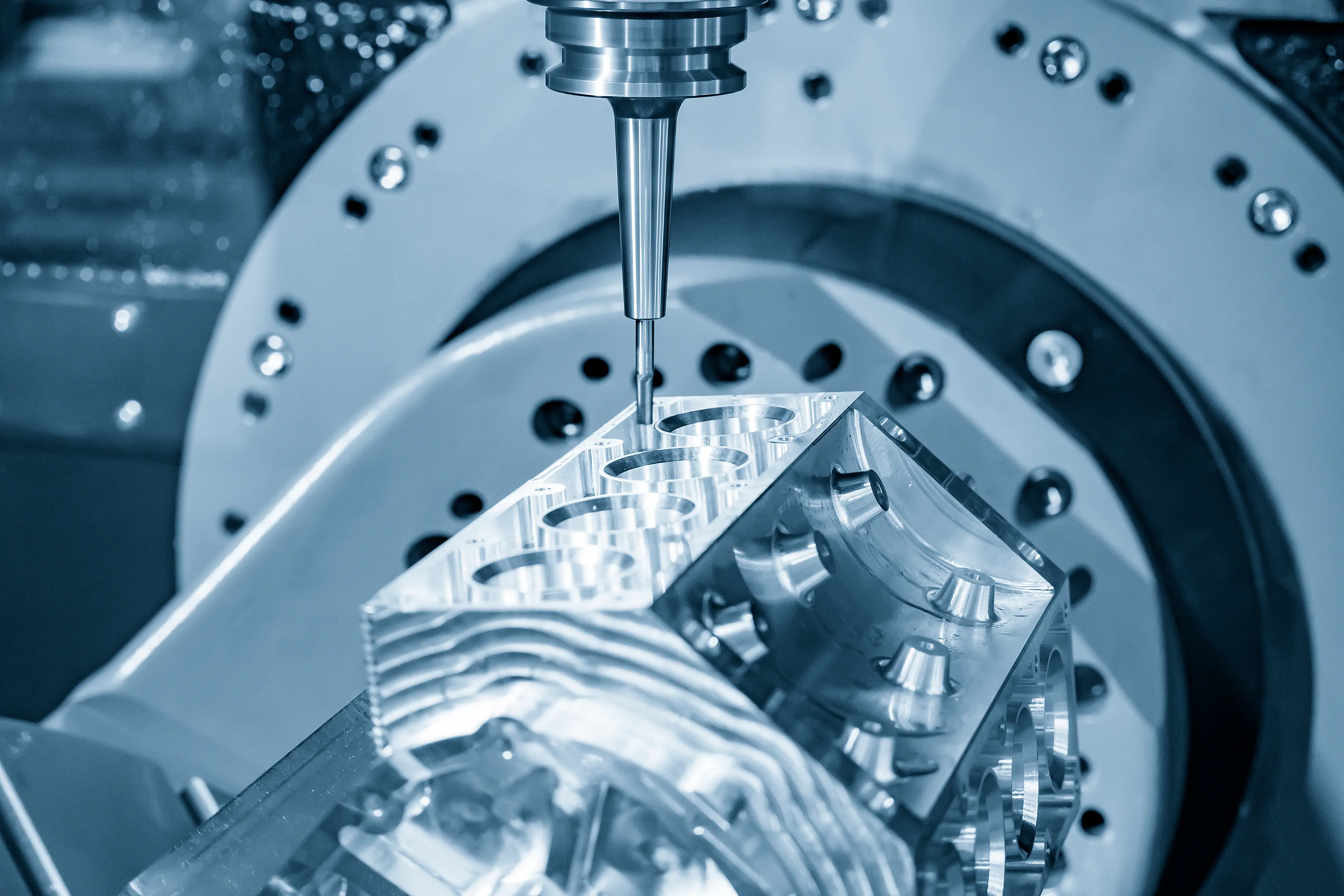
The main advantage of a 5-axis CNC machine is its ability to machine complex parts in a single setup by moving the cutting tool along five different axes. This reduces repositioning errors, improves machining accuracy, and increases overall manufacturing efficiency.
Reduced Setups
By accessing multiple faces of a workpiece in one clamping, 5-axis machining eliminates repeated repositioning, reducing setup time and improving accuracy.
Improved Surface Finish
Continuous tool paths help avoid witness marks caused by part repositioning, resulting in smoother and more consistent surface finishes.
Enhanced Precision
The additional rotational axes allow the use of shorter cutting tools, reducing tool deflection and vibration and enabling tighter machining tolerances.
Increased Efficiency
Fewer setups and continuous machining operations shorten production cycles and increase manufacturing productivity.
Versatility for Complex Geometries
5-axis machining can produce undercuts, deep cavities, and multi-surface structures that are difficult or impossible to achieve with traditional 3-axis machines.
3-Axis vs 4-Axis vs 5-Axis CNC Machining: Key Differences
| Feature | 3-Axis Machining | 4-Axis Machining | 5-Axis Machining |
| Axes of movement | X, Y, Z | X, Y, Z + rotation | X, Y, Z + two rotations |
| Setup requirement | Multiple setups | Reduced setups | Single setup for complex parts |
| Complex geometry | Limited | Moderate | Excellent |
| Surface finish | Standard | Improved | Superior |
| Production efficiency | Moderate | Higher | Highest |
| Typical applications | Basic parts, molds | Cylindrical parts | Aerospace, 3C, EV components |
How to Choose the Right 5-Axis CNC Machine for Your Factory?
Choosing the right 5-axis CNC machine depends on balancing machining requirements, production volume, and long-term manufacturing goals.
Part Size and Complexity
Start by analyzing the size, weight, and geometric complexity of the parts you plan to produce. Smaller precision components often benefit from trunnion-style 5-axis machines, while larger structural parts may require gantry-type machines with higher rigidity.
Required Precision and Tolerances
Different industries require different machining tolerances. Applications such as 3C electronics, precision molds, and aerospace components often require high positional accuracy and stable machining performance.
Spindle Performance
Spindle speed, power, and torque determine machining capability. High-speed spindles are ideal for aluminum and precision components, while higher torque is required for harder materials.
CNC Control System
A reliable CNC system with strong 5-axis interpolation and synchronization capability ensures smooth tool paths and stable multi-axis motion during complex machining operations.
Machine Rigidity and Thermal Stability
A rigid machine structure and stable thermal control are essential for maintaining machining accuracy during long production cycles.
Cost and Long-Term Value
In addition to the initial investment, manufacturers should evaluate the long-term benefits of improved efficiency, reduced setups, and higher production throughput.
Supplier Experience and Technical Support
Partnering with an experienced China CNC machine manufacturer, such as Taikan, provides access to professional training, ongoing maintenance support, and technical assistance throughout the machine’s lifecycle.
FAQs
Q: What is 5-axis CNC machining?
A: It's a process where the machine moves along five axes (three linear, two rotational) to machine complex parts from multiple angles in one setup.
Q: How does 5-axis machining differ from 3-axis?
A: The main difference is the addition of two rotational axes. While 3-axis machines move only along the X, Y, and Z directions, 5-axis machines can tilt and rotate the tool or workpiece. This allows better access to complex surfaces, reduces the number of setups, and improves machining precision.
Q: Is 5-axis CNC machining suitable for small factories?
A: Yes, with models like Taikan's T-U Series, it's accessible for precision work in 3C or mechanical sectors, offering scalability.
Q: Which industries benefit most from 5-axis CNC machining?
A: Industries that require complex geometries and high precision benefit the most. These include aerospace, new energy vehicles (NEVs), consumer electronics (3C), medical devices, and advanced mechanical manufacturing.
Q: What maintenance is required for a 5-axis CNC machine?
A: Regular maintenance typically includes checking spindle performance, lubrication systems, axis alignment, and CNC control components. Proper maintenance helps maintain machining accuracy and extends the service life of the machine.
Q: Why choose Taikan CNC 5-axis machine?
A: With 20 years of expertise, patents, and global support, Taikan delivers reliable, customizable solutions.


