6 CNC Technology Trends Reshaping Manufacturing in 2026
Views: 0 Author: Site Editor Publish Time: 2026-06-24 Origin: Site
- 1. Trend 1: AI-Native Machining – The Mainstream Takeover
- 2. Trend 2: Digital Twins as the Production Backbone
- 3. Trend 3: Lights-Out Manufacturing – Automation That Never Sleeps
- 4. Trend 4: Predictive Maintenance – AI That Sees Failures Coming
- 5. Trend 5: Hybrid Manufacturing – The Best of Both Worlds
- 6. Trend 6: Sustainable Manufacturing – Green Metrics on the Shop Floor
- 7. Bringing It All Together
How AI, Digital Twins, Automation, and Hybrid Manufacturing Are Transforming the Future of CNC Machining?
The CNC machining industry is entering a new phase of transformation. Over the past decade, manufacturers have focused heavily on increasing spindle speeds, improving accuracy, and reducing cycle times. In 2026, however, the biggest competitive advantage is no longer coming solely from machine hardware—it is increasingly driven by data, intelligence, connectivity, and automation.
Rising labor costs, skilled-worker shortages, shorter product life cycles, and growing demands for sustainability are pushing manufacturers to rethink how machining operations are planned and executed.
This article explores six technology trends that are having the greatest impact on CNC manufacturing in 2026 and examines how they are changing the future of precision machining.
Trend 1: AI-Native Machining – The Mainstream Takeover
In 2026, AI is no longer experimental—it has become integral to daily machine control and production planning.
What It Is
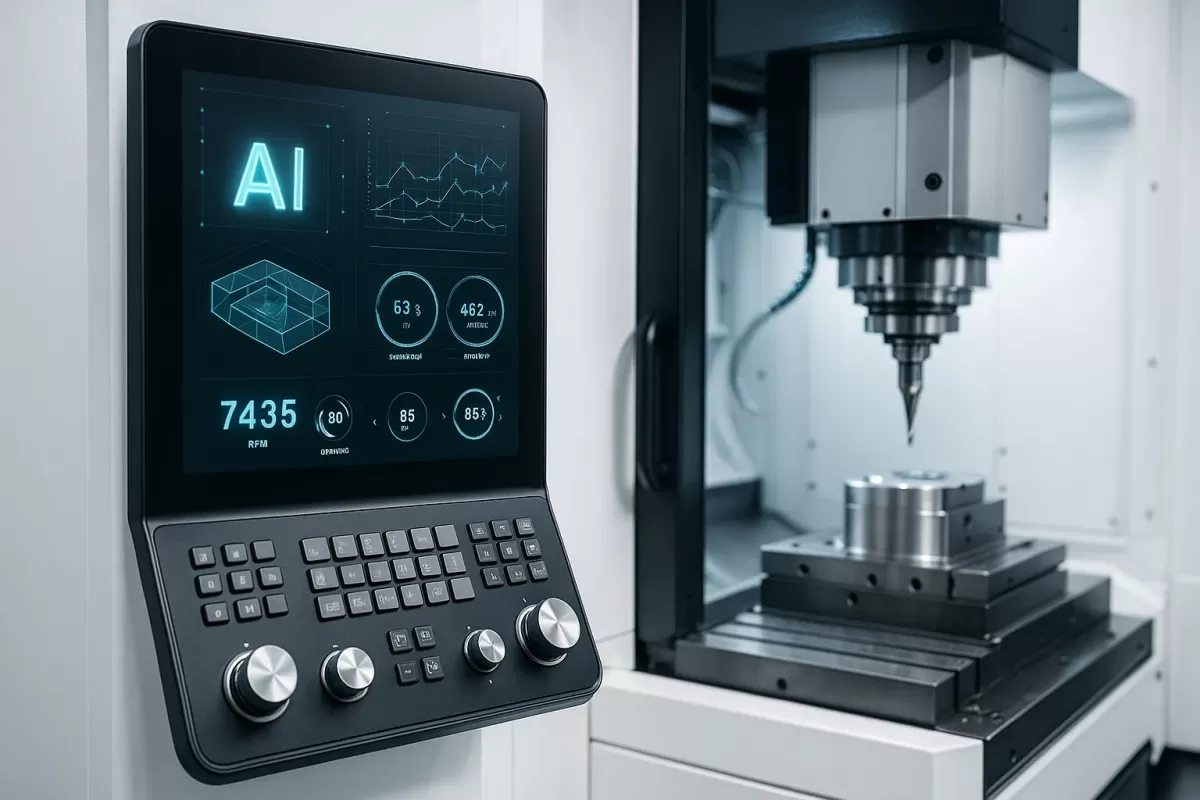
AI-driven machining uses real-time sensor feedback to automatically adjust feeds, speeds, and toolpaths in response to vibration, load, or temperature changes as they occur. This closed-loop approach bridges the gap between design intent, NC programming, and actual machining behavior, enabling adaptive correction rather than passive prediction.
The Technical Backbone
The shift from prediction to real-time control is happening across multiple fronts. Machine tool builders are equipping their systems with onboard AI processors and edge computing units to minimize decision-making latency. Advanced implementations now pair deep reinforcement learning with genetic algorithms for adaptive error compensation—one recent study on aerospace-grade titanium (Ti-6Al-4V) turning achieved a mean absolute error of 2.6 μm, representing 86.3% compensation effectiveness, along with 38% faster convergence than standalone DRL approaches.
At CCMT 2026—the largest machine tool exhibition in Asia—CNC system manufacturers across the board showcased AI-powered adaptive self-learning and real-time process optimization as standard features rather than fringe innovations. Siemens, for instance, has embedded AI deeply into its SINUMERIK ONE system, alongside a digital twin architecture that spans from CAD and CAM through to production.
What This Means for Shops
The operator’s role is fundamentally shifting. Future machinists will spend less time reacting to machine alarms and more time validating data patterns, tuning algorithms, and improving process reliability. Shops that adopt AI-native equipment early will see tangible gains: more consistent surface quality, lower tool wear, and fewer production halts.
Key Takeaway: AI in 2026 is not about futuristic robotics—it’s about making every cut smarter, every tool change more predictable, and every operator more effective.
Trend 2: Digital Twins as the Production Backbone
Once a buzzword limited to simulation and visualization, digital twin technology in 2026 has matured into a living ecosystem that mirrors the entire machining process.
What It Is
The 2026 digital twin integrates design, process engineering, machining, and inspection into a continuously updated model. This goes far beyond static CAD visualization—real machining data flows back into the simulation, continuously refining its accuracy and making each production cycle smarter than the last.
Real-World Applications
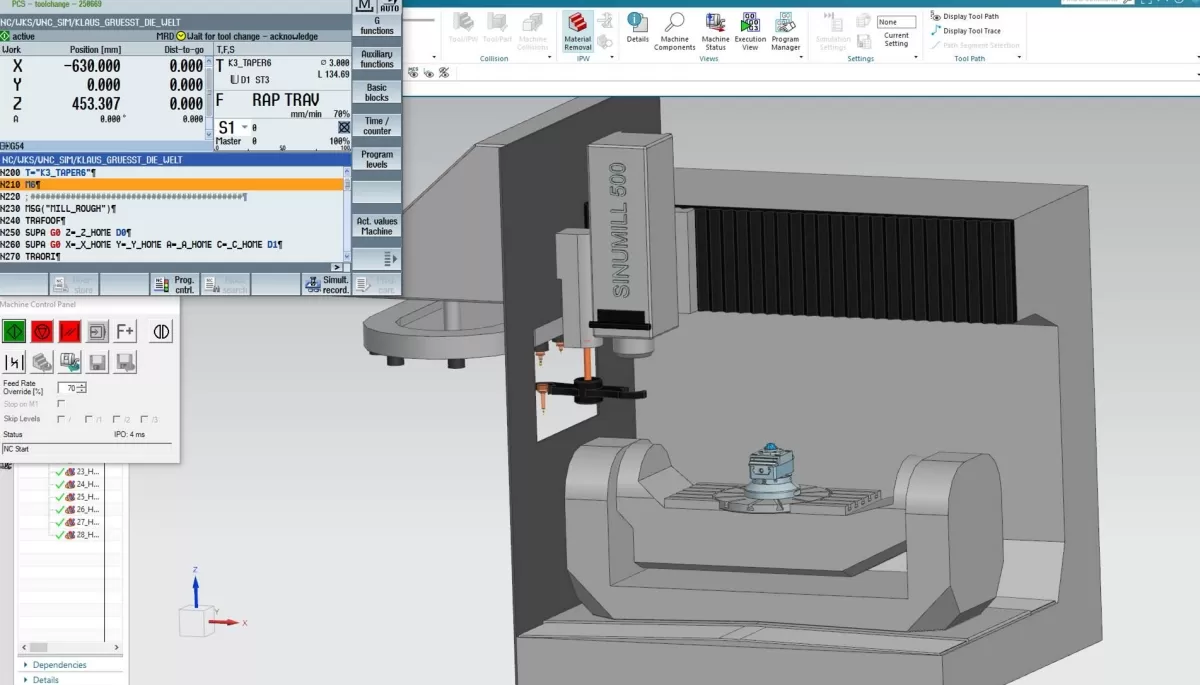
Virtual commissioning, clash detection, and kinematic validation are now performed long before the first chip is cut, dramatically reducing setup errors and lead times. Factories are also pairing digital twins with mixed-reality tools for virtual training and remote support, improving collaboration across teams and reducing dependence on a shrinking pool of expert operators.
Siemens’ approach exemplifies where the industry is heading: a “digital native” architecture that covers the entire machine lifecycle—from design and commissioning to manufacturing and maintenance—enabling a “first-time-right” manufacturing philosophy where defects are simulated and eliminated before steel ever meets the tool.
Perhaps most importantly, digital twins are now being integrated into adaptive control frameworks. Recent research shows that a digital-twin-driven adaptive control system, combining real-time sensing from cutting force, vibration, and temperature monitors with predictive LSTM-based modeling, can reduce mean dimensional error by 39–61% compared to traditional PID control while holding cycle time variation within ±2.5%.
What This Means for Shops
For manufacturers, digital twins are no longer optional—they’re becoming the command center of smart factories. The ability to simulate, validate, and optimize a complete production run offline means fewer scrapped parts, shorter time-to-market, and a dramatically reduced learning curve for complex parts.
Key Takeaway: In 2026, the digital twin is not a simulation tool—it’s the brain of production, where data becomes foresight.
Trend 3: Lights-Out Manufacturing – Automation That Never Sleeps
Unattended, around-the-clock machining—the fabled “lights-out” factory—has moved from theoretical ideal to operational necessity. Driven by persistent skilled labor shortages, tight margins, and customer demand for shorter lead times, more shops are adopting overnight and weekend production runs.
What It Is
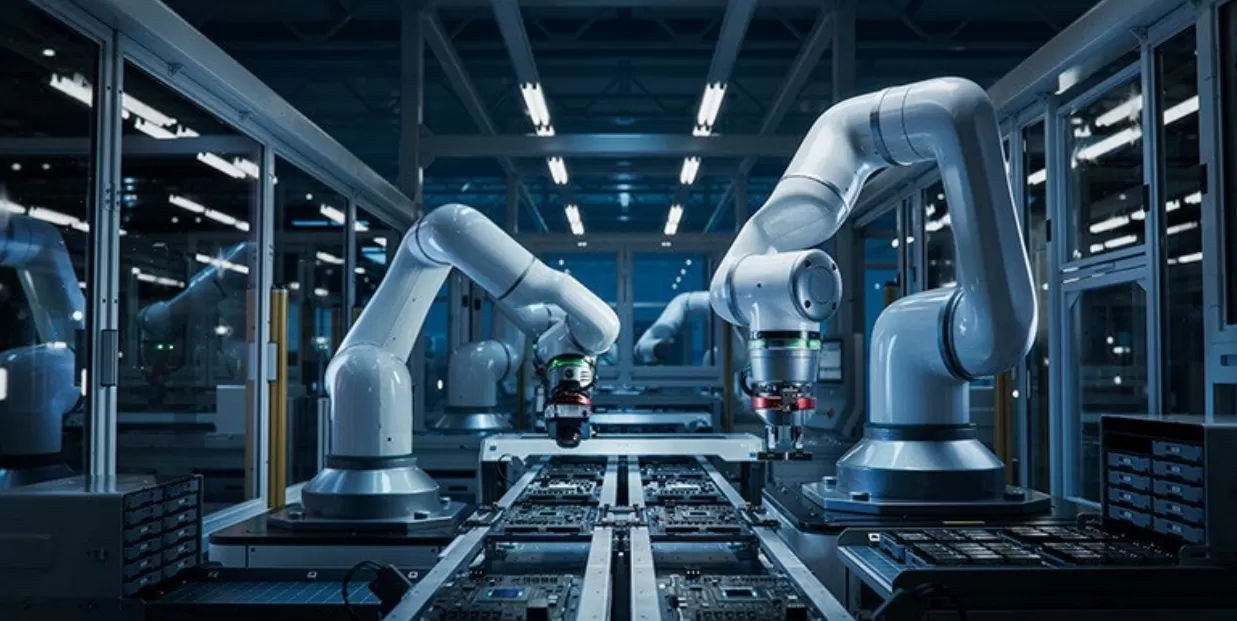
Lights-out machining refers to production environments where CNC equipment operates with little to no human supervision. After programs are validated and material is loaded, machines continue running through nights, weekends, or extended unattended shifts.
Real-World Validation
FANUC has been quietly operating lights-out factories for decades. Located at the foothills of Mount Fuji in Japan, several FANUC production lines can run fully autonomously for weeks, including weekends and holidays. This holistic approach goes far beyond individual machine automation—robots build robots, CNC machines produce CNC components, and automated guided systems move parts across the factory floor. The result is unmatched consistency and defect rates nearly impossible to replicate in conventional human-centric factories.
But lights-out manufacturing isn’t just for industry giants. Small operations are proving the model works too. One solo machinist running a one-man shop transformed a single-machine operation into a nonstop production engine when he landed an order for 3,000 complex parts. Today, he operates six machines across three facilities—all running unattended—with his longest continuous run reaching 192 hours, more than a full week without stopping.
The Enabling Technologies
Success in lights-out environments requires several critical layers:
Process monitoring and anomaly detection: Sensors and adaptive control systems detect tool wear, thermal drift, or process anomalies in real time. When deviations occur, machines can automatically compensate or stop the process safely.
Tool redundancy and in-process probing: Titans of CNC, in a recent exploration of lights-out strategies, covered essential reliability layers including single-operation programming, tabbing techniques, tool redundancy, in-process probing, and automated tool offsets—all necessary for true unattended production.
Material consistency: Conventional stainless steels can struggle in lights-out environments where poor chip control or unexpected tool failure can erase automation gains. Engineered stainless grades specifically developed for improved machinability in high-speed, automated applications are becoming a strategic choice for unattended runs.
What This Means for Shops
For manufacturers facing persistent labor shortages, lights-out machining is no longer a “nice-to-have”—it’s a competitive necessity. Unattended CNC operations allow shops to extend machine utilization, improve throughput, and protect margins without expanding physical footprint or hiring additional operators.
Key Takeaway: In 2026, lights-out manufacturing has a clear business case: every idle night shift is lost revenue, every unattended hour is a strategic asset.
Trend 4: Predictive Maintenance – AI That Sees Failures Coming
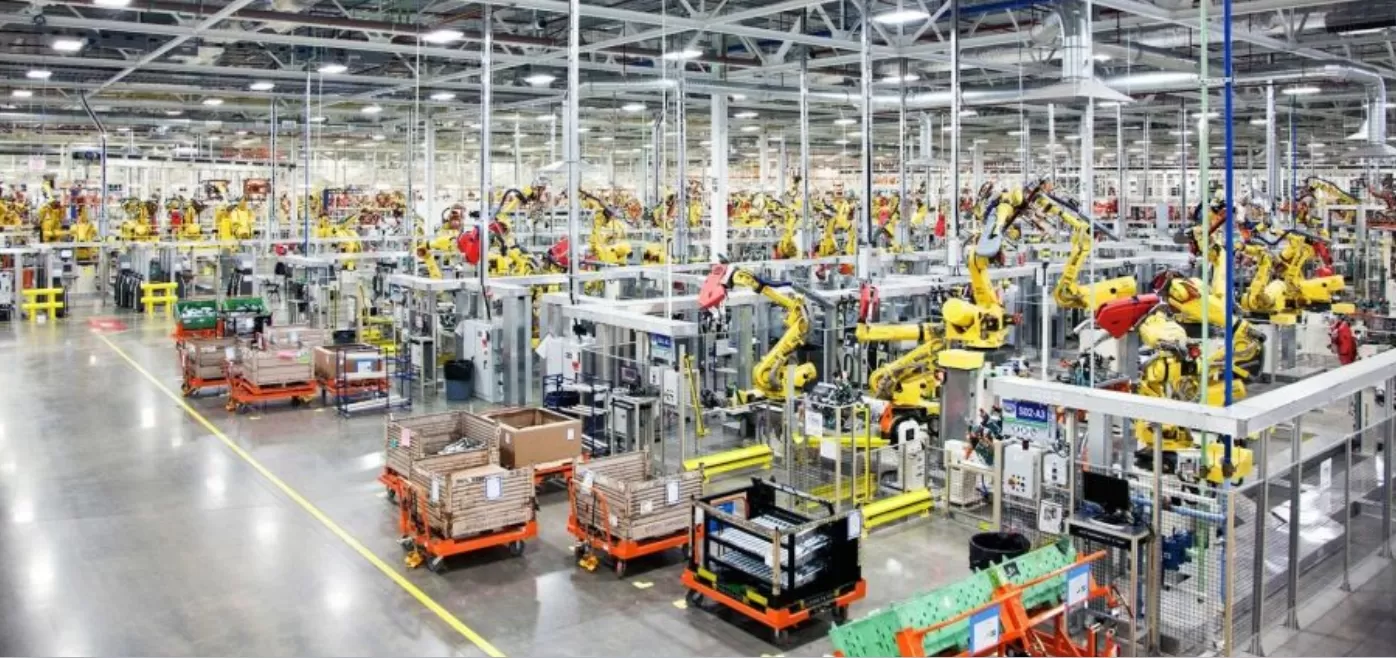
Unplanned downtime remains one of the most costly disruptions in CNC operations. Production facilities can experience up to 20 downtime incidents per month; spindle failures may halt a single machine for up to three days, with direct losses estimated at $30,000 per incident. In 2026, predictive maintenance powered by machine learning is moving from a promising concept to a standard practice.

What It Is
Predictive maintenance uses AI models trained on sensor data—vibration signals, temperature readings, cutting forces—to forecast tool wear, bearing degradation, and other failure modes before they cause unplanned stops. Instead of reactive repairs or purely schedule-based maintenance, operations shift to condition-based interventions.
The Technology Landscape
Fraunhofer IMS, through its GenSATIOn-Edge project, has demonstrated that AI models running directly on edge devices can analyze processes in real time, detect quality deviations early, and enable condition-based maintenance planning without cloud dependency. Initial predictive models already show that tool wear can be reliably detected and chronologically classified based on sensor data.
Multiple academic and industry efforts are advancing the field:
Studies have applied deep learning-based PHM (Prognostics and Health Management) frameworks to predict remaining useful life in CNC milling, optimizing tool utilization and reducing unplanned downtime.
Research using XGBoost with LIME and SHAP for explainable predictive maintenance aims to increase system reliability by minimizing the risk of unexpected failures.
Cloud-native cyber-physical CNC manufacturing frameworks are integrating tool wear condition monitoring into supervisory decision support systems.
What This Means for Shops
For manufacturers, the value proposition is simple: predicted failures can be scheduled. A maintenance intervention that occurs during planned downtime costs a fraction of an emergency repair that halts production. Moreover, AI-driven predictive maintenance extends beyond component-level monitoring to encompass entire machining processes, providing a data foundation on which AI systems can continuously learn and adapt to new production conditions.
Key Takeaway: In 2026, maintenance is no longer about fixing what broke—it’s about replacing what’s about to break, on your schedule, not the machine’s.
Trend 5: Hybrid Manufacturing – The Best of Both Worlds
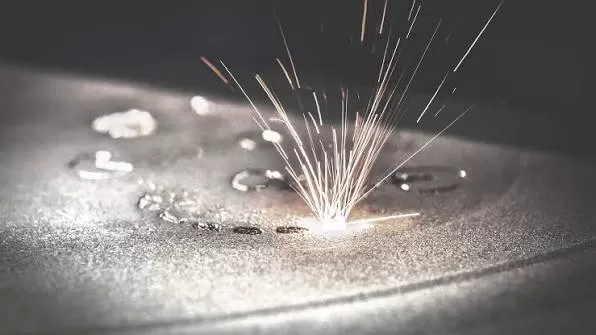
Additive and subtractive processes—long seen as competing technologies—are converging rapidly. Hybrid manufacturing, where a single platform combines metal deposition (additive) with CNC cutting (subtractive), is gaining serious traction in aerospace, energy, medical, and MRO sectors.
What It Is
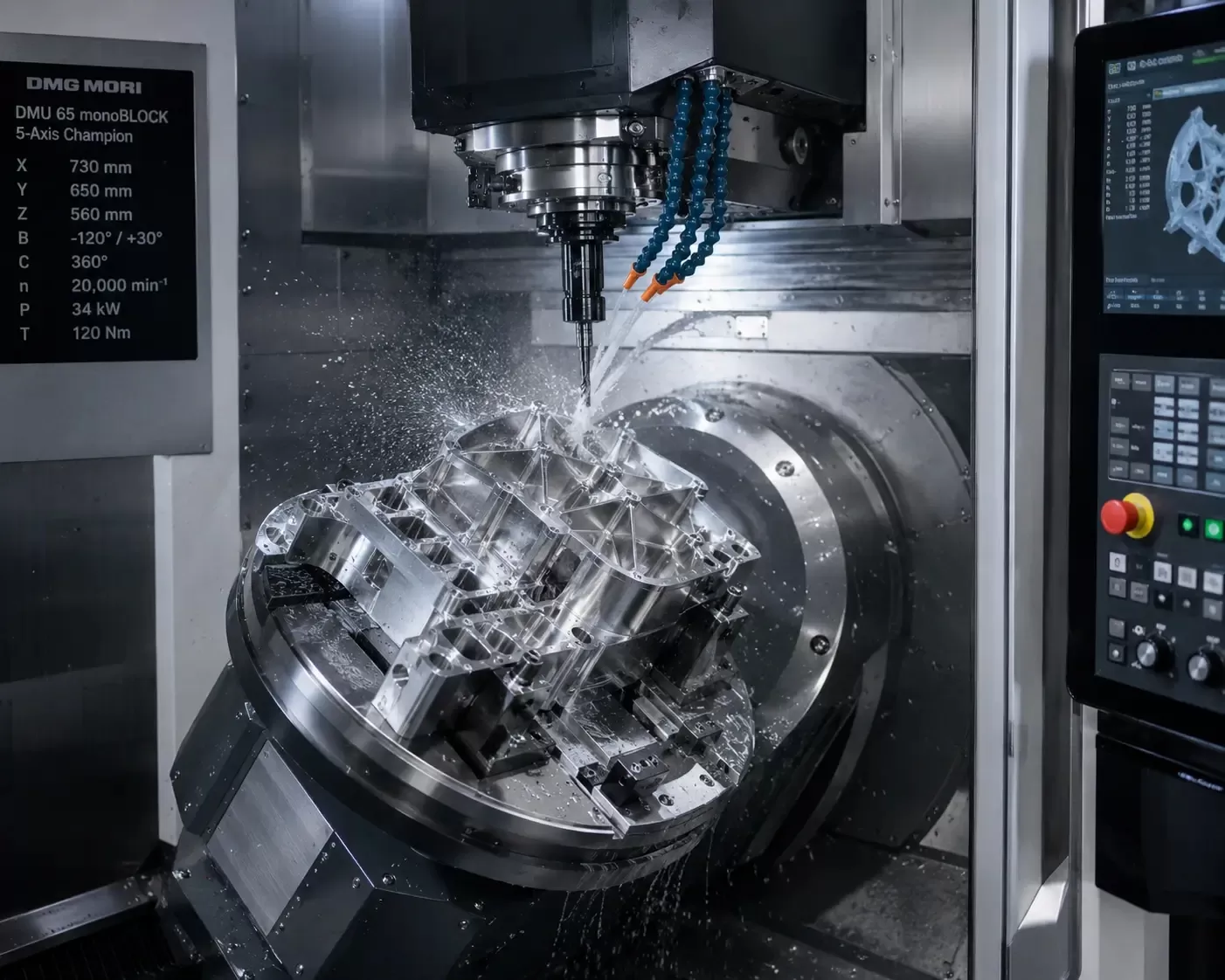
A hybrid manufacturing platform builds near-net shapes through additive deposition, then finishes critical features with high-precision CNC machining—all in a single setup, often requiring advanced equipment such as 5 axis cnc machining centers to achieve complex geometries and tight tolerances. This approach eliminates the need to transfer workpieces between separate additive and subtractive systems, reducing handling errors and setup time.
The Two Breakthroughs
Hybrid manufacturing solves two long-standing machining challenges simultaneously:
Material Waste: Traditional machining often removes 80–90% of the starting stock to produce a finished part. Additive deposition builds material only where it’s needed, dramatically reducing waste before the finishing cut.
Complex Geometry: Features impossible to cut conventionally—internal channels, lattice structures, conformal cooling paths—become manufacturable. This opens entirely new design possibilities for lightweighting and thermal management that were previously unattainable.
The Challenges Ahead
For machinists, hybrid manufacturing introduces new complexities: heat-affected zones from deposition processes, unfamiliar alloys with different machining characteristics, and irregular starting surfaces that complicate toolpath planning. Shops that master hybrid workflows early will secure a significant competitive edge as customers demand lighter, more efficient, and more customized components.
What This Means for Shops
Hybrid manufacturing isn’t about replacing existing capabilities—it’s about expanding them. Repair and remanufacturing (MRO) applications, where worn components can be built up and remachined rather than scrapped, represent a particularly compelling use case. For job shops serving aerospace or medical industries, hybrid capabilities are rapidly becoming a differentiator in winning complex, high-value contracts.
Key Takeaway: Hybrid manufacturing breaks the traditional trade-off between material efficiency and geometric freedom—shops that don’t explore this technology risk being locked out of tomorrow’s most demanding applications.
Trend 6: Sustainable Manufacturing – Green Metrics on the Shop Floor
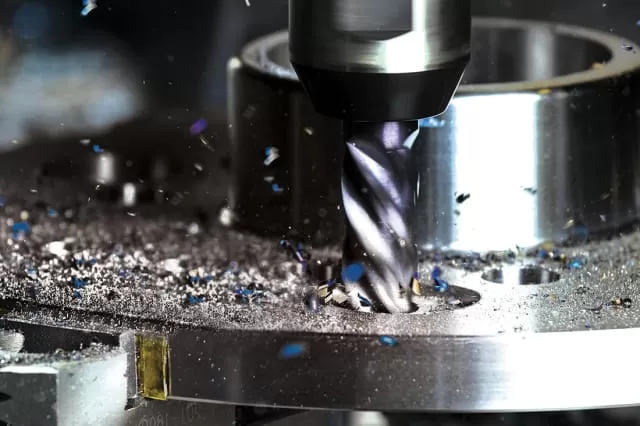
By 2026, sustainability is no longer sitting in corporate reports—it is embedded in machining KPIs. Environmental responsibility has become core business strategy, driven by regulatory pressure, customer expectations, and genuine cost savings.

What It Is
Sustainable CNC manufacturing encompasses multiple dimensions: energy efficiency, material utilization, waste reduction, and lifecycle carbon footprint. Modern machining centers are significantly more energy efficient than earlier generations, with features such as intelligent standby modes, variable speed drives, and smart monitoring systems.
Hard Evidence from Leading Manufacturers
Okuma has emerged as a leader in this space, introducing its Green Smart Machine technology engineered to monitor and control energy consumption in CNC machine tools. The system targets unnecessary power usage by intelligently managing auxiliary equipment, standby states, and operational cycles, enabling energy reduction during idle and non-cutting times without sacrificing productivity or precision. Since October 2022, Okuma’s three main machine tool factories in Japan have used only carbon-neutrally generated electricity. The company now labels certain products as “Green-Smart Machines” if they cut energy consumption considerably—achieved through the Thermo-Friendly Concept (eliminating warm-up periods), ECO Suite plus (autonomous energy saving via spindle temperature monitoring), and optimized spindle cooling systems that reduce energy consumption by up to 68%.
The Operational Side of Sustainability
Beyond machine-level improvements, manufacturers are optimizing production workflows to minimize unnecessary runtime. Even small improvements—automated power-down systems and more efficient scheduling of machining operations—can significantly reduce overall energy consumption. Additionally, recycling systems for metal chips and swarf generated during machining are becoming standard practice, with waste materials reprocessed and reused rather than discarded.
The energy intensity of tool manufacturing itself is being scrutinized. Recent studies quantifying energy consumption across the production of solid carbide cutting tools demonstrate that near-net-shape green machining, combined with tool regrinding, can significantly reduce material losses and primary energy demand.
What This Means for Shops
For manufacturers, the business case for sustainability is increasingly clear: lower energy bills, reduced material costs, compliance with tightening regulations, and improved customer positioning. Shops that treat sustainability as a core operating metric rather than a compliance checkbox will find it drives both cost savings and competitive advantage.
Key Takeaway: Green manufacturing is not a trade-off between profitability and responsibility—it’s the smartest long-term business decision a shop can make.
Bringing It All Together
The six trends outlined above are not isolated developments—they reinforce and enable each other:
Trend | Enables | Is Enabled By |
AI-Native Machining | Smarter adaptive control, predictive maintenance | Digital twin simulation, edge computing |
Digital Twin | Virtual validation, process optimization | AI-native analytics, data from lights-out runs |
Lights-Out Manufacturing | 24/7 productivity | Predictive maintenance, process stability via AI |
Predictive Maintenance | High uptime for lights-out operations | AI-native monitoring, digital twin models |
Hybrid Manufacturing | New geometries, reduced waste | Digital twin for toolpath planning |
Sustainable Manufacturing | Lower energy/material costs | All of the above |
For industry professionals, the priority is clear: assess where your current operation sits relative to each trend, identify the gaps that matter most for your market, and invest strategically with reliable cnc machining center suppliers that understand the future direction of smart manufacturing. No shop needs to adopt all six trends overnight—but ignoring any one for too long may mean watching competitors pull ahead.
Which of these six trends do you see as the most urgent for your operation? The answer will likely determine where you focus your next investment in equipment or training.
At TAIKAN, we’ve been engineering high-performance CNC machine tools for over two decades. As a publicly listed company, we combine deep manufacturing heritage with cutting-edge automation and intelligent manufacturing solutions — empowering global shops to machine smarter, not harder.
Sources
DELMIA / Automation.com[1] – 2026 CNC Machining Trends: How Data, Automation and Hybrid Tech Are Reshaping Precision Manufacturing
Machinery.co.uk[2] – CNC Machining trends to pay attention to in 2026
CCMT 2026 Exhibition Review
Springer/Nature Scientific Reports – Adaptive error compensation in CNC turning based on deep reinforcement learning and genetic algorithm fusion
IEEE Xplore – Digital-Twin-Driven Adaptive Control for High-Precision Machining Under Dynamic Disturbances
Fraunhofer IMS – GenSATIOn-Edge: Self-learning sensor systems for industrial manufacturing
FANUC – The Benchmark for Lights-Out Manufacturing and Industrial Automation
IMTS – *Lights Out, Machines On: Inside a One-Man 24/7 Shop*
Materials Plus – Lights-Out Manufacturing: How Material Selection Drives Performance
Okuma – Green Smart Machine Technology


