3-Axis CNC Machining Solutions: Optimizing Precision and Efficiency for Your Production
Views: 0 Author: Site Editor Publish Time: 2026-05-08 Origin: Site
- 1. What is a 3-axis CNC Machine?
- 2. Main 3-axis Machine Types
- 2.1 3 Axis Milling Machines
- 2.2 3 Axis Lathe Machines
- 2.3 Gantry Mills
- 2.4 3 Axis CNC Routers
- 3. What Parts Can Be Made with 3-Axis Machining?
- 4. Industrial Applications of 3-Axis Machining
- 4.1 Aerospace
- 4.2 Automotive
- 4.3 Electronics
- 4.4 Medical Devices
- 4.5 Tool and Die
- 5. 3 Axis Machining Process VS 5 Axis CNC Machining Process
- 6. Taikan CNC Machining Services
What is a 3-axis CNC Machine?
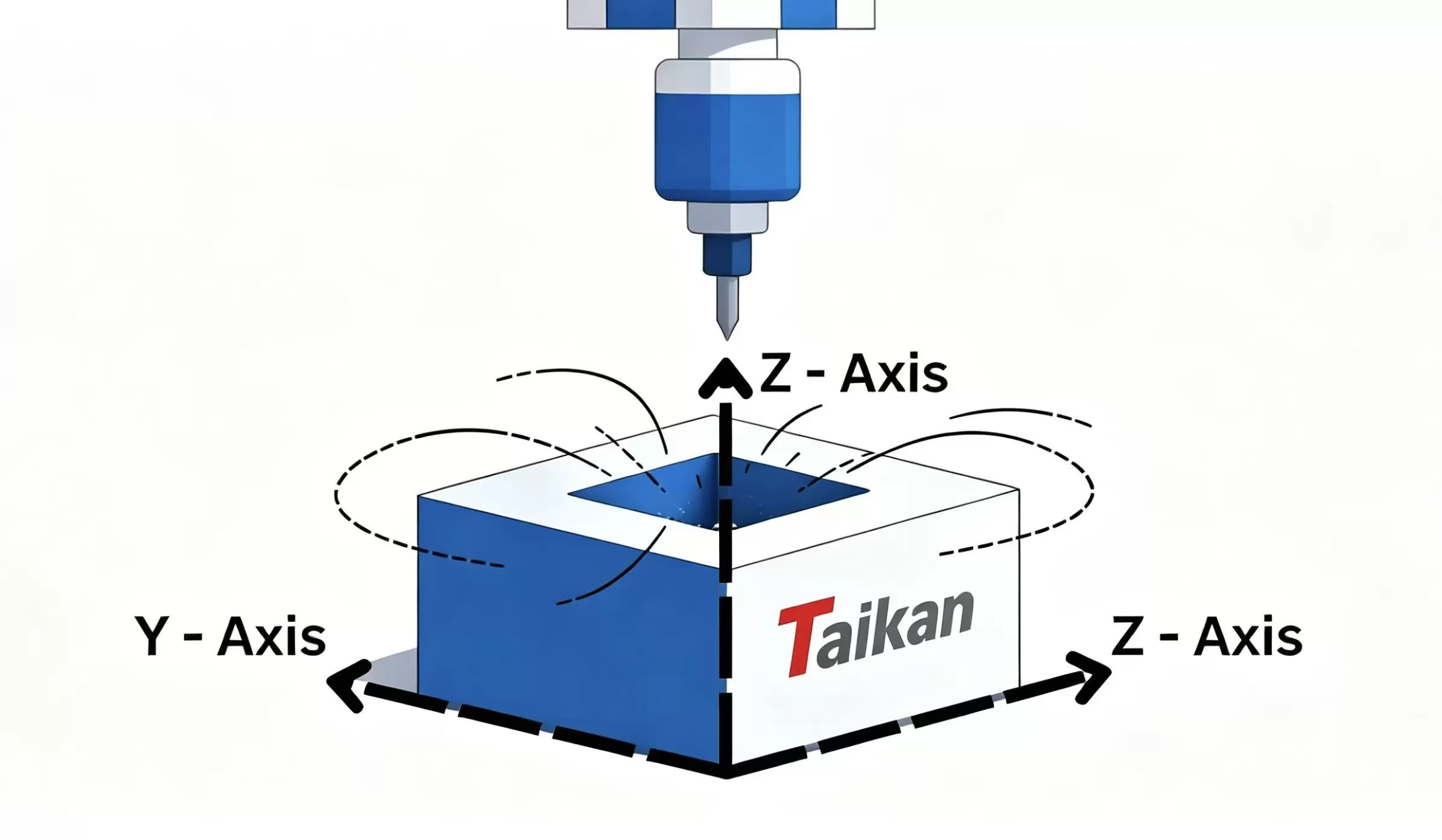
3-axis CNC machining moves the tool along the X, Y, and Z linear axes. It is widely used for milling, drilling, contouring, slotting, and pocketing on parts that can be machined from one or several simple directions. This method is mature, stable, and easy to program. Because the machine structure is simpler, 3-axis equipment usually has lower purchase cost, lower maintenance requirements, and a shorter learning curve for operators and programmers.
Main 3-axis Machine Types
In industrial manufacturing, they are most commonly divided by machine structure and application, rather than by a single machining process. The main 3-axis machine types include 3-axis milling machines, 3-axis lathes or turning centers, gantry mills, and 3-axis CNC routers.
3 Axis Milling Machines
3-axis milling machines are the most widely used CNC machine type for general-purpose machining. The spindle and cutting tool move along the X, Y, and Z axes to machine slots, pockets, contours, flat surfaces, and drilled features. They are ideal for parts that require stable precision, efficient programming, and repeatable production.
3 Axis Lathe Machines
3-axis lathe machines are primarily used for turning cylindrical parts. In standard operation, the workpiece rotates on the spindle while the cutting tool moves along linear axes to perform turning, facing, grooving, and threading. Compared with conventional two-axis lathes, a 3-axis configuration can support more flexible machining operations, such as off-center drilling or milling on selected models with added axis capability.
Gantry Mills
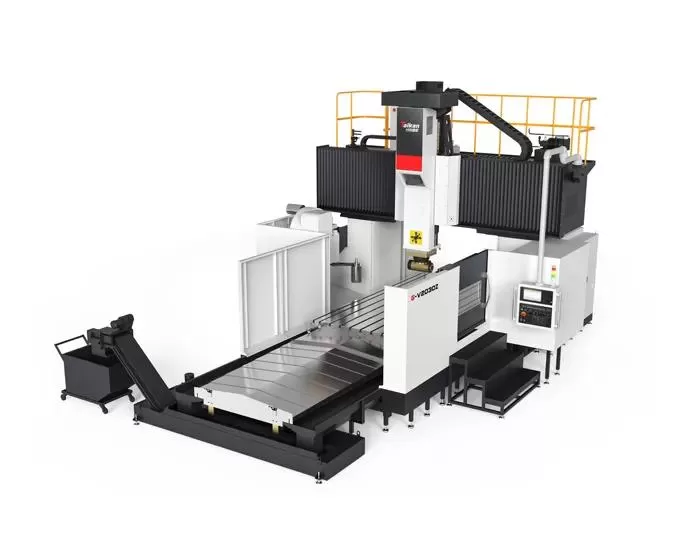
Gantry mills use a bridge-style structure that provides strong support for large and heavy workpieces. Because of their large working envelope and high rigidity, they are often used for machining oversized molds, aerospace structures, energy equipment, and large machine bases. The gantry machining center is especially valuable when precision must be maintained across a large machining area.
3 Axis CNC Routers
3-axis CNC routers are commonly used for non-metal materials such as wood, MDF, plastics, foam, and composites. They are designed for high-speed movement, large working areas, and efficient 2D or 2.5D contouring. In industries like signage, furniture, and composite panel processing, routers offer a cost-effective and productive solution.
What Parts Can Be Made with 3-Axis Machining?
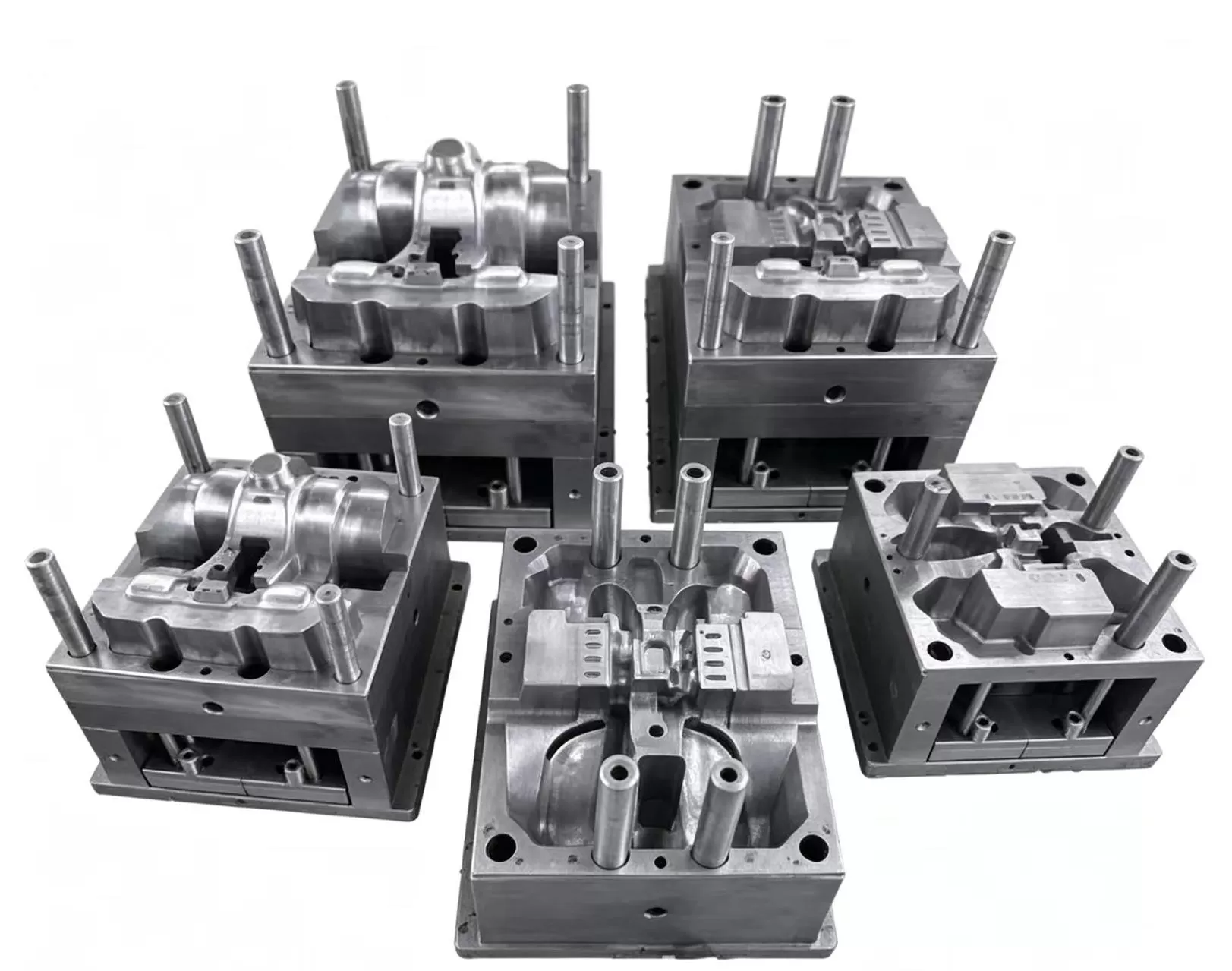
3-axis machining is suitable for a wide range of parts with simple to moderate geometry. It is commonly used to produce flat plates, stepped blocks, manifolds, brackets, fittings, molds, dies, and prototypes. It is also a practical choice for parts with drilled holes, milled grooves, pockets, and simple contoured surfaces. In industries that require high repeatability, 3-axis machining is often used for structural components, fixture parts, and precision machined housings.
Common part types include:
Flat plates and base components.
Brackets and mounting parts.
Stepped blocks and manifolds.
Prototypes and sample parts.
Molds and dies.
Simple contoured parts without undercuts.
Gear-related components and rotary parts with basic geometry.
Industrial Applications of 3-Axis Machining
3-axis machining is widely used across multiple industries because it offers a good balance of precision, efficiency, and cost control.
Aerospace
3-axis machining is used for aerospace parts such as fittings, brackets, and lightweight structural components. It supports the processing of specialized materials and tight dimensional requirements.
Automotive
In the automotive industry, 3-axis machining is commonly used for housings, shafts, fenders, panels, and engine-related components. It is especially useful for parts that require stable tolerances and repeatable production.
Electronics
3-axis machining is widely used for enclosures, housings, and heat sinks. It helps create precise shapes and surfaces that support assembly and heat dissipation.
Medical Devices
Medical parts are often machined from titanium, stainless steel, and composite materials. 3 axis gantry type machining center is suitable for components that require accuracy, surface quality, and consistency.
Tool and Die
3-axis machining plays an important role in tool and die production. It is commonly used for mold bases, dies, and tooling parts that require reliable precision and repeatability.
3 Axis Machining Process VS 5 Axis CNC Machining Process
| Item | 3-Axis Machining | 5-Axis Machining |
| Axis movement | X, Y, Z | X, Y, Z + 2 rotational axes |
| Part complexity | Best for simple to moderate parts | Best for complex and multi-surface parts |
| Setup count | Usually requires more setups | Usually requires fewer setups |
| Programming difficulty | Lower | Higher |
| Tool access | Limited to fixed directions | Better access to difficult features |
| Machining efficiency | Efficient for simpler parts | More efficient for complex parts |
| Accuracy potential | Good for standard parts | Higher for parts needing fewer re-clamps |
| Cost | Lower machine and programming cost | Higher investment, but better for complex parts |
| Applications | Plates, brackets, housings, standard components | Impellers, molds, aerospace parts, medical parts |
Taikan CNC Machining Services
Taikan CNC machining services are designed to support a wide range of part requirements, from standard 3-axis machining to advanced 5-axis machining solutions. We help customers choose the most suitable process based on part geometry, material, precision requirements, and production goals.
With strong technical experience in machining process planning, equipment integration, and application support, Taikan provides reliable CNC solutions for industries that demand consistency, efficiency, and quality. Whether the project involves simple structural parts or complex high-precision components, our goal is to deliver a practical machining solution that matches the real production need.


