The Engine of Precision: The Strategic Choice Between VMC and Tapping Center
Views: 0 Author: Site Editor Publish Time: 2026-02-02 Origin: Site
In the field of precision manufacturing, Vertical Machining Centers and Tapping Centers are two of the most widely used and crucial machine tools. Although both fall under the category of CNC machinery, there are significant differences in terms of functionality, structure, application scenarios, and technical specifications. For businesses, selecting the right machining equipment according to their specific needs is paramount. This article delves into the key features, applications, technical configurations, and selection strategies for these two machining centers.

I. Deconstructing the Core: Design Philosophy & Technical Execution
Since its inception, the Vertical Machining Center has been positioned as an "all-rounder." Its design focuses on high rigidity, high torque, and multi-axis machining capabilities. Structurally, a VMC vertical machining center typically features a solid bed and column design, coupled with a powerful spindle and large-capacity tool magazine, enabling it to perform a full range of processes from heavy cutting rough machining to precision milling, boring, and tapping.

The drilling and tapping center is a "specialized champion." Derived from traditional machining centers, it is specifically optimized to meet the high-efficiency, high-precision needs of industries like 3C electronics and small precision hardware, which require mass production of components with numerous holes. Its design focus is extreme dynamic performance, sacrificing some heavy-duty cutting capabilities for speed and efficiency.
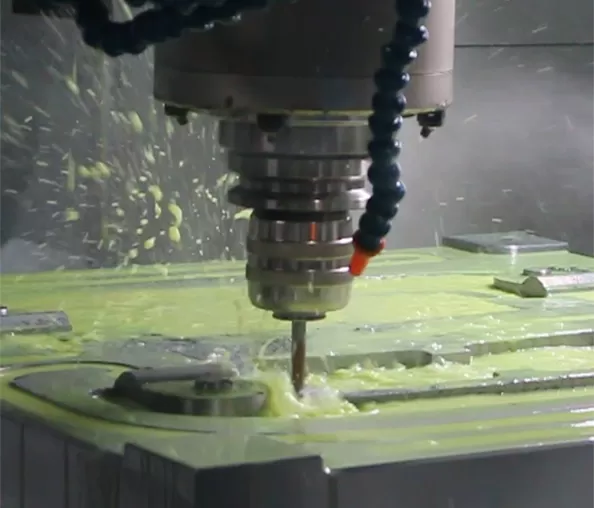
1. Spindle System: Power, Torque, and Maximum Speed
In CNC Vertical Machining Centers, the spindle is engineered to provide substantial cutting torque and power over a wide range of speeds, addressing the demands of tough-to-machine materials such as steel, cast iron, and titanium alloys. Typically equipped with BT40 or larger BT50 tool holders, these CNC vertical machines ensure rigidity and optimal torque transmission.
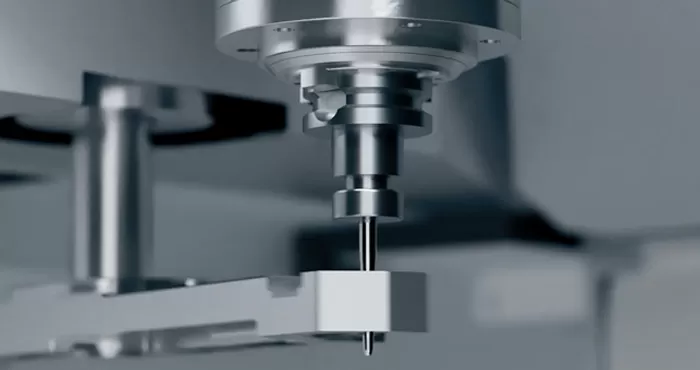
In contrast, the Drilling and Tapping Center prioritizes maximum spindle speed and rapid start-stop response, ideal for small-diameter drills, end mills, and taps. The spindle speed generally ranges from 20,000 to 24,000 rpm, and the machines are typically equipped with lighter BT30 or HSK-E32 tool holders, designed to reduce centrifugal force at high speeds, ensuring balance and fast tool changes.
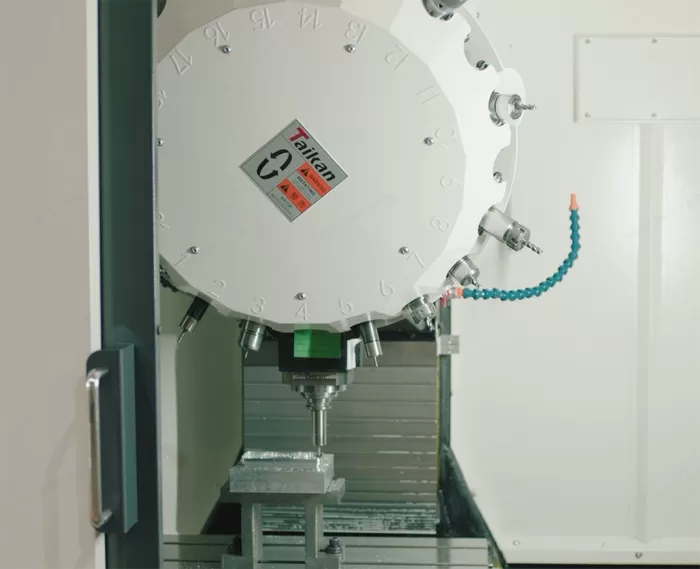
2. Machine Structure: Rigidity vs. Dynamic Response
Vertical Machining Centers typically utilize high-rigidity C-frame or gantry-style structures. These large vertical machining center parts, such as the base and column, are optimized through Finite Element Analysis (FEM) and made from high-strength cast iron or mineral cast material for enhanced stability.

Drilling-Tapping Centers, however, are designed with a focus on "speed." While they maintain necessary rigidity, their moving parts are significantly streamlined and lightened to achieve higher velocities. This "lean" design allows for rapid positioning and continuous hole processing, but at the cost of reduced heavy-duty cutting capacity.

3. Precision Control Technology: Stability vs. High-Speed Accuracy
The precision technology for each machine type is tailored to its application. In Vertical Machining Centers, precision control focuses on thermal error compensation, which is crucial during extended, heavy-duty machining operations. Technologies such as spindle temperature control, hollow ball screw cooling, and thermal error compensation software are integrated to mitigate thermal deformation and maintain precision over long processing periods.
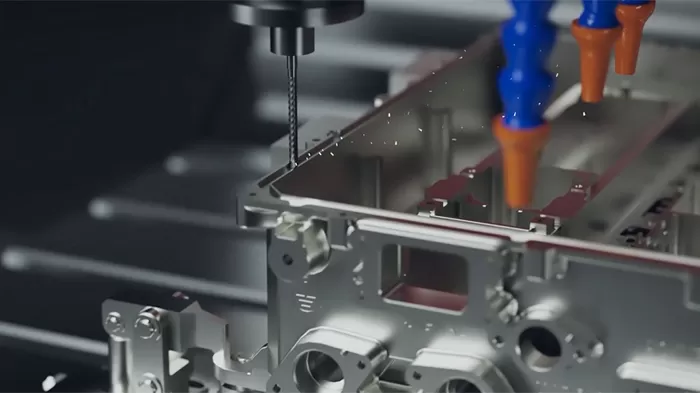
Conversely, Drilling-Tapping Centers emphasize stability during high-speed operations. The drilling machining center typically features high-resolution encoders, linear glass scales, and synchronized control algorithms optimized for tapping, ensuring hole accuracy and thread quality even at maximum spindle speeds.

II. Defining the Application Landscape
The choice of machine depends ultimately on the characteristics of the parts being processed.
Vertical Machining Centers are the undisputed leader for complex parts and heavy-duty machining:
· Mold Manufacturing: Used for large-scale injection molds and die-casting molds, often found in automotive and home appliance industries, where robust material removal (roughing) and high surface finish (finishing) are required.
· Aerospace and Automotive Critical Components: Parts like engine housings, landing gear structures, and transmission cases are typically made from hard-to-machine titanium alloys, high-temperature alloys, or high-strength steel. These parts require high rigidity, high precision, and multi-process capabilities.
· General Machinery and Energy Equipment: Components like pump valve bodies, hydraulic parts, and laser machine frames often feature complex cavities and multi-angle hole systems, necessitating multi-sided machining in a single setup.

Drilling-Tapping Centers are the efficiency leaders for precision light cutting and high-volume production:
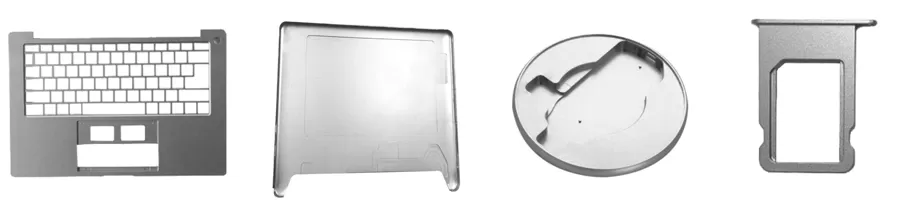
· 3C Consumer Electronics: Parts such as smartphone frames, backplates, and camera mounts, typically made from aluminum alloys, require precision hole placement, complex slots, and shallow cavities, demanding fast processing and exact hole positioning.
· Precision Hardware and Medical Devices: Small components such as electronic connectors, sensor housings, and surgical tools need extremely high spindle speeds and dynamic precision to ensure optimal machining quality.
· Emerging Heat Dissipation Applications: With the surge in AI servers and electric vehicles, the demand for liquid cooling plates has risen significantly. The dense channels and hole systems on these plates are an ideal application for the Drilling-Tapping Center’s high-precision and high-efficiency drilling and milling capabilities.
III. The Strategic Selection Framework
When selecting between a Vertical Machining Center and a Drilling-Tapping Center, companies should proceed with the following decision-making steps:

1. Core Process Analysis: Examine the core components to be processed. If the process mainly involves high-volume drilling, tapping, and light milling with materials such as aluminum and copper, the Drilling-Tapping Center will provide significant efficiency advantages. If the work involves complex multi-surface milling, deep cavity rough machining, and hard material cutting, the Vertical Machining Center is the indispensable choice.
2. Capacity and Flexibility Assessment: For high-volume, standardized small part production, Drilling-Tapping Centers are ideal for creating high-speed production lines with high output per unit of time. For small-batch, multi-variety, or complex processes that frequently require adjustments, the Vertical Machining Center’s versatile capabilities make it a better fit.
3. Return on Investment Calculation: Beyond the initial purchase cost, consider the total lifecycle cost. The Drilling-Tapping Center’s extreme efficiency in certain processes can significantly reduce unit costs. The Vertical Machining Center’s versatility, however, minimizes the risk of idle machinery or the need for re-investment when product lines change.
4. Technical Ecosystem Consideration: Modern machine tools are no longer standalone units but integral components of smart manufacturing systems. Consider the integration capability of the machine with automation systems, online inspection systems, and production management software (MES). Whether you are aiming for high-speed automated lines with Drilling-Tapping Centers or flexible manufacturing units with Vertical Machining Centers, ensuring compatibility for future expansions and integrations is crucial.
Conclusion
The Vertical Machining Center and Drilling-Tapping Center represent two distinct yet complementary technological paths in precision manufacturing: the former is the cornerstone for tackling complex challenges, while the latter is a tool for achieving extreme efficiency. In today’s industry, where manufacturing is moving toward automation and flexibility, understanding their core differences is no longer a simple choice of one or the other, but about strategically integrating both into a production system. By doing so, companies can build a robust competitive advantage with flexibility, speed, and precision.
At Taikan, we provide the technological leadership in both domains. Explore our comprehensive range of high-performance VMCs and ultra-fast Tapping Centers, each engineered to deliver the specific capabilities your manufacturing strategy demands. Partner with us to build a production core that is resilient, efficient, and precisely calibrated for your future.
Discover your optimal machining solution. Visit https://www.taikanmachine.com/ to learn more.


