CNC Vertical Lathe for Large-Diameter Parts: How to Choose for Hubs, Brake Discs, and Heavy Components
Views: 0 Author: Site Editor Publish Time: 2026-08-23 Origin: Site
- 1. Why Large-Diameter Parts Create Different Turning Requirements
- 2. How Vertical Turning Uses Workpiece Weight to Improve Loading Stability
- 3. Start Machine Selection With Maximum Workpiece Dimensions
- 4. Chuck Size and Workholding Determine More Than Part Diameter
- 5. Spindle Torque Matters in Heavy Turning
- 6. Machine Rigidity Affects Surface Finish and Tool Life
- 7. Consider Whether Turning Alone Is Enough
- 8. Loading Method Becomes Critical as Part Weight Increases
- 9. Evaluate the Complete Cost per Finished Component
- 10. FAQ
- 10.1 What parts are most suitable for a CNC vertical lathe?
- 10.2 Why are large parts easier to load on a vertical lathe?
- 10.3 Is maximum turning diameter enough to select a vertical lathe?
- 10.4 Do large-diameter parts require high spindle speed?
- 10.5 Can a vertical lathe perform milling and drilling?
- 11. Conclusion
Large-diameter turned components create a different set of machining challenges from long shafts and small bar-stock parts. Workpiece weight, chuck diameter, spindle torque, clamping stability, chip flow, and safe loading become increasingly important as component size increases.
For parts such as wheel hubs, brake discs, gear blanks, bearing components, flanges, large rings, and short cylindrical housings, a vertical turning configuration can provide a practical alternative to conventional horizontal turning. However, choosing the correct machine requires more than simply comparing maximum turning diameter. Manufacturers need to evaluate the complete relationship between workpiece geometry, machine capacity, cutting load, and production method.
Why Large-Diameter Parts Create Different Turning Requirements
A long shaft and a large brake disc may both be produced by turning, but they place very different demands on the machine.
Long cylindrical workpieces are naturally suited to a horizontal lathe, where the spindle axis is parallel to the floor and the component can be supported along its length.
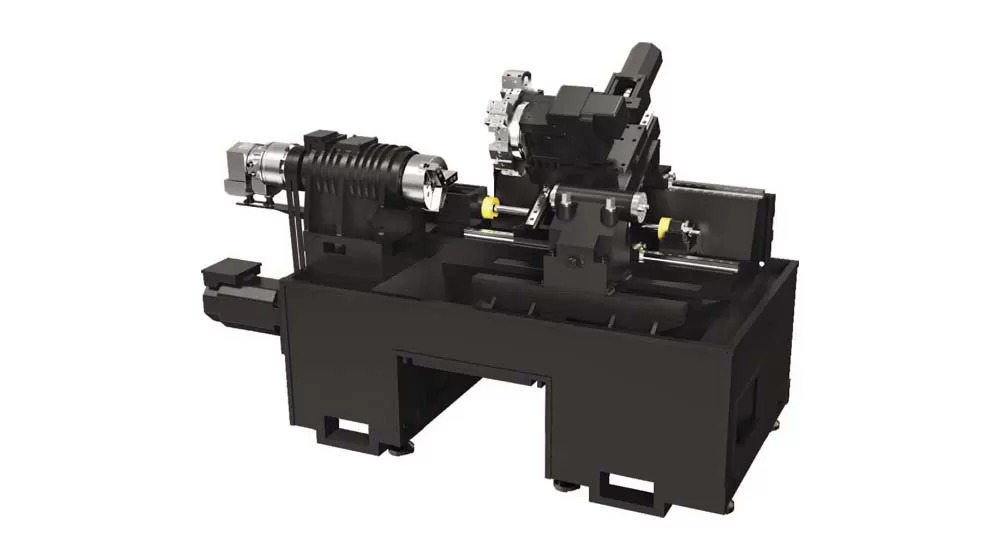
Large-diameter components are often relatively short compared with their diameter. Their weight can also make horizontal loading and clamping more difficult.
Typical examples include:
Automotive wheel hubs
Brake discs and brake drums
Large bearing rings
Gear blanks
Pump components
Reducers and transmission components
Valve bodies
Large flanges
Short heavy shafts
These components require stable support while significant radial and axial cutting forces are generated. As a result, workpiece orientation becomes an important part of machine selection.
How Vertical Turning Uses Workpiece Weight to Improve Loading Stability
On a vertical lathe, the chuck or working table is arranged horizontally and rotates around a vertical axis. The workpiece is placed on top of the chuck rather than being suspended horizontally from the spindle.
For a large, heavy component, gravity therefore helps keep the workpiece seated on the chuck during loading and clamping.
This is one reason a vertical lathe machine can be particularly attractive for short, large-diameter parts.
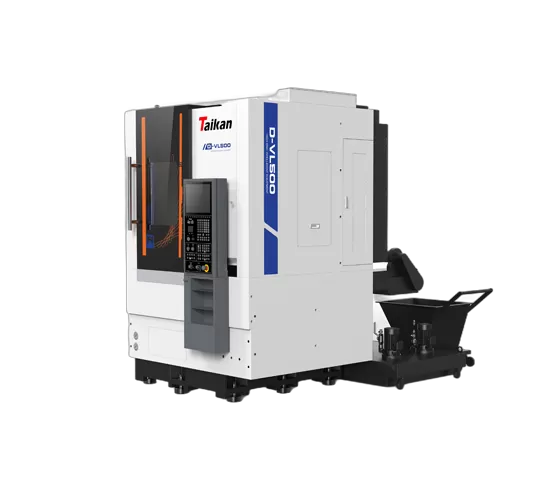
The vertical orientation can simplify:
Workpiece positioning
Crane or robotic loading
Centering of heavy components
Chuck access
Removal of finished parts
The advantage becomes increasingly important as workpiece mass rises. Instead of requiring operators or automation systems to support the component horizontally during loading, the part can be lowered directly onto the chuck.
Start Machine Selection With Maximum Workpiece Dimensions
The first specification to evaluate is the real workpiece envelope rather than the nominal machine size.
Manufacturers should define:
Maximum workpiece diameter
Maximum workpiece height
Maximum workpiece weight
Required turning diameter
Required machining depth
Fixture and jaw dimensions
A machine should not be selected with almost no remaining capacity above the current part size. Fixtures, chuck jaws, workpiece loading clearance, tool approach, and future components may all require additional space.
At the same time, selecting a machine substantially larger than necessary can increase floor-space requirements and capital cost without producing a corresponding productivity benefit.
Chuck Size and Workholding Determine More Than Part Diameter
Chuck diameter is often treated as a simple machine specification, but workholding directly affects machining accuracy and cutting performance.
The workpiece must be held securely against cutting forces without excessive deformation. Thin brake discs, rings, and lightweight housings can distort if clamping force is too high or poorly distributed.
Heavy cast components may require greater gripping force, while irregular workpieces may need customized jaws or fixtures.
When planning the setup, manufacturers should consider:
Available clamping surface
Jaw contact area
Required clamping force
Part deformation risk
Repeatability after loading
Chip access around the fixture
For high-volume automotive components, workholding should also support fast and repeatable loading. A fixture that requires lengthy manual adjustment can become a cycle-time bottleneck even when the machine itself cuts quickly.
Spindle Torque Matters in Heavy Turning
Large components frequently require substantial material removal. Rough turning of cast iron, steel, or other demanding materials can generate significantly higher cutting forces than finishing operations on small precision parts.
For this reason, buyers should evaluate spindle torque and usable power across the intended speed range rather than looking only at maximum spindle speed.
High maximum rpm can be useful for smaller diameters, but a large workpiece normally rotates at a much lower speed because surface speed increases with diameter.
The machine must therefore provide sufficient torque at the operating speed required for the component.
Representative part drawings and expected cutting conditions should be used to estimate whether the spindle can support the intended depth of cut, feed rate, tool geometry, and material-removal rate.
Machine Rigidity Affects Surface Finish and Tool Life
Turning forces travel through the tool, turret, slide, column, spindle, chuck, and machine base. Any unwanted movement within this structural loop can contribute to chatter, dimensional variation, poor surface finish, or accelerated tool wear.
Large-diameter turning therefore places high demands on machine rigidity.
Manufacturers should pay attention to:
Column and base construction
Guideway load capacity
Spindle bearing arrangement
Turret rigidity
Ball screw support
Thermal stability
Rigid machine construction becomes particularly important when roughing heavy components, machining interrupted surfaces, or maintaining dimensional consistency across long production runs.
Consider Whether Turning Alone Is Enough
Modern components increasingly require more than simple OD and ID turning. A wheel hub, flange, housing, or transmission component may also contain drilled holes, bolt patterns, grooves, milled surfaces, or other non-rotational features.
When reviewing different cnc lathe machine uses, manufacturers should determine whether these secondary operations will be completed on the lathe or moved to a machining center.
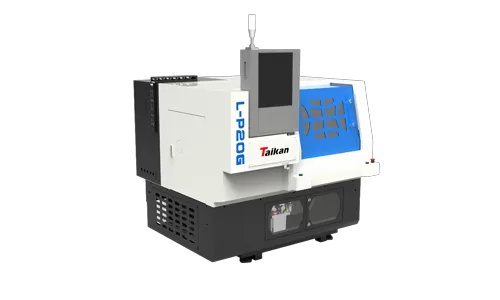
If components repeatedly require turning followed by drilling or milling, a machine equipped with driven tools or turning-milling capability may reduce secondary setup.
However, additional functionality should be justified by production requirements. For components that only require turning, a simpler machine configuration may provide lower investment cost and easier operation.
Loading Method Becomes Critical as Part Weight Increases
Handling time often represents a significant portion of the total production cycle for large components.
Possible loading methods include:
Manual loading for smaller parts
Overhead crane loading
Gantry loading systems
Industrial robots
Dedicated automatic loading equipment
The selected machine should provide sufficient access for the intended handling system. Door opening, chuck height, surrounding guards, robot reach, and crane clearance should all be considered during layout planning.
In high-volume production, automation can reduce labor requirements and improve consistency. In low-volume heavy-part machining, convenient crane access may be more important than fully automatic loading.
Evaluate the Complete Cost per Finished Component
Machine purchase price alone does not determine production economics.
A useful comparison should consider:
Machining cycle time
Loading and unloading time
Fixture cost
Tool consumption
Number of setups
Secondary machining
Operator requirements
Floor-space requirements
Expected machine utilization
A larger or more capable machine may be economical if it eliminates several handling and secondary operations. Conversely, purchasing excessive capacity for relatively simple components can increase investment without reducing unit cost.
FAQ
What parts are most suitable for a CNC vertical lathe?
Vertical lathes are especially suitable for short, large-diameter, or heavy rotational components such as wheel hubs, brake discs, brake drums, gear blanks, bearing rings, flanges, and large housings.
Why are large parts easier to load on a vertical lathe?
The chuck faces upward, allowing heavy components to be lowered directly onto the workholding surface. Gravity helps support the part during positioning and clamping.
Is maximum turning diameter enough to select a vertical lathe?
No. Buyers should also evaluate workpiece height, weight, chuck diameter, spindle torque, machine rigidity, turret capacity, fixture clearance, loading method, and required machining operations.
Do large-diameter parts require high spindle speed?
Not necessarily. Large-diameter components generally operate at lower rotational speeds to maintain appropriate cutting surface speed. Torque and usable spindle power at these lower speeds can therefore be more important than maximum rpm.
Can a vertical lathe perform milling and drilling?
Some machine configurations can support driven tools or turning-milling functions. Whether these capabilities are necessary depends on the number of non-turning features and whether eliminating secondary machining improves the overall production process.
Conclusion
A CNC vertical lathe can provide an efficient machining platform for large-diameter, short, and heavy rotational components. Its vertical workpiece orientation simplifies loading and offers a stable arrangement for components such as wheel hubs, brake discs, gear blanks, bearing parts, and large flanges.
Successful machine selection should go beyond maximum turning diameter. Manufacturers should evaluate workpiece weight, height, chuck requirements, spindle torque, machine rigidity, loading method, fixture strategy, secondary machining requirements, and expected production volume. By matching these factors to representative part drawings and the complete production route, manufacturers can choose a turning solution that delivers reliable machining performance while controlling cost per finished component.


